Archive for the ‘Analysis’ Category

Keep your eyes on the prize.

Wednesday, May 15th, 2013

Keep your eyes on the prize. By Yilma Bekele

We are witnessing a flurry of news from the TPLF party that calls itself the Ethiopian government. Why is the Woyane party so busy and why is the party pushing its cadres to be super active is a good question. That is what piqued my interest and I was forced to look around to figure out what exactly is happening both in Ethiopia and the Diaspora community to make the illegal regime work overtime.

I did not have to look far to see why the government is acting very nervous. It looks like for a change the progressive forces are on the attack and the reactionary regime is on the defense. Believe me this is a rare occurrence and shows the realignment of forces in our country. I will try to explain why later on but let us look at what is causing this shift. A few weeks back the regime carried out its ‘ethnic cleansing’ activity in the Beneshangul Gumuz Kilil. It was not the first time the TPLF led regime has done this criminal act but what was different this time around was our collective indignation. We were able to carry out a sustained and well organized push back from around the world. The opposition in Ethiopia cooperated by boldly demanding action and tried to collect evidence from the affected areas.

First the hapless regime paraded its toy PM and made him give some half ass explanation and dumped the crimes on their Kilil dog. The fact that the previous ‘ethnic cleansing’ activity was carried out in the South Kilil where the PM originated from was not lost on us. This rehearsed mea culpa did not impress anyone. It was back to the drawing board for the regime. Next In the clueless regime tried to divert our attention by planting rumors about the death of that other tyrant in Zimbabwe. We did not bite. After the failure of that story they again tried to engage us by removing the monument dedicated to our Holy Father Abune Petros. Again we showed our unhappiness but did not take our eyes of the ‘ethnic cleansing’ crime. We were focused and relentless. We were just simply not crying but talking about taking the matter to the International Court of Justice and the UN.

After lots and lots of postponements and dragging the regime brought our political prisoners and decided to hand down their useless justice. We were supposed to drop all other activity and concentrate on Eskinder Nega and Andulalem’s miscarriage of justice. Something odd happened here. We did not follow the script. For the first time we were able to connect the dots and see the whole picture. The progressive forces decided to link ethnic cleansing, Abune Petros and our Political prisoners’ situation as one.

I was waiting for the next drama with heightened anticipation. What would they try now was a common question asked by students of Woyane theatre. Invading Somalia was out of the question since they have already learned their lesson. The demonization of Eritrea was becoming stale. Playing the ethnic card is what brought about the problem in the first place so that was a no go zone. What would the ‘great visionary’ leader do under the circumstances was in the mind of all TPLF cadres in leadership position. They dug deep, traveled back in their criminally ladened history and came up with ‘cannibalism’ as the way out.

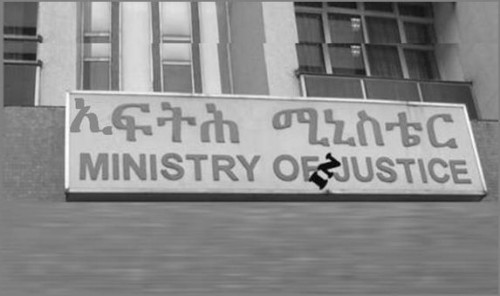
So with great fanfare they went about arresting anything anybody they could find. The injustice Minister was hauled away. The guy with dark glasses that sat behind the tyrant in Parliament was arrested. The Revenue and Customs guys were escorted to their won prison with a few selected business people to add flavor to the drama.

I guess all this activity is supposed to impress us. A criminal arresting another criminal is meant to fill our soul with hope for the future. They are so clueless they don’t even know that the news is taken with such amusement that a soccer game between Buna and Giorgis garners more anticipation than their cheap drama. Why would anyone think that Melaku Fenta that spineless individual sitting under Gebrewhaid Giorgis is capable of making any decision let alone steal big? Like most sycophants that are serving as the face of their departments Melaku was just another mannequin for show while the TPLF boss under him runs the outfit. That game is played all over Ethiopia and in the Embassy’s outside. I bet you cannot find any worthwhile governmental body without a TPLF deputy in charge.

This new drama is meant to keep us guessing what in the world is going on inside the TPLF party. We are supposed to guess which faction is up and who is down. The disinformation campaign by Debretsion keeps manufacturing different versions of their supposedly internal turmoil and some of us love nothing more than being instant experts in the inner workings of the mafia group. To hear some of our people go on the minute details of the party is mind boggling and a testimonial to the hopelessness of a few of our family and friends. They might have their own differences but do you really think that will stop them from their common goal of staying in power no matter what? Do you for second think they will not close ranks when threatened? Then why in the world are you wasting time and energy whether Azeb is fighting with Berket and if Sebhat is is not in good terms with Seyoum? Now if they really want our attention the best way to do it will be arrest Azeb or Abay Woldu not Sebhat or Seyoum since they already are near death.

The biggest joke of all is the claim that Hailemariam Desalgne was cleaning house. Let us see the PM that was handpicked by the dead tyrant and schooled in the art of servitude to TPLF, the PM that does not have a power base, the same PM that cannot even pick the guards outside his office is exercising authority on TPLF officials? Who would swallow such Mamo Kilo bed time story is a good question. Yes there are a few especially here in the Diaspora that are trying to put some lipstick on this pig of a story.

Some opined ‘EPDRF supporters speaking out’ while others declared ‘EPDRF undergoing profound changes.’ Well, well let see us what is giving these Woyane coddlers new life? What is different today that was not there yesterday is a good question. I read their writings very closely and tried to see what they were basing their new found euphoria on. I wanted to know what arguments they were bringing to the table to see if there was any validity to their conclusions. I couldn’t find any. It is all wishful thinking, self fulfilling prophesy and confused theories that is trying hard to fit a square peg in a round hole. The ones that are trying to see light at the end of the tunnel are the same people that advised wait and see attitude when Woyane conquered our capital and were willing and ready to serve the criminal organization. Their last miscalculation caused twenty years of misery to our people and country and here they are again advising us the presence of a non entity called EPDRF that is supposed to usher a new era of peace and prosperity. Give it a rest gentlemen and do not waste our time with your unfounded optimism. Why peddle a worn out theory this late in the game?

I am emboldened by three factors that have been added to the equation of fighting injustice in our dear country. The first and very significant addition to our arsenal of fighting for freedom and democracy is no other than our beloved ESAT. It has given voice to the voice less and opened our eyes to the reality that is what is ailing us. ESAT is the main reason Woyane misinformation campaign is falling on deaf ears. ESAT is the main reason the cry of our people in Ethiopia is getting a hearing. No matter what no sane Ethiopian can ignore the voice of our people coming thru the airwaves loud and clear. The tenacity and diligent reporting by ESAT that refused to fall for Woyane diversion kept the ‘ethnic cleansing’ criminal act in focus and thwarted their attempt to derail us.

The second factor is the gallantry of our Moslem citizens that have against all odds persevered for over a year their quest for freedom and independence. The many attempts to divide and splinter them by the illegal Woyane regime has been repulsed and the Moslem community is still standing together with one voice and one aim of protecting their right to run their religion free of government interference. It is a lesson to the rest of us to keep our eyes on the prize and not to let our organizations be the play ground of Woyane operatives.

The third factor that is emerging from Ethiopia is the beautiful new voice of Semayawi Party that is clear, clean and void of any clutter of the past that has been hindering our forward movement. From what I can observe from afar Semayawi is not encumbered by our past failures, weighed down by unnecessary dogma and geared to act and try newer stuff. That is what the doctor ordered. Why use beige and gray to paint when you can use bright blue and bring warmth to the canvas. The call by Semayawi Party to dress in black and show the discontent of our people during African Unions 50th anniversary is a bold and timely call. That is all peaceful resistance is about. It is our duty to follow the advice of the Party and tell our family and friends to cooperate in showing their grief by dressing in black. Those of us that believe in peaceful resistance this is our chance to practice what we preach.

As times go by it is becoming clear that the regime is feeling the loss of the evil person in charge. For over thirty years the prince of darkness Meles Ashebari Zenawi has been the brain and body of the mafia outfit that has been masquerading as a political party. I am willing to give him the credit as the personification of Satan on earth. He has earned the title. His death has left the TPLF party void of someone to fill his shoes no matter how small it is. It is not the absence of idiots or sycophants that is lacking in their midst but they just seem to suffer from the mistrust the evil one has left them with. That deficiency coupled with the emergence of new and daring Ethiopians schooled in the art of confronting the regime head on is what is causing headaches to the downgraded TPLF.

Life is beautiful. Our new found unity and purposeful march to the future is a hard won victory. The fact that it is Woyane in disarray and we are becoming hip to their many attempts to distract us is testimonial to our ability to learn and apply the lesson. There are still many voices that are constantly trying to derail our movement but the fact that we have matured and are able to separate the chaff from the wheat is our new found strength. We are not there yet but with all those strong and tested groups and individuals joining our movement there is no reason to doubt we are bringing the dark days to an end and new bright sun will rise up over our mountains and valleys. A luta continua-the struggle continues.

Edu-corruption and Mis-education in Ethiopia

Monday, May 13th, 2013

educEducorruption and the miseducation of Ethiopian youth

“Education is the most powerful weapon which you can use to change the world,” said Nelson Mandela. For the late Meles Zenawi and his apostles (the Melesistas) in Ethiopia, the reverse is true: Ignorance is the most powerful weapon you can use to prevent change and cling to power. They have long adopted the motto of George Orwell’s Oceania: “Ignorance is Strength”. Indeed, ignorance is a powerful weapon to manipulate, emasculate and subjugate the masses. Keep ‘em ignorant and impoverished and they won’t give you any trouble.

For the Melesistas education is indoctrination. They feed the youth a propaganda diet rich in misinformation, disinformation,  distortions, misguided opinions, worn out slogans and sterile dogmas from a bygone era. Long ago, Dr. Carter G. Woodson, “Father of African-American History”, warned against such indoctrination and miseducation of the oppressed: “When you control a man’s thinking you do not have to worry about his actions. You do not have to tell him not to stand here or go yonder. He will find his proper place and will stay in it. You do not need to send him to the back door. He will go without being told. In fact, if there is no back door, he will cut one for his special benefit. His education makes it necessary.” The rulers in Ethiopia continue to use higher educational institutions not as places of learning, inquiry and research but as diploma mills for a new breed of party hacks and zombie ideologues doomed to  blind and unquestioning servility.  “Zombie go… zombie stop… zombie turn… zombie think…,” sang the great African musician Fela Kuti. I’d say, “zombie teach… zombie learn… zombie read… zombie dumb… zombie dumber.”

For over two decades, Meles and his gang have tried to keep Ethiopians in a state of blissful ignorance where the people are forced at gunpoint to speak no evil, see no evil and hear no evil.  Meles and his posse have spent a king’s ransom to jam international radio and satellite transmissions to prevent the free flow of information to the people. They have blocked internet access to alternative and critical sources of information and views. According to a  2012 report of  Freedom House, the highly respected nongovernmental research and advocacy organization established in 1941, “Ethiopia has one of the lowest rates of internet and mobile telephone penetration on the continent. Despite low access, the government maintains a strict system of controls and is the only country in Sub-Saharan Africa to implement nationwide internet filtering.” They have shuttered independent newspapers, jailed  reporters, editors and bloggers and exiled dozens of journalists in a futile attempt to conceal their horrific crimes against humanity and vampiric corruption. They have succeeded in transforming Ethiopia from the “Land of 13 Months of Sunshine” to the “Land of Perpetual Darkness”.

But my commentary here is not about the Benighted Kingdom of Ethiopia where ignoramuses are kings, queens, princes and princesses. I am concerned about the systemic and rampant corruption in Ethiopia’s “education sector”.  The most destructive and pernicious form of corruption occurs in education. Educorruption steals the future of youth. It permanently cripples them intellectually by denying them opportunities to acquire knowledge and transform their lives and take control of the destiny of their nation. As Malcom X perceptively observed, “Without education, you are not going anywhere in this world.” Could Ethiopia’s youth go anywhere in this world trapped and chained deep in the belly of a corrupt educational system?

I will admit that in the hundreds of weekly commentaries I have written over the last half dozen or so years, I have not given education in Ethiopia the critical attention it deserved. I have no excuse for not engaging the issue more intensely. In my own defense, I can only say that when an entire generation of Ethiopian scholars, academics, professors and learned elites stands silent as a bronze  statute witnessing the tyranny of ignorance in action, the burden on the few who try to become the voices of the voiceless on every issue is enormous.

I have previously commented on the lack of academic freedom in Ethiopian higher education and the politicization of education in Ethiopia. In my February 2008 commentary “Tyranny in the Academy”, I called attention to the lack of academic freedom at Mekelle Law School. I defended Abigail Salisbury who was a visiting professor at that law school when she was summarily fired by Meles after she published an academic commentary on her experiences at that law school:

…I was absolutely shocked, then, when I started reading my students’ work. Out of the hundred third-year students I teach, probably forty of them had inserted a special section, right after the cover page, warning me of what might happen to them were their paper to leave my hands. A number of students wrote that they would never give their real opinions to an Ethiopian professor because they fear being turned in to the government and punished. Others begged me to take their work back to America with me so that people would know what was going on…

In my September 2010 commentary, “Indoctri-Nation”, I criticized the Meles regime for politicizing education. The “Ministry of Education” (reminds one of Orwell’s “Ministry of Truth” (Ignorance)) at the time had issued a “directive” effectively outlawing distance learning (education programs that are not delivered in the traditional university classroom or campus) throughout the country.  The regime had also sought to corner the disciplines of law and teaching for state-controlled universities, creating a monopoly and pipeline for the training of party hacks to swarm the teaching and legal professions. I demonstrated that “directive” was in flagrant violation and in willful disregard of the procedural safeguards of the Higher Education Proclamation No. 650/2009. It did not faze them. (It was time to mint a new legal maxim: “The ignorant are entitled to ignore their own law and invoke ignorance of their own law as a defense.”)

The “directive” was at odds with the recommendations of the World Bank (which has been assisting the regime in improving education administration and delivery of services)  for increased emphasis on the creation of a network of “tertiary educational” institutions (e.g. distance learning centers, private colleges, vocational training services, etc.,) to help support the “production of the higher-order capacity” necessary for Ethiopia’s development. In its 2003 sector study “Higher Education Development for Ethiopia”, the World Bank had recommended “a near term goal [of] doubl[ing]  the share of private enrollments from the current 21% to 40% by 2010.” By 2010, the Meles regime had decided to reduce private tertiary institutions, particularly the burgeoning distance learning sector, to zero!

In my October 2010 commentary, “Ethiopia: Education Unbanned!”, I was pleasantly surprised but unconvinced by the Meles regime’s apparent change of strategy to abandon its decision to impose a blanket ban on distance learning and reach a negotiated resolution of instructional quality issues with distance learning providers. I pointed out a few lessons Meles and his crew could learn from the bureaucratic fiasco. (Is it really possible for the closed- and narrow-minded to learn?)

I focus on educational corruption in Ethiopia in this commentary for four reasons: 1) I was appalled by the corruption findings in the recent World Bank 448-page report “Diagnosing Corruption in Ethiopia”. That  report, with bureaucratic delicacy and hesitancy, demonstrates the cancer of corruption which afflicts the Ethiopian body politic has metastasized into the educational sector putting the nation’s youth at grave risk. 2) There is widespread acknowledgement that education in Ethiopia at all levels is in a pitiful condition. For instance, a 2010 Newsweek “study of health, education, economy, and politics” showed Ethiopia with a population of 88 million had a literacy rate of 43.3 percent, and ranked 98 out of 100 countries on education. 3)  Few Ethiopian educators and scholars are examining the issue of educational corruption and its implications for the future of the country and its youth.  Hopefully, this commentary could spur some of them to investigate corruption in education (and other areas) and conduct related policy research and analysis. 4) I had promised in my first weekly commentary of 2013 to pay special attention to youth issues in Ethiopia during the year. Nothing is more important to Ethiopia’s youth than education. Youth without education are youth without a future and without hope. Youth without education are emblematic of a nation in despair.

World Bank findings on corruption in the Ethiopian education sector

The WB report on the education sector alludes to an Ethiopian proverb in assessing the culture of corruption and impunity: “Sishom Yalbela Sishar Ykochewal” — roughly translates into English as follows: “One who does not exploit to the full his position when he is promoted will lament when he no longer has the opportunity.”

Ethiopia’s education sector has become a haven and a refuge for prebendalist (where those affiliated with the ruling regime feel entitled to receive a share of the loot) party hacks and a bottomless barrel of patronage. The Meles regime has used jobs, procurement and other opportunities in the education sector to reward and sustain loyalty in its support base. They have been handing out teaching jobs to their supporters like candy and procurement opportunities to their cronies like cake.  “In Ethiopia’s decentralized yet authoritarian system,considerable powers exist among senior officials at the federal, regional, and woreda levels. Of particular relevance to this study is the discretion exercised by politically appointed officials at the woreda level, directly affecting the management of teachers.”

In “mapping corruption in the education sector in Ethiopia”, “the World Bank report cautions that “corruption in education can be multifaceted, ranging from large distortions in resource allocation and significant procurement-related fraud to smaller amounts garnered through daily opportunities for petty corruption and nontransparent financial management.” Corruption in the education sector is quadri-dimensional “affecting the selection of teachers for training, recruitment, skills upgrading, or promotion; falsification of documents to obtain qualifications, jobs, or promotions and fraud and related bribery in examinations and conflict of interest in procurement.”

The “selection of candidates for technical training colleges (TTCs)” is the fountainhead of educational corruption in Ethiopia. According to the WB report, “students do not generally choose to become teachers but are centrally selected from a pool of those who have failed to achieve high grades.” In other words, the regime’s policy is to populate the teaching profession with, for lack of a better word, the “dumber” students. Such students also make the most servile party hacks. But it is a spectacular revelation that the future of Ethiopia’s youth — the future of Ethiopia itself — is in the hands of “those who have failed to achieve high grades”. Ignorant teachers and ignorant students= Ignorance is strength. Could a greater crime be committed against Ethiopia’s youth and Ethiopia?

To add insult to injury, the selection of underachieving students to pursue teacher training institutes is itself  infected by “bribery, favoritism and nepotism.” The most flagrant corrupt practices include “manipulation of the points system for selection of students to higher education.” The “allocate[on] of higher percentage points for results from transcripts and national exams than for entrance exams” has “enabled a large number of inadequately qualified students to join the affected institutes, sometimes with forged transcriptsThis practice has affected the quality of students gaining entry to higher education and eroded the quality of the training program.” In other words, even among underachievers seeking to become teachers, it is the washouts, the duds and flops that are likely to become teachers!

Fraud and related corrupt practices in matriculation are commonplace. According to the WB report, there is

a significant risk of corruption in examinations…The types of fraudulent practices in examinations include forged admission cards enable students to pay other students to sit exams for them, collusion allowing both individual and group cheating in examinations, assistance from invigilators (exam monitors) and school and local officials (during exams), higher-level interference [in which] regional officials overturned the disqualification of cheaters, fraudulent overscoring of examination papers [by] teachers are bribed by parents and students, fraudulent certification of transcripts and certificates to help  students graduate.

Although there are public officials who have considered reporting corrupt practices, they have refrained from doing so because there was “a strong sense that there is no protection to guard against possible reprisals directed at those who report malpractice.” There is no place for whistle blowers in Ethiopia’s edu-corruptocracy.

Recruitment and management of teachers is a separate universe of corrupt practices. “In Ethiopia, the overwhelming bulk of expenditure in education is taken up by salaries of teachers” and there is a “high risk of bribery, extortion, favoritism, or nepotism in selecting teachers for promotion, upgrading, or grants.” The WB report found “nepotism and favoritism in recruitment were broad and frequent—namely that, in some woredas, the recruitment of teachers (and other community-based workers) is based on political affiliation, including paid-up membership of the Ethiopian People’s Revolutionary Democratic Front (EPRDF).”

What is shocking is not only the culture of corruption in education but also the culture of impunity — the belief  that there are no consequences for practicing corruption. The WB report shows not only the “prevalence of fraud and falsification of teaching qualifications and other documents, reflecting weak controls, poor-quality documents (that are easily falsified), [but also] the widespread belief that such a practice would not be detected… For such falsification to go unnoticed, there is a related risk of the officials supporting or approving the application being implicated in the corrupt practice.”

The types of corrupt practices that occur at the management level are stunning. Managers manipulate access to “program of enhancing teacher qualifications through in-service training during holiday periods by using their positions to influence the selection of candidates. Hidden relationships are used in teacher upgrading, with officials at the zonal or woreda level taking the first option on upgradation programs.” The appointment of local education officials is not “competitive” but “politically assigned”. Collusion between local managers and teachers over noncompliance with curriculum, academic calendar, and similar practices is a relatively common practice and “reduces the provision of educational services.” This situation is made worse by “teacher absenteeism [which] is tolerated by head teachers, within the context of staff perceiving a need to supplement their income through private tutoring or other forms of income generation.” Poorly paid teachers supplement their incomes by “private tutoring [which] is widespread, with 40 percent of school officials reporting it as a practice.”  Corruption also extends to “teachers paying bribes or kickbacks to management, mostly school directors, to allocate shorter work hours in schools so that they can use the freed-up time to earn fees as teachers in private schools.” The payola is hierarchically distributed: “Bribes received are likely to be shared first with superiors, then with a political party, and then with colleagues, in that order.

Falsification of documents including forged transcripts and certificates occurs on an “industrial” scale and is “most prevalent in the provision of certification for completing the primary or secondary school cycles” and in generating bogus “documents in support of applications for promotion”.

Procurement (official purchases of goods and services from private sources) is the low hanging fruit. “In the education sector, a number of public actors maybe involved [in procurement], depending on the size and type of the task. These include national and local government politicians and managers.” Some people have a lock on the procurement system. Successful “tendering companies” are likely to have “family or other connections with officials responsible for procurement”. Procurement corruption also takes the forms of “uncompetitive practices” “including the formation of a cartel, obstruction of potential new entrants to the market, or other forms of uncompetitive practices that may or may not include a conspiratorial role on the part of those responsible for procurement.” Other procurement related corruption includes “favoritism, nepotism, or bribery in the short-listing of consultants or contractors or the provision of tender information.” There are some “favored contractors and consultants” who have a “dominant market position” and are “awarded contracts for which they were not eligible to bid.” Corruption also occurs in the form of defective construction, substandard materials and overclaims of quantities.

Construction quality issues are considered a significant problem in the construction of educational facilities, particularly in the case of small, remote facilities where high standards of construction supervision can be difficult to achieve. For example, a toilet block in a school collapsed a month after completion. The contractor responsible for building the facility was not required to make the work good or repay the amount paid, nor was the contractor sanctionedThe matter was not investigatedSuch problems are a significant indicator of corrupt practices, particularly when the contractor is not ultimately held to account for its failures…

There is corruption in the “purchase of substandard or defective supplies or equipment. For this to go unchallenged by those responsible for procurement strongly suggests either a lack of capacity, corrupt practices, or both.” According to an example cited in the WB report, “a large fleet of buses purchased by the MOE [“Ministry of Education”] using Teacher Development Program funds and distributed to TTCs were found to be defective. The TTCs complained that the MOE had dumped the buses on them. The MOE subsequently sent auditors to determine whether the complaint was genuine.”

The amazing fact is that the regime reflexively decided to investigate those who filed the complaint, and not the reported crooks. They automatically assumed the technical training colleges were lying and sent their auditors to investigate them for possible false reporting of defective buses!! (Orwelliana: The criminals are the victims and the victims are the criminals.)  There is evidence of theft and resale of school supplies or equipment. “One such indication relates to the alleged illegal sale of education facilities, with related allegations of nepotism. A city education office is alleged to have sold valuable heritage buildings in a secondary school to a private developer and then to have requested land to rebuild the school facilities.

Changing the culture of corruption and impunity

The culture of corruption and impunity in Ethiopia must be changed. The WB report observes,

In Ethiopia, the pattern of perception suggests that outright bribery is perceived to be more corrupt than, for example, favoritism or the falsification of documentation. There is also a sense that some practices, such as expressing gratitude to a client through the giving of a small gift, are normal business practice and not necessarily corrupt. Finally, there is an underlying acceptance among many that the state has the right to intervene in the market if that is considered to be in the national interest, and there is little sense that such interventions could be at variance with ongoing efforts to promote the level playing field needed for effective privatization of service provision, including in the education sector.

It is unlikely that a corrupt regime has the will, capacity or interest to change its own modus operandi. As I have argued elsewhere, having the “Federal Ethics and Anti-corruption Commission” (FEAC) investigate the architects and beneficiaries of corruption in Ethiopia is like having Tweedle Dee investigate Tweedle Dum. It is an exercise in futility and an absurdity. FEAC is a toothless, clawless and feckless make-believe do-nothing bureaucratic shell incapable of investigating corruption in its own offices let alone systemic corruption in the country.

Pressures for accountability and transparency could come from domestic civil society institutions, but as the WB report points out, a 2009 “civil societies law” has decimated such institutions. The only practical and effective mechanism for accountability and transparency in the education sector is the institutionalization of an independent and energetic teachers’ union. But the regime has destroyed the real teachers’ union. According to the WB report,

Teachers in Ethiopia have historically been represented by the Ethiopian Teachers’ Association (ETA), founded in 1949. Following a long legal battle, a 2008 court ruling took away the right of the ETA to its name and all of its assets, creating a different organization with an identical name. Most teachers are now members of this replacement organization, for which dues are deducted from teachers’ salaries. The original ETA, now reorganized as the National Teachers Association (NTA), considers the new ETA to be unduly influenced by the government and has complained of discrimination against its members. Such concerns have in turn been expressed internationally through a range of bodies including the International Labour Organization (ILO 2009).

The mis-edcuation of Ethiopia’s youth and stolen futures

Education of Ethiopia’s youth is a human rights issue for me and not just a matter of professional concern as an educator. Corruption in the education sector is so severe that the future of Ethiopia’s youth is at grave risk.   As Transparency International admonishes,

Stolen resources from education budgets mean overcrowded classrooms and crumbling schools, or no schools at all. Books and supplies are sometimes sold instead of being given out freely. Schools and universities also ‘sell’ school places or charge unauthorised fees, forcing students (usually girls) to drop out. Teachers and lecturers are appointed through family connections, without qualifications. Grades can be bought, while teachers force students to pay for tuition outside of class. In higher education, undue government and private sector influence can skew research agendas.

It is true “ignorance is strength”. The Meles regime seeks to create an army of ignorant youth zombie clones who will march lockstep and follow their orders: “Zombie go, zombie stop, zombie think… zombie learn… zombie dumb… zombie dumber…” If ignorance is strength, then knowledge is power. When “ignorant” youth gain knowledge, they become an unstoppable force.

It may not be manifest to many but Ethiopia’s mis-educated youth are on the rise. A quiet riot is raging among the youth debilitated by overwhelming despair and anguish. The youth look at themselves and their lost futures under a corrupt tyranny. They know things are not going to get better. For now the despair simmers but it will reach a boiling point. Mohamed Bouazizi was a 26 year old Tunisian street vendor who set himself on fire in December 2010. Dictator Ben Ali did not see it coming, but the fire that consumed Bouazizi also consumed and transformed not only Tunisia but also led to an Arab Spring. Moamar Gadhafi, the great “Brotherly Leader and Guide of the Revolution of Libya” died at the hands of youth he miseducated for 42 years. Informed, enlightened and interconnected Egyptian youth brought down the Mubarak regime in less than two weeks!

Ethiopia’s youth will rise because there is no force that can keep them down. The only question is when not if. That is the immutable of law of history. In the end, I believe Ethiopia’s youth will remember not the deeds and misdeeds of those who miseducated them and robbed them of their futures, but the silence of the scholars, intellectuals, academics, professors and learned men and women who watched the tyranny of ignorance like bronze statutes. I am confident in my conviction that there will come a time when Ethiopia’s youth will stand up collectively, and each one pointing an index finger, shout out, “J’accuse!”

Ignorance is strength but knowledge is power! Fight the tyranny of ignorance. Educate yourself!

Professor Alemayehu G. Mariam teaches political science at California State University, San Bernardino and is a practicing defense lawyer.

Previous commentaries by the author are available at:

http://open.salon.com/blog/almariam/

www.huffingtonpost.com/alemayehu-g-mariam/

Amharic translations of recent commentaries by the author may be found at:

http://www.ecadforum.com/Amharic/archives/category/al-mariam-amharic

http://ethioforum.org/?cat=24

Ethiopia: Shadowboxing Smoke and Mirrors

Monday, May 6th, 2013

 shadowMeles Zenawi when he was alive and his apostles today (“Melesistas”) keep playing us in the Diaspora like a cheap fiddle. They make us screech, shriek, scream and shout by simply showing their mugs in our cities. How do they do it? Every now and then, the Melesistas suit up a few of their bumbling and bungling zombies from central casting and unleash them into the Ethiopian Diaspora to “sell bonds” for the “Grand Meles Dam” to be built over the Blue Nile. Anytime these zombies show up to panhandle chump change from their supporters, a welcoming committee of defiant and patriotic Ethiopian activists show up to chase them out of town like campers at a national park chasing coyotes scrounging at the trash bin. For the past several weeks, Diaspora activists have been routing these imposters across European and American cities; but incredibly, these brazen con artists show up in the next city like snake oil salesmen at a carnival. That really piqued my curiosity. Why do these scammers show up in city after city knowing that they will be confronted and chased out by young patriotic Ethiopians? Are they really fundraising by “selling bonds” in the Diaspora or are they using “fundraising” as a cover for something altogether different? Ummm!!! 

First, the irrefutable facts about the Meles Dam hogwash.  As I demonstrated in my March 11 commentary, “Rumors of Water War on the Nile?”, the Meles Dam on the Blue Nile (Abay River) was  the exquisite figment of Meles’ imagination, and now the phantasmic idol of worship for his discombobulated apostles. Anyone who bothers to study the facts of this so-called dam project will readily conclude that it is pie in the sky. It is “self-funded” because the multilateral lending institutions and private investors who normally bankroll such major infrastructure projects wouldn’t touch it with a ten foot pole standing a mile away. They have determined it is a white elephant. Egypt has also used its leverage to block funding sources.  Egypt has contingency military plans to undam the dam if it ever comes on line.

The fact of the matter is that it is impossible for the bumbling regime in Ethiopia, which sustains itself  through international panhandling, to raise the USD$6-10bn needed from the people of the second poorest country in the world. The regime does not even have sufficient foreign reserves to cover the cost of imports for three months. Its foreign debt exceeds USD$12bn; and despite windbagging about an 11 percent annual growth, the “fifth fastest growing economy in the world”, yada, yada, unemployment, inflation, mismanagement and corruption have put on life support an economy addicted to international handouts. The idea that nickels and dimes collected from Ethiopians in the country by staging “musical concerts, a lottery and an SMS campaign” and a buck or two from Diaspora Ethiopians could build such a project is simply nutty. Because the dam builders live in a fool’s paradise, they think Diaspora Ethiopians are all “fools and idiots” who will buy fantasy dam bonds. (Just as an aside, those who are buying Meles Dam junk bonds should first consider buying the Brooklyn Bridge in New York City.)  Anyway, the Diaspora “bond sales” effort has been a total failure. The regime recently announced that it had collected $43,160 from its latest bond sales in San Diego, CA. Yeah! Right!

For domestic public relations purposes, the Melesistas’ strategic objective in pushing the Meles Dam hoax is to create patriotic fervor and galvanize the entire population around an object of national pride while deifying Meles and generating political support for themselves to prolong their lease on political power. The Meles Dam would at once be a hydrological temple to worship  “Meles the Great Leader and Visionary” and a symbolic object of national unity that could rally massive support for the regime. The Melesistas have convinced themselves that by talking about the Meles Dam 24/7, 365 days, they can convince the people that the dam is actually under construction.  They blather about building the “largest dam in Africa” and Ethiopia becoming a middle income country and a formidable regional economic power in just a few years. They talk about their “visionary leader” and how they will blindly follow his vision to the end of the rainbow where they will collect their pot of gold in the form of Meles Dam bonds. They march on chanting their mantra: “We will follow Meles’ vision without doubt or question.”

They must really think the people are “fools and idiots” (to borrow a phrase from Susan Rice) to be fooled by their silly dog and pony show and talk of pie in the sky.  The Ethiopian people may not know about a “pie in the sky”, but they certainly know about the “cow they have in the sky whose milk they never see.”  But careful analysis shows the Melesistas have pulled this one right out of Joseph Goebbel’s bag of tricks: “If you tell a lie big enough and keep repeating it, people will eventually come to believe it. The lie can be maintained only for such time as the State can shield the people from the political, economic and/or military consequences of the lie. It thus becomes vitally important for the State to use all of its powers to repress dissent, for the truth is the mortal enemy of the lie, and thus by extension, the truth is the greatest enemy of the State.” Isn’t this exactly what the Melesistas  are doing in Ethiopia now – repeat the dam lie, development lie and repress dissent and persecute journalist who tell the truth?

The Melesistas think they are so smart that they can hoodwink not only Ethiopians in the country but also those in the Diaspora. They put on a dam “bond selling” show to convince Diasporans that the Meles Dam is real and that it is the panacea to Ethiopia’s economic woes. “Buy dam bonds! Ethiopia will be rafting on a river of milk and honey once the Blue Nile is dammed.” But only a damned fool would believe that.  According to the World Bank, Ethiopia’s “power sector alone would require $3.3 billion per year to develop” in the next decade. Currently, power tariffs are so underpriced that they range between “$0.04-0.08 per kilowatt-hour” and are “low by regional standards and recover only 46 percent of the costs of the utility.” For every dollar they spend supplying power, they lose 54 cents! In other words, these guys hawking the Meles Dam junk bonds and promising billions in profits are losing their shirts on the power they are selling right now! Why would anyone trust and buy dam bonds from those who can’t even make a damn profit from existing dams? Why would anyone buy dam junk bonds when the outlook for the energy sector in Ethiopia is so damn bleak? The Melesistas fantasize that they can pay off bondholders by selling power from the dam to the Sudan, Egypt and the Arabian peninsula. Why the hell would Egypt or the Sudan buy power from a dam that damns them by effectively reducing their water supply for agriculture and their own production of power?

The real aim of the Meles Dam is not the construction of a dam over the Blue Nile but to use the specter of the construction of a gargantuan dam on the Nile to inspire fear, loathing and dread of an imminent regional water war. Simply stated, the dam idea is an extortion scheme to scam the international community and downstream countries for more aid and loans as a price for continued regional stability, avoidance of conflict and maintenance of the status quo. Suffice it to say, one has to be a damned “fool and an idiot” to believe the Meles Dam will ever be built or buy Meles Dam junk bonds and expect a return. (Buying the Brooklyn Bridge is a much better investment.)

Shadowboxing Smoke and Mirrors

So, why do the Melsistas send zombies into the Diaspora on a fool’s errand? They know they will be shamed and disgraced and chased out of every American and European city like stray dogs at a bazaar. They know they will be lucky to squeeze a few hundred dollars at a Diaspora “bond selling” event. Do they do it because they are professional beggars and panhandlers?

There is a deceptively simple method to their madness. They send their zombies in the Diaspora to make us shadowbox smoke and mirrors. They are playing a simple but clever psychological game.

The Melesistas are getting hammered everyday by bad publicity. Hardly a day passes without some report by an international human rights, press or research organization documenting their monumental crimes against humanity. Just in the past few months, there have been numerous reports and press releases by Human Rights Watch, the Committee to Protect Journalists and a host of newspaper and television outlets, including Al Jazeera and CNN, on massive human rights violations, land grabs, ethnic cleansing, suppression of religious freedom and other issues in Ethiopia. Recently, the World Bank made public a 448-page corruption report on Ethiopia. A couple of weeks ago, the U.S. State Department released its annual Human Rights Report on Ethiopia documenting the regime’s “arbitrary killings, torture, beating, abuse, and mistreatment of detainees by security forces, harsh and life-threatening prison conditions, arbitrary arrests and detentions, detention without charge and lengthy pretrial detention, illegal searches, “villagization” (pillagization) program, restrictions on freedom of assembly, association, and movement, interference in religious affairs…” This past week, they got clobbered in the international press for a kangaroo appellate court affirmance of the 18-year sentences of the internationally-acclaimed journalist Eskinder Nega and dynamic opposition leader Andualem Aragie.

The Melesistas have become international pariahs and desperately want to change the topic from Eskinder Nega, Reeyot Alemu, Woubshet Taye, Andualem Aragie…, corruption, ethnic cleansing, land giveaways, suppression of religious freedom and interference in religious affairs and critical human rights reports. They want to take control of the international public relations agenda. They want to shed off their international image as corrupt thugs who trample on human rights and steal elections. They want to reinvent themselves as anti-poverty warriors and statesmen of economic development. They want to be seen as the new “new breed of African leaders” toiling indefatigably to eradicate poverty and promote economic development and democracy.

In a Machiavellian maneuver, they have, to some extent, succeeded in getting Diaspora Ethiopians, particularly the activists, to promote their “dam development” agenda for them in America, Europe and elsewhere. Every time Diaspora activists confront the zombie junk bond dealers and brokers, they are seen talking (but saying nothing) about development, growth, infrastructure projects and how the Meles Dam will transform Ethiopia into an economic powerhouse. (They never mention the massive foreign debt, the USD$12bn that has left the country illegally since 2001, the massive youth unemployment, accelerating population growth, etc.). They always sheath their bloody hands in the glove of development talk. When activists protest and confront these zombies, they appear to be anti-development obstructionist agitators. That’s is the exquisite trick of the Melesistas. They want the world to see Diaspora  Ethiopians as a bunch of rowdy, wild, disorderly, loudmouthed, raucous, uncivil and intolerant bunch who will not even allow civil discussions of “development”. They aim to create and nurture the image of a few combative “Diaspora extremists” and an overwhelming number of silent (as a church mouse) regime supporters who are afraid to come forward (or attend their “bond selling” events) and show their support for fear of attack by the “extremists.” In the mix are the hapless Diasporans who have to go back and forth to Ethiopia to secure their property and business interests. Those guys are toast; either they pay protection money (buy dam bonds) or get jacked up on some trumped up charge and lose their properties or worse.

The Melesistas’ strategy to counter bad publicity and capture the domestic and international public relations commanding heights is based on three principles: Distract, distract and distract some more. Distract Ethiopians inside the country from critical political, social and economic issues by bombarding them with inane development propaganda. State television (which is watched by virtually no one in the country) is filled with ceaseless barrages of nauseating and mind numbing amateur development propaganda. It is vintage police state propaganda aimed at convincing a largely illiterate population that famine is plenty, decline is development, poverty is wealth, dictatorship is democracy and the man who destroyed the country is its savior.

The second strategy is to distract Diaspora Ethiopians from vigorously pursuing an agenda that promotes democracy freedom and human rights. They unleash a few smooth-talking empty suits with empty heads and let them wander from one city to another in the U.S. and Europe just to get Ethiopian activists emotionally worked up about a fantasy dam and lose their focus on issues of  human rights violations, abuse of political prisoners, ethnic cleansing, suppression of religious freedoms, and myriad economic problems.  Some Diaspora activists react vigorously whenever they see these hapless empty suits at “bond selling” events believing they are confronting the master criminals. Therein lies the trick. The Melesistas are so clever that they have succeeded in making some of us believe that the puppets are actually the puppet masters. We need to be aware that the empty suits they send into the Diaspora to sell the dam bonds are just schmucks and buffoons who do what they are told; or “zombies” as the great African musician Fela Kuti would have called them (“Zombie go… zombie stop…zombie turn…zombie think…” ) They are bait and are offered as scapegoats to the Diaspora.  By chasing the puppets out of town, some of us feel we have chased out the puppet masters. But the puppet masters laugh at us because our victory is the victory of the shadow boxer who knocked out the shadow.

The third strategy of the Melesistas is to distract donors and human rights organizations from criticizing them on their atrocious human rights record. They want to justify and convince them that the masses of ordinary Ethiopians are interested in the politics of the belly and not the politics of the ballot. Meles declared, “My view is that there is no direct relationship between economic growth and democracy historically or theoretically.” They want to convince donors and human rights organizations that the masses do not care about human rights or democracy; they are concerned only about filling their bellies. To them, the masses of poor, illiterate, hungry and sick Ethiopians are too dumb and too damn needy to appreciate “political democracy.”

Legacy of the great manipulator

Manipulation of the Diaspora is one of the chief legacies of Meles. Wikileaks cablegrams portray Meles as a slick, scheming, crafty and cunning hombre. He could have achieved greatness but undid himself because he was unable to tame his voracious appetite for extreme vindictiveness and revenge and could not bridle his bottomless capacity for maliciousness, viciousness and obduracy. Those who claim to know Meles say he knew his opposition better than the opposition knew itself. Distraction, diversion, misdirection, hoodwinking, chicanery, paralogy and sophistry were the hallmarks of Meles’ strategy. The cunning dictator was able to shroud his corrupt empire for two decades by pursuing a propaganda policy of mass distraction and by staging one farcical political theatre after another. As I have long maintained, Meles’ “attitude was that he can outwit, outthink, outsmart, outplay, outfox and outmaneuver boatloads of Ph.Ds., M.Ds., J.Ds. Ed.Ds or whatever alphabet soup of degrees exist out there any day of the week. He seemed to think that like the opposition leaders, Ethiopian intellectuals are dysfunctional, shiftless and inconsequential, and will never be able to pose a real challenge to his power.” In a rare moment of candor responding to a journalist’s question about Diaspora Ethiopians protesting his overseas visits,  Meles confessed, “We may be at fault in some way. I am sorry. That maybe we didn’t communicate well enough to those Ethiopians living abroad what is happening, what we are doing here.” Meles’ apostles keep making the same mistake. Like shepherd, like sheep!  Like Meles, like Melesistas!

Criminal violations in selling unregistered securities in the U.S.

There have been questions raised about the legality of the sale of Meles Dam bonds as “securities” in the U.S.  Under federal and most state laws, a “security” is broadly defined and includes stocks, bonds, debt and equity securities, notes, investment contracts, etc. Unless exempted, all securities must be registered with the Securities and Exchange Commission (SEC) and/or relevant state agencies prior to selling or offering for sale to the public. A security which does not have an effective registration statement on file with the SEC and/or the relevant state agency is considered an unregistered security. Buying or selling unregistered securities is a crime under federal and state laws. The SEC can prosecute issuers and sellers of unregistered securities under section 20(b) of the Securities Act of 1933 (which regulates original issuers) and seek injunctions if the Securities Act has been violated, or if a violation is imminent. Section 8A also allows the SEC to issue orders to issuers of unregistered securities to cease and desist and seek civil penalties under Section 20(d) if an issuer violated the Securities Act, an SEC rule, or a cease-and-desist order.

Like most states, California Corporations Code sections 25110-25118 set strict guidelines for any securities sold in that state. Any person or entity who willfully sells or transports unregistered securities through interstate commerce or buys such securities  could face serious criminal liabilities under California Corporations Code section 25540, subd. (a) with penalties of incarceration for up to three years and a fine up to $1 million. California prosecutors, like their federal counterparts, could also seek injunctive relief and civil penalties.

There are a few limited  exemptions to the registration requirement. One of them is an exemption “for certain foreign government securities brokers or dealers”.  Pursuant to 17 CFR 401.9, “A government securities broker or dealer (excluding a branch or agency of a foreign bank) that is a non-U.S. resident shall be exempt from the provisions of sections 15C(a), (b), and (d) of  the Act (15 U.S.C. 78o–5(a), (b) and (d)) and the regulations of this subchapter provided it complies with the provisions of 17 CFR 240.15a–6…” In other words, the bond “brokers and dealers” sent to the U.S. to sell the Meles Dam bonds must meet the multifarious requirements of  federal securities law and other regulatory requirements including full disclosure, proof of maintenance of required books and records relating to the bond issues and written consent to service of process for any civil action arising from disputes in bond related transactions. It is highly unlikely that the “brokers and dealers” selling the Meles Dam bonds in the United States qualify under 17 CFR 240.15a–6 and 15 U.S.C. 78o–5(a).

Fight the Power, not the smoke and image in the mirror

Diaspora activists should keep their eyes on the prize, not on the smoke and mirrors of the Melesista Road Show, Carnival and Circus.

Ethiopian Americans are fortunate to live under a Constitution that guarantees our right to free expression and peaceful protest. As citizens, it is our moral duty to exercise our constitutional rights. We have recently seen Americans using their right to protest by launching the “Occupy” protest movement. Historically, the civil rights movement relied on sit-ins, sit downs, teach-ins, rallies and marches as a form of direct nonviolent action to bring about change. Nonviolent mass protests eventually led to passage of the Civil Rights Act of 1964 which ended racial segregation, and the Voting Rights Act of 1965 which removed barriers to voting. The anti-war and free speech movements relied on non-violent protests to defend expressive freedoms and end the war in Vietnam. Nonviolent protests were also used in the anti-Apartheid movement in the U.S. resulting in boycotts, divestments in corporations  and spurring legislative and diplomatic action which hastened the end of Apartheid.

The main point is that Diaspora Ethiopians should be laser-focused on the prize and make sure that democracy will in the end triumph over dictatorship in Ethiopia; human rights are vindicated and human rights abusers are held accountable and any government in Ethiopia shall fear the people and the people shall never fear their government. We should not be distracted by empty suits with empty heads lurking in and out of town to scrounge up chicken feed. We should not be angry at programmed zombies at “bond selling” events because they are just wretched flunkies and bootlickers, who given the opportunity will make a beeline to the immigration office to file for political asylum. We should not mistake the puppets for the puppet masters. We should not confuse shadow for reality.

We should be aware not only when we are being abused but also used. We should never let them make us do their dirty jobs because they can cleverly manipulate our psychological disposition to righteous indignation. We should never react because that allows them to take control of our emotions and reactions.  We should always act and never react. Most importantly, we should engage in proactive activism instead of reactive activism. When we are proactive, we plan things out carefully and strategically. Nonviolent protest is a highly disciplined effort. Dr. Martin L. King, Jr. taught, “In any nonviolent campaign there are four basic steps: collection of the facts to determine whether injustices exist; negotiation; self-purification; and direct action.” We should educate and train ourselves in the ways of nonviolent protest. When confronting the zombies, we should maintain a high degree of composure and display self-dignity in our expressions of defiance. At dam “bond selling ” events, protesters should adequately prepare pre-event publicity. Serious attention should given to the development of press kits and talking points. Press  and law enforcement liaisons should be trained and designated. Well informed and articulate spokespersons should be selected to give press interviews. Adequate attention should be given to post-event follow up activities.

It is a great disservice to oneself and to our great cause to engage in nonviolent protest without reading and understanding Gene Sharp’s extraordinary work, “From Dictatorship to Democracy”available online for free.  An Amharic translation of Gene Sharp’s book is also available online free of charge (here) for anyone to download or print. Ignorance cannot drive out ignorance, only knowledge can. We must educate ourselves in the ways of peaceful protest, or our efforts will produce few results. We are less likely to be manipulated if we keep ourselves informed and develop critical analysis skills that cut through the blather of our adversaries.

While those of us in the older generation (“Hippos”) wallow in self-pity and cynicism, it is inspiring to see young patriotic Diaspora Ethiopians (“Cheetahs”) using their right to peaceful protest to resist the zombies of tyranny. Just as the task of building a fantasy dam belongs to the Melesistas, the construction of the new Ethiopia is a task reserved for the young Cheetahs. It is painful to admit that we Hippos have not been much of a role model for the Cheetahs. We have unkindly criticized the Cheetahs for their lack of engagement, apathy and single-minded pursuit of flash and cash. We grumble that the Cheetah generation is the lost generation and there is no one to save Ethiopia (but it has been a long time since we Hippos looked into the mirror without smoke).

I am afraid there is little that Ethiopian Cheetahs could learn from Ethiopian Hippos. Perhaps Ethiopian Cheetahs can get inspiration from other Cheetahs. In the past 2 years, we have seen inexperienced youth using social media bring down dictators or force them to make radical changes in governance in North Africa and the Middle East. The key to their success was their ability to get in tune and on the same wavelength with each other, and to be able to speak the same beautiful language of peaceful change and protest. As always, I believe Ethiopian youth united — across ethnic, religious, linguistic, gender, and regional lines — can never be defeated!

“Get up, stand up, stand up for your rights. Get up, stand up, don’t give up the fight.” Bob Marley

Professor Alemayehu G. Mariam teaches political science at California State University, San Bernardino and is a practicing defense lawyer.

Previous commentaries by the author are available at:

http://open.salon.com/blog/almariam/

www.huffingtonpost.com/alemayehu-g-mariam/

Amharic translations of recent commentaries by the author may be found at:

http://www.ecadforum.com/Amharic/archives/category/al-mariam-amharic

http://ethioforum.org/?cat=24

Watching American Diplocrisy in Ethiopia

Monday, April 29th, 2013

Hypocrisy America is Watching!?

Diplomacy by hypocrisy is “diplocrisy”.

Edmund Burke, the British statesman and philosopher, said “Hypocrisy can afford to be magnificent in its promises, for never intending to go beyond promise, it costs nothing.” We’ve heard many promises on human rights in Africa from President Obama and his Administration over the past four years.  “We will work diligently with Ethiopia to ensure that strengthened democratic institutions and open political dialogue become a reality for the Ethiopian people… We will work for the release of jailed scholars, activists, and opposition party leaders… We align ourselves with men and women around the world who struggle for the right to speak their minds, to choose their leaders, and to be treated with dignity and respect…. Africa’s future belongs to its young people… We’re going to keep helping empower African youth… Africa doesn’t need strongmen, it needs strong institutions. We support strong and sustainable democratic governments…. America will be more responsible in extending our hand. Aid is not an end in itself… [Dictatorship] is not democracy, [it] is tyranny, and now is the time for it to end… America is watching…” All empty promises and cheap talk.

Last week, the U.S. State Department released its annual Human Rights Report for 2013. In his remarks launching that report, Secretary of State John Kerry announced

…[These] reports show  brave citizens around the world and those who would abuse them that America is watching

So anywhere that human rights are under threat, the United States will proudly stand up, unabashedly, and continue to promote greater freedom, greater openness, and greater opportunity for all people. And that means speaking up when those rights are imperiled. It means providing support and training to those who are risking their lives every day so that their children can enjoy more freedom. It means engaging governments at the highest levels and pushing them to live up to their obligations to do right by their people…

Is America really watching and standing up?

I am always curious when someone is watching. Big Brother is watching! Aargh!!

When Kerry tells “brave citizens” in Ethiopia like Eskinder Nega, Reeyot Alemu, Wobshet Taye, Sertkalem Fasil, Bekele Gerba, Olbana Lelisa, Abubekar Ahmed, Ahmedin Jebel, Ahmed Mustafa and so many others   “America is watching”, what does he  mean? Does he mean America is watching them rot in Meles Zenawi Prison #1 in Kality and/or #2 in Zewai? Does he mean America is watching Ethiopia like birdwatchers watch birds? Or like amateur astronomers watching the starry night sky? Perhaps like daydreaming tourists at the beach watching the waves crash and the summer clouds slowly drifting inland?

Is “watching” a good or a bad thing? If we believe Albert Einstein, watching is no good. “The world will not be destroyed by those who do evil, but by those who watch them without doing anything.” (Silent watchers, watch out!) Like Nero Claudius Caesar who watched Rome burn from the hilltops singing and playing his lyre. Or, (I hate to say it but it would be hypocritical of me not to) like  Susan Rice who watched Rwanda burn.  Her only question was, “If we use the word ‘genocide’ and are seen as doing nothing, what will be the effect on the November [Congressional] election?”

I like it when Human Rights Watch (HRW) watches because when they watch they witness. They saw the genocide and crimes against humanity in the Ogaden and Gambella and they have witnesses. They watched independent journalists jacked up in kangaroo court and railroaded to Meles Prison #1 or #2. (Sounds like the equivalent of a hotel chain? Well, they do put chain and ball on innocent people at the Meles Zenawi Hilton.)

I like watching watchdogs watch crooks, criminals and outlaws. I mean “watchdog  journalists” like Eskinder, Reeyot, Serkalem,  Woubshet and many others. These journalists used to watch power abusers and alert citizens of the crimes they were watching. Now the criminals  are watching them in solitary at the Meles Zenawi Hilton.

I also like the way the watchdogs’ watchdog watch those who dog the watchdogs. I am referring to the Committee to Protect Journalists (CPJ). The CPJ guys are like McGruff, the crime watchdog, always tracking to “take bites out of crimes” committed against journalists. Not long ago, they watched and sounded the alarm that Reeyot Alemu was heading to solitary confinement just because she complained about inhumane and inhuman treatment in Meles Zenawi Prison.  Last week, the CPJ watched Woubshet Taye being hauled from the Meles Zenawi Prison #1 to Meles Zenawi Prison #2.   (They think he will be forgotten by the world lost in the armpits of Meles Zenawi Prison #2.)

I pity those who just watch. Like the “foolish and senseless people, who have eyes but do not see, who have ears but do not hear” or those who may “indeed see but not perceive, and may indeed hear but not understand.” I have no idea what the Obama Administration is watching, perceiving or seeing in Ethiopia? I would like to believe they are watching human rights abuses and abusers and the criminals against humanity. But how is it possible to watch with arms folded, ears plugged and wearing welding goggles? I wonder: Could they be watching the tragicomedy, “The Trials and Tribulations of the Apostles of Meles”? Perhaps they are watching kangaroo courts stomping all over justice and decency? I am certain they are not watching the political prisoners. Perhaps they are watching the horror movie, “Dystopia in Ethiopia”? Sure, it’s a scary movie but it really isn’t real. But if it is real, what’s the big deal? The same horror film has been playing all over Africa since before independence. Get over it!

From where I am watching, the Obama Administration seems to be watching Ethiopia peekaboo style; you know, cover your face with the palms of your hand and “watch” between the fingers. “I seee yooou!” That is, stealing elections, sucking the national treasury dry, handing over the best land in the country to bloodsucking multinationals,  jailing journalists and ripping off the people.

Doesn’t “America is watching,” sound like Orwellian doublespeak. You know, “War is peace. Freedom is slavery. Ignorance is strength.” Dictatorship is democracy. Watching is turning a blind eye.

When America is watching, those being watched in Ethiopia are watching America watching them. They watch America waffling and shuffling,  double-talking, flip-flopping and dithering, equivocating, pretending, hemming and hawing and hedging and dodging. But those chaps in Ethiopia watch like George Orwell’s Big Brother (Nineteen Eighty-Four) who watched  everybody and everything in Oceania. Well, Big Brother Meles is gone from Ethiopiana but the “Little Brothers of the Party of Meles”  keep on watching and yodeling:

…The Party seeks power entirely for its own sake. We are not interested in the good of others; we are interested solely in power, pure power. What pure power means you will understand presently. We are different from the oligarchies of the past in that we know what we are doing. All the others, even those who resembled ourselves, were cowards and hypocrites. The German Nazis and the Russian Communists came very close to us in their methods, but they never had the courage to recognize their own motives. They pretended, perhaps they even believed, that they had seized power unwillingly and for a limited time, and that just around the corner there lay a paradise where human beings would be free and equal. We are not like that. We know what no one ever seizes power with the intention of relinquishing it. Power is not a means; it is an end. One does not establish a dictatorship in order to safeguard a revolution; one makes the revolution in order to establish the dictatorship. The object of persecution is persecution. The object of torture is torture. The object of power is power. Now you begin to understand me.

Oceania Ethiopiana!

I have been watching America watching Ethiopia for a very long time. I have been watching the Obama Administration watching and coddling the criminals against humanity in Ethiopia, Rwanda and Uganda.   I must confess that I enjoy watching and re-watching President Obama’s  speeches in Accra, Cairo, Istanbul and elsewhere. “History is on the side of brave Africans…” (whatever that means).

I liked watching former Secretary of State Hilary Clinton declare moral victory on the Chinese and capture the commanding moral heights. “We don’t want to see a new colonialism in Africa… It is easy to come in, take out natural resources, pay off leaders and leave… and not  leave much behind for the people who are there.” Right on! Power to the people of Africa! Down with colonialism! (I think that may be a bit passé.)

Sometimes I feel bad watching. When I watch hard earned American tax dollars bankrolling ruthless African dictators who laugh straight to the bank to deposit their American tax dollars, I really get bummed out. I am peeved when I watch the American people being flimflammed into believing their tax dollars are supporting democracy, human rights and American values in Africa. But when I watch those miserable panhandlers “enfolded in the purple of Emperors” bashing  and trashing America on their way back from depositing their foreign aid welfare checks, I just plain get pissed off!!

“America is watching,” but is America watching where its tax dollars are going? It is NOT.  According to an audit report by the Office of the Inspector General of US AID in March 2010 (p. 1), there is no way to determine the fraud, waste and abuse of American tax dollars in Ethiopia:

The audit was unable to determine whether the results reported in USAID/Ethiopia’s Performance Plan and Report were valid because agricultural program staff could neither explain how the results were derived nor provide support for those results. Indeed, when the audit team attempted to validate the reported results by tracing from the summary amounts to the supporting detail, it was unable to do so at either the mission or its implementing partners… In the absence of a complete and current performance management plan, USAID/Ethiopia is lacking an important tool for monitoring and managing the implementation of its agricultural program.

Watching diplocrisy in Technicolor 

There is nothing more mind-bending and funny than watching hypocrisy in Technicolor. Earlier this month, in an act of shameless diplocrisy, Secretary Kerry expressed grave reservations about the legitimacy of the election of Nicolás Maduro as president of Venezuela. Maduro won the election by a razor thin margin of 50.66 percent of the votes. Opposition leader Henrique Capriles rejected the results alleging irregularities and demanding a recount of all votes.

Kerry supported Capriles’ demand for a recount. “We think there ought to be a recount… Obviously, if there are huge irregularities, we are going to have serious questions about the viability of that [Maduro] government.” White House spokesman Jay Carney also issued a statement calling for a recount of all the votes.

… Given the tightness of the result — around 1 percent of the votes cast separate the candidates – the opposition candidate and at least one member of the electoral council have called for a 100 percent audit of the results.  And this appears an important, prudent and necessary step to ensure that all Venezuelans have confidence in these results. In our view, rushing to a decision in these circumstances would be inconsistent with the expectations of Venezuelans for a clear and democratic outcome.

In May 2010 when the late Meles Zenawi claimed 99.6 percent victory in the parliamentary elections and  leaders from Medrek, the largest opposition coalition, and the smaller All Ethiopia Unity Party alleged glaring election fraud, vote rigging and denial of American food aid to poor farmers unless they voted for the ruling party, the U.S. response was “see no evil, hear no evil and speak no evil.” White House National Security Spokesman Mike Hammer could only express  polite “concern” and muted “disappointment”:

We acknowledge the conclusion of Ethiopia’s parliamentary elections on May 23, 2010…

We are concerned that international observers found that the elections fell short of international commitments. We are disappointed that U.S. Embassy officials were denied accreditation and the opportunity to travel outside of the capital on Election Day to observe the voting.  The limitation of independent observation and the harassment of independent media representatives are deeply troubling.

An environment conducive to free and fair elections was not in place even before Election Day. In recent years, the Ethiopian government has taken steps to restrict political space for the opposition through intimidation and harassment, tighten its control over civil society, and curtail the activities of independent media. We are concerned that these actions have restricted freedom of expression and association and are inconsistent with the Ethiopian government’s human rights obligations.

…We urge the Ethiopian government to ensure that its citizens are able to enjoy their fundamental rights. We will work diligently with Ethiopia to ensure that strengthened democratic institutions and open political dialogue become a reality for the Ethiopian people.

Victory by 50.66 percent is irrefutable evidence of election fraud in Venezuela but “all Ethiopians should have confidence” in the 99.6 percent election victory of Meles Zenawi? Sounds like election certification in Oceania. Rigged elections are free and fair elections!    

Watching “fools, idiots” and sanctimonious diplocrites

If Susan Rice is to be believed, critics of Meles Zenawi and his regime (and by implication critics of U.S. policy that supports the regime) are “fools and idiots”. I guess if one must choose between being a “fool/idiot” and a hypocrite/diplocrite, one is well-advised to choose the former. A fool does or does not do the right thing because s/he lacks intelligence and understanding. S/he has the potential to learn and make right choices. But the cunning diplocrite does the wrong thing with full knowledge and understanding of the wrongfulness of his/her acts. S/he is unteachable and incorrigible. No one knows more about the difference between right and wrong than diplocrites, yet they do wrong because they don’t give a   _ _ _ _!

The U.S. has been practicing diplocrisy in Ethiopia for the past two decades. It has propped up the regime of  Meles Zenawi with billions of dollars of “development” and “humanitarian” aid while filling the stomachs of starving Ethiopians with empty words and emptier promises.  Since 1991, the West in general has provided Meles’ regime nearly $30 billion in aid.  In 2008 alone, $3 billion in international aid was delivered on a silver platter to Meles, more than any other nation in sub-Saharan Africa. In March 2011, Howard Taylor, head of the British aid program declared Ethiopia will receive $2 billion in British development assistance. In 2010, the EU delivered £152m to Meles Zenawi.

In December 2010, Human Rights Watch called on the Development Assistance Group (DAG), a coordinating body of 26 foreign donor institutions for Ethiopia to “independently investigate allegations that the Ethiopian government is using development aid for state repression.” In July 2010, a DAG-commissioned study issued a whitewash denying all allegations of improper use of aid. In August 2011, the Bureau of Investigative Journalism and the BBC reported the “Ethiopian government is using millions of pounds of international aid to punish their political opponents.” The report presented compelling evidence of how “aid is being used as a weapon of oppression propping up the government of Meles Zenawi.” Despite numerous documented reports of aid abuse and misuse, Western leaders and governments continue to hide behind a policy of plausible deniability and the massaged and embellished reports of swarms faceless international poverty-mongers creeping invisibly in Ethiopia.

The Center for Global Development in its comprehensive 2012 report cautioned, “The United States could be making a dangerous long-term bet with its assistance dollars by placing so little emphasis on governance in Ethiopia”, and US policymakers should temper their expectations for future development prospects in Ethiopia under the current regime. Sorry, no one is listening at  the U.S. State Department, only watching.

Watching truth on the scaffold and wrong on the throne

“America is watching.” But is anybody watching America?  The people of Ethiopia are watching America asking,  “Is America watching? Watching what?”

The powerful don’t believe the powerless are watching them because they equate powerlessness with blindness. The powerless do watch because that is all they can do. They watch boots pressing down on their necks. They watch crimes committed against them as they sit helplessly with empty stomachs and hearts filled with terror. When Kerry says, “America is watching”, he should be mindful that  Ethiopia’s poor and powerless are watching America with outrage on their faces, sorrow in their hearts and resentment in their minds.

I have watched Ethiopia’s “best and brightest” fall silent, deaf and mute watching truth on the scaffold and wrong on the throne. They have been watching the scaffold and throne like bystanders watching a crime scene — horrified, terrified and petrified. Perhaps they should heed Dietrich Bonhoeffer’s counsel, “Silence in the face of evil is itself evil. Not to speak is to speak. Not to act is to act.”

But if Robert Lowell is right, it does not matter who is watching silently, watching peekaboo style, watching by turning a blind eye, watching for the sake of watching or not watching at all, because there is One who standing within the shadow watches the watchers, the watched and the unwatched:

Truth forever on the scaffold, Wrong forever on the throne,—                     Yet that scaffold sways the future, and, behind the dim unknown,               Standeth God within the shadow, keeping watch above his own.

Professor Alemayehu G. Mariam teaches political science at California State University, San Bernardino and is a practicing defense lawyer.

Previous commentaries by the author are available at:

http://open.salon.com/blog/almariam/

www.huffingtonpost.com/alemayehu-g-mariam/

Amharic translations of recent commentaries by the author may be found at:

http://www.ecadforum.com/Amharic/archives/category/al-mariam-amharic

http://ethioforum.org/?cat=24


The Audacity of Evil in Ethiopia

Monday, April 22nd, 2013

Reeyot Alemu Ethiopian Political PrisonerTriumph of Evil?

“The only thing necessary for the triumph of evil is that good men do nothing”, said Edmund Burke. But what happens when evil triumphs over a good young woman journalist named Reeyot Alemu in Ethiopia? Do good men and women turn a blind eye, plug their ears, turn their backs and stand in silence with pursed lips?

In an extraordinary letter dated April 10, 2013, the Committee to Protect Journalists pled with Berhan Hailu, “Minister of Justice” in Ethiopia, on behalf of the imprisoned 32-year old journalist urging that she be  provided urgent medical care and spared punishment in solitary confinement at the  filthy Meles Zenawi Prison in Kality just outside the capital Addis Ababa.

Prison authorities have threatened Reeyot with solitary confinement for two months as punishment for alleged bad behavior toward them and threatening to publicize human rights violations by prison guards, according to sources close to the journalist who spoke to the International Women’s Media Foundation on condition of anonymity.CPJ has independently verified the information. Reeyot has also been denied access to adequate medical treatment after she was diagnosed with a tumor in her breast…

Last week Reeyot was declared winner of the “UNESCO / Guillermo Cano World Press Freedom Prize 2013.” That award recognizes “a person, organization or institution that has made an outstanding contribution to the defence and/or promotion of press freedom anywhere in the world, especially when this has been achieved in the face of danger.” The $25,000 prize will be awarded on the occasion of World Press Freedom Day on May 3, 2013.

In May 2012, Reeyot received the prestigious International Women’s Media Foundation “2012 Courage in Journalism Award for “her commitment to work for independent media when the prospect of doing so became increasingly dangerous, her refusal to self-censor in a place where that practice is standard, and her unwillingness to apologize for truth-telling, even though contrition could win her freedom.”

In December 2012, Reeyot, along with three other courageous independent journalists, received Human Rights Watch’s prestigious Hellman/Hammett Award for 2012 “in recognition of their efforts to promote free expression in Ethiopia, one of the world’s most restricted media environments.”

Reeyout Alemu is Ethiopia’s press freedom heroine

In May 2012, when Reeyot received the IWMF’s award, I wrote a commentary entitled, “Reeyot Alemu: Young Heroine of Ethiopian Press Freedom” recounting some of Reeyot’s courageous acts of journalism and denouncing the abuse she received at the hands of those in power in Ethiopia. In June 2011, Reeyot and her co-defendant journalist Woubshet Taye were arrested on trumped up charges of “terrorism” and held incommunicado in the infamous Meles Zenawi Prison. Reeyot’s arrest occurred just after she had written a column in a weekly paper criticizing the late Meles Zenawi’s harebrained fundraising campaign for the so-called Grand Renaissance Dam over the Blue Nile. That column seemed to have angered the cantankerous and irascible Meles. Reeyot also skewered Meles’ sacred cow, the half-baked “five-year growth and transformation plan” (which I critiqued in “The Fakeonomics of Meles Zenawi in June 2011) . In September 2012, Reeyot and Woubshet were charged with “conspiracy to commit terrorist acts and participation in a terrorist organization” under Meles Zenawi’s cut-and-paste anti-terrorism law.

Reeyot’s trial in Meles’ kangaroo court was a template for miscarriage of justice. She was held in detention for three months with no access to legal counsel. She was denied counsel during interrogation.  The kangaroo court refused to investigate her allegations of torture,  mistreatment and denial of medical care in pre-trial detention. The evidence of “conspiracy” consisted of  intercepted emails and wiretapped telephone conversations she had about peaceful protests and change with other journalists abroad. Her articles posted on various opposition websites were “introduced” as “evidence” of conspiracy.

Human Rights Watch was confounded by the idiocy of the terrorism charges: “According to the charge sheet, the evidence consisted primarily of online articles critical of the government and telephone discussions notably regarding peaceful protest actions that do not amount to acts of terrorism. Furthermore, the descriptions of the charges in the initial charge sheet did not contain even the basic elements of the crimes of which the defendants are accused….”

Amnesty International denounced the judgment of the kangaroo court: “There is no evidence that [Reeyot and the other independent journalists] are guilty of any criminal wrongdoing. We believe that they are prisoners of conscience, prosecuted because of their legitimate criticism of the government. They must be released immediately and unconditionally.”

PEN American Center “protested the harsh punishment handed down to” Reeyot and Woubshet and demanded their “immediate and unconditional release.” PEN asserted the two journalists “have been sentenced solely in relation to their peaceful exercise of their right to freedom of expression, in violation of Article 19 of the International Covenant on Civil and Political Rights and Article 9 of the African Charter on Human and People’s Rights, to which Ethiopia is a signatory.”

The International Women’s Media Foundation saw the kangaroo court trial as an intimidation tactic against all independent women journalists: “The fact that the Ethiopian Government pursues and persecutes courageous, brave and professional women journalists does not bode well particularly for young women who may be interested in journalism. As a result, women’s voices (as reporters, editors, journalists, decision-making chambers) are rarely heard and women’s  issues are often relegated to secondary position.”

Following Reeyot’s kangaroo court conviction, her father told an interviewer his daughter will not apologize, seek a pardon or apply for clemency. “As a father, would you rather not advise your daughter to apologize?”

This is perhaps one of the most difficult questions a parent can face. As any one of us who are parents would readily admit, there is an innate biological chord that attaches us to our kids. We wish nothing but the best for them. We try as much as humanly possible to keep them from harm…. Whether or not to beg for clemency is her right and her decision. I would honor and respect whatever decision she makes… To answer your specific question regarding my position on the issue by the fact of being her father, I would rather have her not plead for clemency, for she has not committed any crime.

Meles offered Reeyot her freedom if she agreed to snitch on her colleagues and help railroad them to prison. She turned him down flat and got herself railroaded into solitary confinement. Even in prison, Reeyot remained defiant as she informed IWMF: “I believe that I must contribute something to bring a better future. Since there are a lot of injustices and oppressions in Ethiopia, I must reveal and oppose them in my articles.”

The problem of evil in Ethiopia

Over the hundreds of uninterrupted weekly commentaries I have written over the years, I have rarely strayed much from my professional fields of law and politics. I make an exception in this commentary by indulging in philosophical musings on evil, a subject that has puzzled me for the longest time (and one I expect to ruminate over from time to time in the future) but one I never considered opining about in my public commentaries.  I am mindful that there is the risk of sounding pedantic when one reflects on “Big Questions”, but pedantry is not intended here.

My simple definition of evil is any human act or omission that harms human beings. For instance, convicting an innocent young journalist on trumped up “terrorism” charges, sentencing her to a long prison term and throwing her into solitary confinement is evil because such acts cause great physical and psychological pain and suffering. Ordering the cold-blooded massacre of hundreds of unarmed demonstrators is evil because that act arbitrarily deprives innocent people of their God-given right to life. Forcibly displacing indigenous populations from their ancestral homes and selling their land to outsiders is evil because that act destroys not only the livelihood of those people but also their history and social fabric. Trashing the rights of individuals secured in the law of nations is evil because it is a crime against humanity and an affront to human decency and all norms of civilization. Discriminating against a person based on ethnicity, language and religion is evil because it deprives the victims of a fundamental right of citizenship. Albert Camus argued evil is anything that prevents solidarity between people and disables them from recognizing the rights or values of other human beings. Stealing elections in broad daylight and trying to deceive the world that one won an election by 99.6 percent is evil because such an act is an unconscionable lie and theft of the voice of the people. Stealing billions from a poor country’s treasury is evil because such theft deprives poor citizens vital resources necessary for their survival.

The evil I struggle to “understand” is that evil viciously committed by ordinary or sub-ordinarypeople in positions of political power. Such persons believe they can cheat, rob, steal and kill with absolute impunity because they believe there is no force on earth that can hold them accountable.

I am also concerned about the evil of passive complicity by ordinary and extraordinary people who stand silent in the face of evil. What is it that paralyzes those “good men and women” who can stand up, resist and defend against evil to cower and hide? Why do they pretend and rationalize to themselves that there really is no evil but in the eye of the beholder? What evil binds the blind, silent and deaf majority? Dr. Martin Luther King, Jr. taught, “He who passively accepts evil is as much involved in it as he who helps to perpetrate it. He who accepts evil without protesting against it is really cooperating with it.”

I should clarify my use of the word “understand” in the context of evil. One can never understand evil. The Holocaust and the Rwanda Genocide are evils beyond human understanding and reason. To “understand” the deaths of millions or hundreds of thousands of innocent human beings is to implicitly justify it and somehow diminish its enormity.  To “understand” the deliberate and premeditated murder of 193 unarmed protesters is beyond understanding because there could never be adequate reason, explanation or argumentation to justify it. “Understanding” such evil is tantamount to suggesting that there are or could be justifications for its occurrence.

When I use the word “understand”, I mean to suggest only that I am trying to get some insight, a glimpse of the moral makeup of people who live in a completely different moral universe than myself. It is impossible for me to see the world through the eyes of those in power who perpetrate evil in Ethiopia. When I speak of the triumph of evil in Ethiopia, I realize that there is nothing I can say by way of reasoned argument or presentation of evidence to persuade those in power to forsake their evil ways and deeds. I have concluded that those in power in Ethiopia live on a planet shielded by the equivalent of a moral Van Allen radiation belt that  keeps out all cosmic rays of virtue, decency and goodness.

Let me also clarify what I mean when I speak of the audacity of evil in Ethiopia. The evil I am talking about is not the evil that Aquinas’ wrestled with in Questions 48 and 49 of Summa Theologica. Nor I am concerned about the evil Spinoza determined  originates in the mind that lacks understanding because it is overwrought by fickle emotions. Neither am I concerned with evil that, for most of us, is associated with the Devil and his lesser intermediaries. I am not concerned about inanimate non-moral evil which manifests itself in the form of famine, pestilence and plague. I am also not referring to that evil lurking deep in the nihilistic being of those soulless, heartless and mindless psychopaths who are so disconnected from the rest of humanity that they feel justified in slaughtering innocent people at a sports event.

I am concerned about the evils of ordinary human wickedness and bestial human behavior that Aristotle alluded to in Nicomachean Ethics. I am concerned about gratuitous evil (pointless evil from which no greater good can be derived) committed by ordinary and sub-ordinary wicked people whose intellect is corrupted, and their bestial counterparts who are lacking in intellectual discernment. Such evil is cultivated in the soil of arrogance, ignorance, narcissism, desire for domination, self-aggrandizement and hubris. Those who commit gratuitous evil do so audaciously, willfully, recklessly and impulsively because they feel omnipotent; because they fear no retribution; because they anticipate no consequences for their evil deeds. They know they are committing evil and inflicting unspeakable and horrific pain and suffering on their victims but nonetheless go about doing evil with calculation and premeditation because they believe they are beyond morality, legality, responsibility and accountability. Hubristically relying on their power, they have exempted themselves from all rules of civilized society. They believe that their stranglehold on power gives them a license to commit evil at their pleasure and therefore make a habit of doing evil for evil’s sake. They are incapable of remorse or regrets because they have made evil their guiding “moral” principle.

My musings on the audacity of evil in Ethiopia are not intended to be abstract philosophical reflections but observations with practical value for victims of evil. I have an unshakeable belief that there will come a time in Ethiopia when the demands of punishment, blame and justice would have to be weighed against the greater good of peace, harmony and reconciliation. There will come a time when the open wounds of ethnic division, hatred and sectarianism must be healed and safeguards put into place to prevent their future recurrence. I believe insight into the nature of gratuitous evil is an important step in the healing process.  By “understanding” (gaining insight) why individuals and groups in power commit gratuitous evil, it may be possible for Ethiopians to develop the courage, perseverance, fortitude and spiritual strength to move towards a reconciled and peaceful society. That is exactly what the South Africans did by instituting their Truth and Reconciliation Commission (TRC) after Apartheid ended. Perpetrators of gratuitous evil were given the option to come to a public hearing and confess the evils they have committed and seek not only  amnesty and immunity from civil and criminal prosecution but also forgiveness from their victims and the survivors of their victims. The Commission largely succeeded in that mission. The Rwandan “Gacaca courts” (traditional grassroots village courts composed of well-respected elders) which were established to administer justice to those alleged to have committed genocidal acts similarly sought to achieve “reconciliation of all Rwandans and building their unity” by putting justice partially into the hands of the surviving victims or victims’ families who are given the opportunity to confront and challenge the perpetrators in the open. The Rwandans also achieved a measure of success.

What has been learned from the TRC of South Africa and Rwanda’s Gacaca courts is that the act of forgiving can be an activity that victims of evil can find enormously helpful and beneficial. By publicly confronting the perpetrators, victims gain a sense of psychological satisfaction, moral vindication and physical well-being. The victims are no longer tormented by the desire for revenge and retribution. Coming to terms with the enormity of gratuitous evil makes it easier for a society to reconcile and prevent the recurrence of such evil.

Touched by evil

The Socratic thesis is that no one does evil intentionally. In other words, men and women commit evil out of ignorance which blinds them from doing right and good and deprives them of the practical wisdom to know the difference between right and wrong and good and evil. Evil doers are morally blind and unable to value other human beings while overestimating their own value and worth.

Why do those in power in Ethiopia commit the gratuitous evil of throwing into solitary confinement an innocent young woman who has been internationally honored and celebrated for her journalistic courage? Could it be the evil of misogyny that makes powerful men derive sadistic pleasure from the humiliation, degradation, dehumanization, depersonalization, demoralization, brutalization and incapacitation of strong-willed, intelligent, defiant, principled and irrepressible women who oppose them?

The gratuitous evil that is inflicted on Reeyot by those in power in Ethiopia is only the latest example. The exact same evil was inflicted on Birtukan Midekssa, the first woman political party leader in Ethiopian history, who was thrown into solitary confinement for months at Meles Zenawi Prison because she stood up and opposed him. The same evil in different form was inflicted on Serkalem Fasil, another world-renowned female Ethiopian journalist who was imprisoned and forced to give birth in prison. The common denominator between these three women is that they are strong, self-confident, determined and principled and risked their lives to stand up to a brutal  dictatorship. Because they refused to back down, they suffered the most inhumane treatment at the hands of powerful men.

Solitary confinement in Meles Zenawi Prison is used as a psychological weapon to drive the victims mad. By depriving victims of all human contact and by denying them access to any information about the outside world, the aim is to make them feel lost and forgotten. Solitary confinement for women is a particularly insidious from psychological torture intended to humiliate and breakdown their physical, psychological, spiritual and moral integrity. Those in solitary confinement in Meles Zenawi Prison are not allowed to visit with friends. They are denied access to books. They are not allowed to meet their legal counsel. Family visits are interrupted even before smiles are exchanged; and even hugs and kisses with family members are forbidden. Solitary confinement is a dirty psychological game played by those in power to plunge the victims into the depths of despair, sorrow and confusion and make them feel completely helpless and hopeless.

When Meles threw Birtukan into solitary confinement, he just did not want her to suffer. That would be too easy. He wanted to humiliate and dehumanize her. When she was in solitary confinement, he used a cruel  metaphor describing her as a “silly chicken who did herself in”. While in solitary confinement, he mocked and took cheap shots at her telling the press that that she is “in perfect condition” but “may have gained a few kilos”. He wanted her to suffer so much that he told reporters, “there will never be an agreement with anybody to release Birtukan. Ever. Full stop. That’s a dead issue.” He wanted Birtukan to be the living dead in solitary confinement. Providence had a different plan.

The gratuitous evil perpetrated against Serkalem Fasil is beyond human comprehension. In their letter to President Lee C. Bollinger of Columbia University opposing Meles Zenawi’s appearance to speak at that institution, Serkalem and her husband the world-renowned journalist Eskinder Nega wrote:

We are banned Ethiopian journalists who were charged with treason by the government of PM Meles Zenawi subsequent to disputed election results in 2005, incarcerated under deplorable circumstances, only to be acquitted sixteen months later; after Serkalem Fasil prematurely gave birth in prison.Severely underweight at birth because Serkalem’s physical and psychological privation in one of Africa’s worst prisons, an incubator was deemed life-saving to the new-born child by prison doctors; which was, in an act of incomprehensible vindictiveness, denied by the authorities. (The child nevertheless survived miraculously. Thanks to God.)

Do those who slammed Reeyot and Birtukan in solitary confinement and forced Serkalem to give birth in one of the filthiest prisons in the world realize what they are doing is evil?  Do they care about the suffering of these young women?

Birtukan has survived and continues to thrive. Serkalem struggles to survive every day as she agonizes over the unjust imprisonment of her husband Eskinder. Reeyot, I believe, will survive in solitary confinement because she is a strong woman of faith and conviction. Solitary confinement to persons of faith and conviction is like fire to steel. It brings out the best in them. Nelson Mandela was imprisoned for 27 years; but is there a man alive who is more compassionate, humane, kindhearted and forgiving than Mandela?

Sigmund Freud wrote about the kind of sadistic gratuitous evil driven by deep-seated hatred and aggression against women. Other psychologists see the root of gratuitous evil in personality “fragmentation” caused by feelings of rejection and inferiority. They say those who commit gratuitous evil seek to “defragment and hold themselves together” by degrading and feeling superior to their victims. Others have argued that beneath the gratuitous evil that perpetrators commit lies a profound emptiness filled by sadistic rage, anger, and hatred.

I believe those in power in Ethiopia commit gratuitous evil to obtain absolute obedience and respect. As Stanley Milgram’s obedience experiments (and in other aspects the Zimbardo (Stanford) experiments) have shown, those in authority seek to secure obedience by establishing social models of compliance. In other words, those in power aim to teach by harsh example. If you are an independent journalist and do your job, you will be jacked up on bogus terrorism charges, held in detention, thrown in solitary confinement and tortured. If you challenge a stolen election and protest in the street, you will be shot in the  streets like a rabid dog.  By using extreme violence, those in power in Ethiopia seek to create not only an atmosphere of fear but also a culture of terror. The experiments have also shown that resistance can also be taught by example. Reeyot, Serkalem, Birtukan, Eskinder, Woubshet, Andualem are social models of resistance.

Hanna Arendt observed Adolf Eichmann, one of the major organizers of the Holocaust, at his trial in Jerusalem and found him to be  “medium-sized, slender, middle-aged, with receding hair, ill-fitting teeth, and nearsighted eyes, who throughout the trial keeps craning his scraggy neck toward the bench.” He appeared to be a common man  incapable of monstrous crimes. The banality of evil is the capacity of ordinary people to commit monstrous crimes. The audacity of evil is the capacity of ordinary and sub-ordinary people to commit evil not out of necessity, obedience to authority or even adherence to ideology; it is evil committed by those who are absolutely convinced that they will never be held accountable for their crimes.

Doing evil, doing good

I have many unanswered questions. Are the individuals in positions of power in Ethiopia evil by nature? Was evil thrust upon them by a demonic power? Were they victims of evil themselves and now seek to avenge the actual or perceived evil done to them and ended up being evil themselves? Did they become the very monster they slew? Are there persons who are innately incapable of doing good because they are bad seed and are born with a natural disposition to do only wrong and evil? Is gratuitous evil a psychological illness, an incurable sickness of the soul?

My questions do not end there. No one is immune from evil. Those of us who rise up in self-righteous indignation and denounce evil should look at ourselves and ask: If we were shown “all the kingdoms of the world and their splendor”, would we succumb to that offer and choose the path of evil? Nietzsche said, “When you look long into an abyss, the abyss looks into you.”  When we raise our lances at the windmills, do we really see monsters? Let us not forget that “He who fights monsters should see to it that he himself does not become a monster.” Are we also brutes, like those we criticize, costumed in a veneer of civilization and morality untested and unseduced by the corrupting power of power? Are human beings innately good, and evil people merely mutations of good ones?

The evil that men do lives after them

The late Meles Zenawi has left a dark and bleak legacy of gratuitous evil in Ethiopia.  The evil he has done shall continue to live in the prisons he built, the justice system he corrupted and the lives of young good Ethiopians he destroyed like Reeyot, Eskinder, Serkalem,  Birtukan, Woubshet, Andualem and countless others. In Shakespeare’s Julius Ceasar, Antony speaks: “The evil that men do lives after them; The good is oft interred with their bones. So let it be with Ceasar.”

When I speak of Meles, I speak not of the man but of the wretched legacy he left and of the pious devotion of his disciples to that legacy. His disciples today speak of his great achievements and his great vision with Scriptural certitude and apostolic zeal. Their mantra is, “We will follow Meles’ vision without doubt or question.” One must speak out against pre-programmed robots; but raging against the machine should not be mistaken for raging against the man.

I remain optimistic that in the end good shall triumph over evil because the ultimate battle between good and evil in Ethiopia will not be waged on a battlefield with “crashing guns and rattling musketry”; nor will it be fought and won in the voting  booths, the parliaments, the courts or bureaucracies. The battle for good and evil will be fought, won or lost, in the hearts and minds of ordinary Ethiopian men and women who have the courage to rise up and do extraordinary good.

Elie Wiesel, a prisoner in the Auschwitz, Buna, and Buchenwald concentration camps, and Nobel peace laureate said “indifference is the epitome of evil” and

swore never to be silent whenever and wherever human beings endure suffering and humiliation. We must always take sides. Neutrality helps the oppressor, never the victim. Silence encourages the tormentor, never the tormented. Sometimes we must interfere. When human lives are endangered, when human dignity is in jeopardy, national borders and sensitivities become irrelevant. Wherever men or women are persecuted because of their race, religion, or political views, that place must – at that moment – become the center of the universe.

I have taken the side of Reeyot Alemu, Eskinder Nega, Serkalem Fasil, Birtukan Midekssa, Woubshet Taye, Andualem Aragie…. and made them the “center of my universe”.

(to be continued….)

Professor Alemayehu G. Mariam teaches political science at California State University, San Bernardino and is a practicing defense lawyer.

Previous commentaries by the author are available at:

http://open.salon.com/blog/almariam/

www.huffingtonpost.com/alemayehu-g-mariam/

Amharic translations of recent commentaries by the author may be found at:

http://www.ecadforum.com/Amharic/archives/category/al-mariam-amharic

http://ethioforum.org/?cat=24

Ethiopia: Liberating a “Prison Nation”

Monday, April 15th, 2013

pnEthiopia today is a “prison of nations and nationalities with the Oromo being one of the prisoners”, proclaimed the recently issued Declaration of the Congress of the Oromo Democratic Front (ODF). This open-air prison is administered through a system of “bogus federalism” in which “communities exercise neither self-rule nor shared-rule but have been enduring the TPLF/EPRDF’s tyrannical rule for more than two decades.” The jail keepers or the “ruling party directly and centrally micro-manage all communities by pre-selecting its surrogates that the people are then coerced to ‘elect’ at elections that are neither free nor fair”. Ethiopians can escape from “prison nation” and get on the “path to democracy, stability, peace, justice, and sustainable development” when they are able to establish a democratic process in which “all communities elect their representatives in fair and free elections.”

The ODF is a “new movement” launched by “pioneers of the Oromo nationalist struggle” who “have mapped out a new path that embraces the struggle of all oppressed Ethiopians for social justice and democracy.” Central to the collective struggle to bust the walls and crash the gates of  “prison nation” Ethiopia is a commitment to constitutional democracy based on principles of “shared and separate political institutions as the more promising and enduring uniting factor” and robust protections for civil liberties and civil rights. Shared governance and the rule of law provide the glue “that will bind the diverse nations into a united political community” and return to the people their government which has been privatized and corporatized by the ruling regime “to advance and serve their partisan and sectarian interests.”

The Declaration foresees genuine federalism as the basis for freedom, justice and equality in Ethiopia. It argues that the ruling Tigriyan Peoples Liberation Front (TPLF) hijacked the federalism, which was originally birthed by the “mounting pressures of the struggles for self-determination by the Oromo and other oppressed nations”,  and subsequently corrupted it into a political scheme that serves the “present ruling elite’s aspiration of emerging and permanently remaining as a new dominant group by simply stepping into the shoes of those that it replaced.” The ODF “aspire[s] to build on the positive aspects of Ethiopia’s current federal set-up” by “remov[ing] the procedural and substantive shortcomings that stand in the way of democracy and federalism.”

The Declaration finds traditional notions of unity inadequate. “Invoking a common history, culture or language has not guaranteed unity. We similarly reject the present ruling party’s presumption that it serves as the sole embodiment and defender of the so-called ‘revolutionary democratic unity.’” It also rejects “the ruling party’s illusory expectation that the promotion of economic development would serve as an alternative source of unity in the absence of democratic participation.” The Declaration incorporates principles of constitutional accountability, separation of powers and check balances and enumerates “bundles” of participatory, social  and cultural rights secured in international human rights conventions. It proposes “overhauling” the civil service system and restructuring of the military and intelligence institutions to serve the society instead of functioning as the  private protective services of the ruling party and elites. The Declaration broadly commits to economic and social justice and condemns the mistreatment and “eviction from ancestral lands of indigenous populations, and environmental degradation.”

Significance of the Declaration

The world is constantly changing and we must change with it. Henry David Thoreau correctly observed, “Things do not change; we change.” We change by discarding old and tired ideas and by embracing new and energetic ones. The old ideas which demonize other ethnic groups as mortal enemies are no longer tenable and are simply counterproductive. In a poor country like Ethiopia, the vast majority of the people of all ethnic groups get the shaft while the political and economic elites create ethnic tensions and conflict to cling to power and line their pockets. We change by casting away self-deception and facing the truth. The truth is that “united we stand, divided we fall”. When the Declaration of Independence was signed in 1776, Benjamin Franklin said, “We must all hang together, or assuredly we shall all hang separately.”  For the past 21 years, we have been falling like a pack of dominoes. They have been hanging us separately on the hooks of “ethnic federalism”.

We must be prepared to change our minds as objective conditions change. As George Bernard Shaw said, “Those who cannot change their minds cannot change anything.” We must change our ideas, beliefs, attitudes and perspectives to keep up with the times. The alternative is becoming irrelevant. No organization can achieve unanimity in making change because change makes some in the organization uncomfortable, uneasy and uncertain. However, change is necessary and unavoidable. In line with George Ayittey’s metaphor, we can change and remain viable and relevant like the Cheetahs or suffer the fate of the hopeless Hippos.

It is refreshing and inspiring to see a transformative and forward-looking declaration forged by some of the important founding members and leaders of the Oromo Liberation Front (OLF) emphatically affirming the common destiny of all Ethiopians and underscoring the urgency for consolidating a common cause in waging a struggle for freedom, democracy and human rights in Ethiopia. These leaders show great courage and conviction of conscience in changing their minds with the changing political realities. The reality today is that the “economic and security interests of the Oromo people are intertwined with that of other peoples in Ethiopia. In addition, their geographic location, demography, democratic heritage and bond forged with all peoples over the years make it incumbent upon the Oromo to play a uniting and democratizing role.” It must have taken a staggering amount of effort to overcome internal discord and issue such a bold and positively affirmative Declaration signaling a fundamental change in position. These leaders deserve commendation for an extraordinary achievement.

I believe the Declaration is immensely important not only for the principles it upholds and articulates but most importantly for the fact that it represents a genuine paradigmatic shift in political strategy and tactics by the founders of the OLF. The Declaration signals a tectonic shift in long held views, ideology and political strategy.   It represents a profound change in the perception and understanding of politics, change and society not only in Ethiopia but also in the continent and globally. By emphasizing inclusiveness and common struggle, the Declaration rejects the destructive politics of ethnicity and identity (the bane of Africa)  for politics based on issues of social, political and economic justice. By embracing a common struggle for freedom, democracy and human rights, the Declaration rejects ethnocentrism (the arrogant philosophy of narrow-minded African dictators) and fully accepts federalism as a basis for political power and shared governance.

What are we to make of the Declaration? Is it merely an aspirational statement, an invitation to dialogue, a call to action or all of the above? It appears the Declaration is not merely a statement of principles but also an invitation to dialogue and a call to action. It affirms the universal truth that “injustice anywhere is a threat to justice everywhere” and acknowledges that “struggling for justice for oneself alone without advocating justice for all could ultimately prove futile”.  It urges Oromo groups to stop “trivial political wrangling” and “join hands with us in strengthening our camp to intensify our legitimate struggle and put an end to sufferings of our people.” It counsels the “ruling regime to reconsider its ultimately counterproductive policy of aspiring to indefinitely stay in power by fanning inter communal and interreligious suspicion and tension.” It proposes a “country-wide movement sharing” a common “vision, principles and policies” to “propel Ethiopia forward and ending the current political paralysis.” It pleads with the “international community to stand with us in implementing our vision and proposal of transforming the Ethiopian state to bring peace and sustainable stability in Ethiopia and Horn of Africa.”

Dialoguing over “Federalism” or the futility of putting lipstick on “bogus federalism”

It is the privilege of the human rights advocate and defender to speak his/her mind on all matters of human rights. I should like to exercise that privilege by raising an important issue in the Declaration and respectfully taking exception to it. The Declaration states:

We aspire to build on the positive aspects of Ethiopia’s current federal set-up. However, to make the simultaneous exercise of self-rule and shared-rule possible it is necessary to remove the procedural and substantive shortcomings that stand in the way of democracy and federalism… [which] can be  accomplished by [allowing] subject nations, in due course, freely elect delegates to their respective state and central constitutional assemblies. When this process is completed, the present “holding together” type of bogus federalism will be transformed into a genuine ‘coming together’ variety.

I consider myself a hardcore federalist who believes in a clear division of power between a national and sub-national (local, state) governments. In fact, I consider the “Federalist Papers” written by Alexander Hamilton, James Madison, and John Jay promoting the ratification of the United States Constitution as unsurpassed works of political genius on the theory and practice of federalism. Having said that, I do not believe there is an alchemy that can  transmute “bogus federalism” into “genuine federalism”. Just as there is no such thing as being a “little bit pregnant”, there is also no such thing as building upon “bogus federalism”. Either it is genuine federalism or it is bogus federalism.

As I argued in my May 2010 commentary “Putting Lipstick on a Pig, Ethiopian Style”, discussing the elections, “You can put lipstick on a pig but it’s still a pig. You can jazz up a bogus election in a one-man, one-party dictatorship with a ‘Code of Conduct’, but to all the world it is still a bogus election under a one-man, one-party dictatorship… They want us to believe that a pig with lipstick is actually a swan floating on a placid lake, or a butterfly fluttering in the rose garden or even a lamb frolicking in the meadows. They think lipstick will make everything look pretty.” You can put lipstick on “ethnic federalism” and call it “federalism”, but it is still bogus federalism.

As I have often argued, the late Meles Zenawi, the chief architect of  “ethnic federalism” in Ethiopia was driven by a “vision of ethnic division. His warped idea of ‘ethnic federalism’ is merely a kinder and gentler reincarnation of Apartheid in Ethiopia. For nearly two decades, Meles toiled ceaselessly to shred the very fabric of Ethiopian society, and sculpt a landscape balkanized into tribal, ethnic, linguistic and regional enclaves.” He crafted a constitution based entirely on ethnicity and tribal affiliation as the basis for political organization. He wrote in Article 46 (2) of the Constitution: “States shall be structured on the basis of settlement patterns, language, identity and consent of the people.” In other words, “states”, (and the people who live in them) shall be corralled like cattle in tribal homelands in much the same way as the 10 Bantustans (black homelands) of Apartheid South Africa.  Ethiopia’s tribal homelands are officially called “kilils” (enclaves or distinct enclosed and effectively isolated geographic areas within a seemingly integrated national territory). Like the Bantustans, Ethiopia’s 9 killilistans ultimately aim to create homogeneous and autonomous ethnic states in Ethiopia, effectively scrubbing out any meaningful notion of Ethiopian national citizenship. You can put lipstick on bantustans and call them “ethnic federalism” but at the end of the day a Killilistan with lipstick is a Bantustan without lipstick.

Before committing to “build up on the positive aspects of Ethiopia’s current federal set-up”, I urge the ODF and all others interested in institutionalizing genuine federalism in Ethiopia to carefully study and consider the long line of Apartheid laws creating and maintaining bantustans in South Africa. I commend a couple of illustrative examples of such laws to those interested. The Bantu Authorities Act, 1951(“Black Authorities Act, 1951”)  created the legal basis for the deportation of blacks into designated homeland reserve areas and established tribal, regional and territorial authorities. This Act was subsequently augmented by the Bantu Homelands Citizenship Act, 1970 (“Black States Citizenship Act & National States Citizenship Act, 1970) which sought to change the legal status of the inhabitants of the bantustans by effectively denaturalizing them from enjoying  citizenship rights as South Africans. These laws imposed draconian restrictions on the freedom of movement of black South Africans.  These laws further sought to ensure that white South Africans would represent the majority of the de jure population of South Africa with the right to vote and monopolize control of the state machinery. The Group Areas Act of 1950 (as re-enacted in the Group Areas Act of 1966), divided South Africa into separate areas for whites and blacks and gave the government the power to forcibly remove people from areas not designated for their particular tribal and racial group. Under this Act, anyone living in the “wrong” area was deported to his/her tribal group homeland. The law also denied Africans the right to own land anywhere in South Africa and stripped them of all political rights. The lives of over 3.5 million people were destroyed by this law as they were forcibly deported and corralled like cattle in their tribal group bantustans.

Recently, Prof. Yacob Hailemariam, a prominent Ethiopian opposition leader and a former senior Prosecutor for the International Criminal Tribunal for Rwanda commented that the forceful eviction of members of the Amhara ethnic group  from Benishangul-Gumuz (one of the nine kililistans) was a de facto ethnic cleansing. “The forceful deportation of people because they speak a certain language could destabilize a region, and if reported with tangible evidence, the UN Security Council could order the International Criminal Court to begin to examine the crimes.”  A year ago to the month Meles Zenawi justified the forced expulsion of tens of thousands of Amharas from Southern Ethiopia stating, “… By coincidence of history, over the past ten years numerous people — some 30,000 sefaris (squatters) from North Gojam – have settled in Benji Maji (BM) zone [in Southern Ethiopia]. In Gura Ferda, there are some 24,000 sefaris.” Meles approved the de facto ethnic cleansing of Amharas from the “wrong” areas and repatriation back to their kililistan Amhara homelands. Through “villagization” programs, indigenous populations have been forced of their  ancestral lands  in Gambella, Benishangul and the Oromo River Valley and their land auctioned off to voracious  multinational agribusinesses.  The undeniable fact of the matter is that over the past two decades the Meles regime has implemented a kinder and gentler version of Bantustanism in Ethiopia.

The perils and untenability of Meles’ “bogus federalism” have been documented in the International Crises Group’s report “Ethiopia: Ethnic Federalism and Its Discontents”. That report points out the glaring deficiencies and problems engendered by “ethnic federalism” in  “redefine[ing]  citizenship, politics and identity on ethnic grounds.” The study argues that “ethnic federalism” has resulted in “an asymmetrical federation that combines populous regional states like Oromiya and Amhara in the central highlands with sparsely populated and underdeveloped ones like Gambella and Somali.” Moreover, “ethnic federalism” has created “weak regional states”, “empowered some groups” and failed to resolve the “national question”. Aggravating the underlying situation has been the Meles dictatorship’s failure to promote “dialogue and reconciliation” among groups in Ethiopian society, further fueling “growing discontent with the EPRDF’s ethnically defined state and rigid grip on power and fears of continued inter-ethnic conflict.”

“Ethnic federalism” is indefensible in theory or practice. While intrinsically nonsensical as public policy, “ethnic federalism” in the hands of the Meles regime has become a dangerous weapon of divide and rule, divide and control and divide and destroy. Those in power entertain themselves watching the pitiful drama of kililistans compete and fight with each other for crumbs and preoccupying  themselves with historical grievances. The ICG report makes it clear that in the long term “ethnic federalism” could trigger an implosion and disintegration of the Ethiopian nation.

Meles used to boast that his “ethnic federalism” policy had saved the “country [which] was on the brink of total disintegration.” He argued that “Every analyst worth his salt was suggesting that Ethiopia will go the way of Yugoslavia or the Soviet Union. What we have now is a going-concern.”

The truth of the matter is that ethnic balkanization, fragmentation, segregation and polarization are the tools of trade used by the Meles regime to cling to power while lining their pockets. In a genuine federalism, the national government is the creature of the subnational governments. In Ethiopia, the “kilil” (regional) “governments” are creatures and handmaidens of the national “government”. In a genuine federalism, the national government is entrusted with limited and enumerated powers for the purpose effectuating the common purposes of the  subnational “governments”. In Ethiopia, the powers of the national “government” are vast and unlimited;  and there are no barriers to its usurpatory powers which it exercises at will. There are no safeguards against encroachment on the rights and liberties of the people by the national or subnational “governments”. Simply stated, “ethnic federalism” as practiced in Ethiopia today is not only a recipe for tyranny by the  national “government” but also the creed for secessionists in the name of self-determination. “Ethnic federalism” is an idea whose time has passed and should be consigned to the dustbin of history along with its author.  “Well, back to the old drawing board!”

The Curse of  Meles                                                        

According to those in the know, the late Meles Zenawi used to say “Diaspora Ethiopians can start things but never manage to finish them.” Regardless of the veracity of the attribution, there is a ring of truth to the proposition. Since 2005, we have read lofty declarations and heard  announcements on the establishment of political and advocacy groups and organizations. We have welcomed them with fanfare but they have come and gone like the seasons.

I do not believe those who drafted the Declaration of the Congress of the Oromo Democratic Front will be visited by the Curse of Meles. The Declaration seems to be the product of an enormous amount of organizational soul-searching, discussion, debate, introspection and contemplation. The ODF has come up with an honest, practical, bold and hopeful declaration. I have some questions as do others; but the fact that questions are being raised is proof that the Declaration has considerable appeal, credibility and traction. I ask questions to engage in dialogue and discussion, not to undermine or cause doubt about the worth or value of the Declaration. To be sure, I raise questions about the Declaration in the spirit of Dr. Martin Luther King’s counsel: “Life’s most persistent and urgent question is, ‘What are you doing for others?’” My questions originate from the question: “What does the Declaration do for all of our people?  With sustained effort and the good will and cooperation of all stakeholders, there is no reason why new alliances cannot be created and old ones reinvigorated to move forward the struggle for freedom, democracy and human rights in Ethiopia. I am inspired by the Declaration’s commitment to wage a united struggle: “We will exert all efforts in order to pull together as many advocates and promoters of the interests of diverse social sectors as possible in order to popularize and refine the principles and processes that would transform Ethiopia into a genuinely democratic multinational federation.”

I understand “to pull together” means to stop pushing, shoving,  ripping, picking and tearing each other apart. That is why I have an unshakeable faith in the proposition that “Ethiopians united — pulling together — can never be defeated by the bloody hands of tyrants!”

Professor Alemayehu G. Mariam teaches political science at California State University, San Bernardino and is a practicing defense lawyer.

Previous commentaries by the author are available at:

http://open.salon.com/blog/almariam/

www.huffingtonpost.com/alemayehu-g-mariam/

Amharic translations of recent commentaries by the author may be found at:

http://www.ecadforum.com/Amharic/archives/category/al-mariam-amharic

http://ethioforum.org/?cat=24

Ethiopia: Right in Prison, Wrong on the Throne

Monday, April 8th, 2013

EskinderLast April, I wrote a “Special Tribute to My Personal Hero Eskinder Nega”.  In that tribute, I groped for words as I tried to describe this common Ethiopian man of uncommon valor, an ordinary journalist of extraordinary integrity and audacity. Frankly, what could be said of a simple man of humility possessed of indomitable dignity? Eskinder Nega is a man who stood up to brutality with his gentle humanity. What could I really say of a gentleman of the utmost civility, nobility and authenticity who was jailed 8 times for loving liberty?  What could I say of a man and his wife who defiantly defended press freedom in Ethiopia, even when they were both locked up in Meles Zenawi Prison just outside of the capital in Kality for 17 months! What could anybody say of a man, a woman and their child who sacrificed their liberties, their peace of mind, their futures and earthly possessions so that their countrymen, women and children could be free!?

Ethiopian journalist Eskinder Nega is a special kind of hero who fights with nothing more than ideas and the truth. He slays falsehoods with the sword of truth. He chases bad ideas with good ones. Armed only with a pen, Eskinder fights despair with hope; fear with courage; anger with reason; arrogance with humility; ignorance with knowledge; intolerance with forbearance; oppression with perseverance; doubt with trust and cruelty with compassion. Above all, Eskinder speaks truth to power and to those who abuse, misuse, overuse and are corrupted by power.

Now almost a year since I wrote my tribute, I remember my great friend and brother Eskinder Nega as he languishes in Meles Zenawi Prison.  But I do not remember him in sadness or with heartache.  No! No! I remember Eskinder in the hopeful, faith-filled and resolute words of American poet James Russell Lowell (“The Present Crisis”): “When a deed is done for Freedom, through the broad earth’s aching breast…/ Once to every man and nation comes the moment to decide…/ In the strife of Truth with Falsehood, for the good or evil side… For Humanity sweeps onward: where to-day the martyr stands…/ Truth forever on the scaffold, wrong forever on the throne…/

Eskinder and his wife Serkalem did the right deed to defend the right of press freedom in Ethiopia. They spoke truth to falsehood in their newspapers and never backed down. They spoke right to wrong in kangaroo court. The man who tried for 20 years to right the wrongs of tyranny, today, like Lowell’s Truth, hangs on the scaffold in the belly of Meles Zenawi Prison, a place of  “wrath and tears where the horror of the shade looms”, with his head bloodied but UNBOWED!

Last week, Birtukan Mideksa wrote an opinion piece for Al Jazeera urging the release of Eskinder Nega and  other journalists including Reeyot Alemu (winner of the International Women’s Media Foundation 2012 Courage in Journalism Award) and Woubshet Taye (2012 Hellman/Hammett Grant Award) and all political prisoners in Ethiopia. Birtukan is the first female political party (Unity for Democracy and Justice) leader in Ethiopian history. Birtukan, like Eskinder, was the personal political prisoner of the late dictator Meles Zenawi.   Meles personally ordered Birtukan’s arrest and on December 29, 2008, a year and half after he “pardoned” and released her from prison, he threw her back in jail without even the usual song and dance of kangaroo court.  On January 9, 2010, Meles sent chills down the spines of reporters when he declared sadistically that “there will never be an agreement with anybody to release Birtukan. Ever. Full stop. That’s a dead issue.” On January 15, 2010, the United Nations Working Group on Arbitrary Detention adopted an opinion finding that Birtukan Midekksa is a political prisoner.

It is heartwarming to read Birtukan’s moving and robustly principled defense of Eskinder Nega and the other Ethiopian journalists and political prisoners. It is also ironic that Eskinder should replace Birtukan as the foremost political prisoner in Ethiopia today.

Few can speak more authoritatively on the plight of Eskinder and all Ethiopian political prisoners than my great sister Birtukan who also spent years in in the belly of Meles Zenawi Prison, a substantial part of it in solitary confinement. In her Al Jazeera commentary she wrote:

My journey to become a political prisoner in Ethiopia began as a federal judge fighting to uphold the rule of law. Despite institutional challenges and even death threats, I hoped to use constitutional principles to ensure respect for basic rights… [Ethiopian] authorities have detained my friend Eskinder Nega eight times over his 20-year career as a journalist and publisher. After the 2005 elections, Eskinder and his wife – Serkalem Fasil – spent 17 months in prison. Pregnant at the time, Serkalem gave birth to a son despite her confinement and almost no pre-natal care. Banned from publishing after his release in 2007, Eskinder continued to write online. In early 2011, he began focusing particularly on the protest movements then sweeping North Africa and the Middle East. Eskinder, who does not belong to any political party because of a commitment to maintain his independence, offered a unique and incisive take on what those movements meant for the future of Ethiopia. Committed to the principle of non-violence, Eskinder repeatedly emphasised that any similar movements in Ethiopia would have to remain peaceful. Despite this, police briefly detained him and warned him that his writings had crossed the line and he could face prosecution. Then in September [14], 2011, the government made good on that threat. Authorities arrested Eskinder just days after he publicly criticised the use of anti-terror laws to stifle dissent. They held him without charge or access to an attorney for nearly two months. The government eventually charged Eskinder with terrorism and treason, sentencing him to 18 years in prison after a political trial. Unfortunately, Eskinder is not alone; independent journalists Woubshet Taye and Reeyot Alemu also face long prison terms on terrorism charges.

Eskinder is a hero to the world but a villain to Meles Zenawi and his disciples 

Who really is Eskinder Nega? In Meles Zenawi’s kangaroo court, Eskinder has been judged a “terrorist”, a “public enemy”. In the court of world public opinion, Eskinder is celebrated as the undisputed champion and defender of press freedom.

When speaking of my brother Eskinder, I could be accused of exaggerating his virtues, hyperbolizing his singular contributions to press freedom in Ethiopia and overstating his importance to the cause of free expression throughout the world. Perhaps I am biased because I hold this great man in such high respect, honor and admiration. If I am guilty of bias, it is because seemingly in Ethiopia they have stopped making genuine heroes like Eskinder Nega, Woubeshet Taye, Anudalem Aragie, Temesgen Desalegn… and heroines like Birtukan Midekssa, Serkalem Fasil, Reeyot Alemu….

Let others more qualified and more eloquent than I speak of Eskinder Nega’s heroism, courage, fortitude, audacity and tenacity in the defense of press freedom.

On December 3, 2012, when Carl Bernstein (one of the two investigative journalists who exposed the Watergate scandal leading to the resignation of President Richard Nixon) read at a public forum Eskinder’s last blog before he was arrested, he said:

… No honor can be greater than to read Eskinder Nega’s words. He is more than a symbol. He is the embodiment of the greatness of truth, of writing and reporting real truth, of persisting in truth and resisting the oppression of untruth… So let us marvel at and  celebrate Eskinder Nega. For who among us could write what I am about to read [a blog of Eskinder’s] spirit unbound, faith in freedom and the power of the word untrammeled

When Eskinder was named as the recipient of the prestigious 2012 PEN/Barbara Goldsmith Freedom to Write Award, Peter Godwin, president of PEN American Center said, “The Ethiopian writer Eskinder Nega is that bravest and most admirable of writers, one who picked up his pen to write things that he knew would surely put him at grave risk…”

Larry Siems, director of PEN Freedom to Write Award, at the award ceremonies groped for words trying to describe Eskinder Nega. “…[This year] one [journalist] really stood out, and that is Eskinder Nega. So tonight we recognize one of the world’s most courageous, most intrepid, most creative advocates of press freedom that I have ever seen…”

In awarding its prestigious Hellman/Hammett Award for 2012,  Human Rights Watch described Eskinder and the other journalists as “exemplifying  the courage and dire situation of independent journalism in Ethiopia today. Their ordeals illustrate the price of speaking freely in a country where free speech is no longer tolerated.”

The Committee to Protect Journalists declared, “The charges against Eskinder are baseless and politically motivated in reprisal for his writings. His conviction reiterates that Ethiopia will not hesitate to punish a probing press by imprisoning journalists or pushing them into exile in misusing the law to silence critical and independent reporting.”

Charlayne Hunter-Gault, the American civil rights heroine and former CNN Johannesburg bureau chief defended Eskinder and travelled to Ethiopia to plead for his release:

The specific charge against Eskinder was that he conspired with a banned opposition party called Ginbot 7 to overthrow the government. At his trial, government prosecutors showed as evidence a fuzzy video, available on YouTube, of Eskinder at a public town-hall meeting, discussing the potential of an Arab Spring-type uprising in Ethiopia. State television labeled Eskinder and the other journalists as “spies for foreign forces.” There were also allegations that he had accepted a terrorist mission—what the mission involved was never specified.

United States Senator Patrick Leahy read a lenghty statement into the Congressional Record informing his colleagues that “7,000 miles from Washington, in Addis Ababa, Ethiopia… a journalist named Eskinder Nega stands accused of supporting terrorism simply for refusing to remain silent about the Ethiopian government’s increasingly authoritarian drift…”

The U.S. State Department has condemned the imprisonment of Eskinder and the other journalists:

The United States remains deeply concerned about the trial, conviction, and sentencing of Ethiopian journalist Eskinder Nega, as well as seven political opposition figures, under the country’s Anti-Terrorism Proclamation. The sentences handed down today, including 18 years for Eskinder and life imprisonment for the opposition leader Andualem Arage, are extremely harsh and reinforce our serious questions about the politicized use of Ethiopia’s anti-terrorism law in this and other cases.

Eskinder is a hero to the heroes of international journalism. In April 2012,  twenty international journalists who have been recognised as “World Press Freedom Heroes” by the Vienna-based International Press Institute (IPI) stood by Eskinder’s side, condemned his unjust imprisonment on trumped up terrorism charges and demanded his release and the release of other journalists. These press freedom heroes minced no words in telling Meles Zenawi of their “extremely strong condemnation of the Ethiopian government’s decision to jail journalist Eskinder Nega on terrorism charges.”

On November 21, 2012, the U.N. Human Rights Council Working Group on Arbitrary Detention issued a 9-page legal Opinion concluding:

The deprivation of liberty of Eskinder Nega is arbitrary in violation of articles 9, 10, 19 of the Universal Declaration of Human Rights and articles 9, 14, and 19 of the International Covenant on Civil and Political Rights… The Working Group requests the Government to take the necessary steps to remedy the situation, which include the immediate release of Mr. Nega and adequate reparation to him.

In December 2012, 16 member of the European parliament demanded the release of Eskinder Nega and journalists Reeyot Alemu and Woubshet Taye.

Who is (are) the real terrorist(s) in Ethiopia?

Meles said Eskinder and all of the journalists he jailed are “terrorists”.  If Eskinder Nega is a terrorist, then speaking truth to power is an act of terrorism. If Eskinder Nega is a terrorist, then advocacy of peaceful change is terrorism; thinking is terrorism; dissent is terrorism; having a conscience is terrorism; refusing to sell out one’s soul is terrorism; standing up for democracy and human rights is terrorism; defending the rule of law is terrorism and peaceful resistance of state terrorism is terrorism. If Eskinder Nega is a terrorist today, Nelson Mandela was a terrorist then. The same goes for all of the other jailed journalists and opposition leaders jailed by Meles Zenawi.

But the real terrorists know who they are. When Meles and his horde of guerilla fighters challenged military dictator Mengistu Hailemariam, they were officially branded as terrorists, bandits, mercenaries, criminals, thugs, murderers, marauders, public enemies, subversives, rebels, assassins, malcontents, invaders, traitors, saboteurs and other names.  Were they?

Let the evidence speak for itself. In an interview Meles Zenawi gave to an Eritrean magazine called Hiwot (which was translated into Amharic and published by Etiop newspaper, (Vol. 5 Issue No. 52), he presented himself as the Willie Sutton of Tigray pulling bank jobs all over the palce. Meles spoke proudly of the banks he and his comrade-in-arms robbed or attempted to rob to finance their guerilla war. Meles boasted of his “victorious” robberies in Shire and Adwa while regretting botched jobs in Axum. Today they own the banks!

The current ruling party, “Tigrayan Peoples Liberation Movement” (TPLF), is listed today in the Global Terrorism Database as a terrorist organization. Documented acts of terrorism by the TPLF include armed robberies, assaults, hostage taking and kidnapping of foreign nationals and journalists and local leaders, hijacking of truck convoys, extortion of business owners and merchants, nongovernmental organizations, local leaders and private citizens and intimidation of religious leaders and journalists.

An official Inquiry Commission established by Meles Zenawi to investigate the deaths that occurred in the post-2005 election period determined that security forces under the personal control and command of Meles Zenawi  massacred 193 unarmed protesters in the streets and severely wounded another 763. The Commission concluded the “shots fired by government forces were intended not to disperse the crowd of protesters but to kill by targeting the head and chest of the protesters.” On November 1, 2005, security forces in the Meles Zenawi Prison in Kality gunned down 65 inmates while confined in their cells. No one has ever been brought to justice for these crimes against humanity.

In September 2011, the world learned that “Ethiopian security forces (had) planted 3 bombs that went off in the Ethiopian capital on September 16, 2006 and then blamed Eritrea and the Oromo resistance for the blasts in a case that raised serious questions about the claims made about the bombing attempt against the African Union summit earlier this year in Addis Ababa, Ethiopia.” Following its own investigation and “clandestine reporting”, the U.S. Embassy in Addis Ababa fingered “GoE (Government of Ethiopia) security forces” for this criminal act. If all other acts of state terrorism committed against Ethiopian civilians were to be included, the body count would be in the hundreds of thousands.

Who are the real terrorists and criminals in Ethiopia today?

Tale of the Good Wolf and Evil Wolf

The late Meles Zenawi and his apostles remind me of an old Cherokee (Native American) tale of two wolves:  A grandfather tells his young grandson that everyone has a Good Wolf and an Evil Wolf inside of them fighting with each other every day. The Good Wolf thrives on peace, love, truth, generosity, humility and kindness. The Evil Wolf feeds on hatred, anger, greed, lies and arrogance. “Which wolf will win, grandfather?” asked the boy. “Whichever one you feed,” replied the grandfather.

Meles and his disciples have been feeding the Evil Wolf for decades, and now the Evil Wolf sits triumphantly crowned on the Throne of Hatred and Falsehood. They have fattened the Evil Wolf with a lavish diet of inhumanity, barbarity, brutality, ignobility, immorality, depravity, duplicity, incivility, criminality, ethnocentricity, mediocrity, corruptibility and pomposity.

Eskinder, Reeyot, Woubshet, Andualem. Temesgen and the rest have managed to tame the Good Wolf and have followed the path of peace, love and truth. Their wolf thrives on a simple diet of humanity, unity, integrity, authenticity, civility, morality, incorruptibility, dignity, affability, humility, nobility, creativity, intellectuality and audacity.

It is hard for the reasonable mind to fathom why Meles and his disciples chose to embrace and follow the path of the Evil Wolf. Indeed, the Evil Wolf has been very good to them. The Evil Wolf has made it possible for them to accumulate great wealth and amass enormous power. They have unleashed the Evil Wolf to divide and rule the country along ethnic, religious, linguistic and regional lines. They have used the Evil Wolf to destroy not only the lives and futures of young professionals like Eskinder, Birtukan,  Reeyot, Woubshet, Temesgen and  Andualem but also the future of the younger generation. They have used the Evil Wolf to sell off the country’s most fertile lands for pennies and plunder its natural resources. They have used the Evil Wolf to convict the innocent in kangaroo courts. They have used the Evil Wolf to strike fear and loathing in the hearts and minds or ordinary citizens.

They have given new meaning to the ancient Roman playwright Paluatus’ aphorism homo homini lupus est  (“man is a wolf to his fellow man”).  They have used the Evil Wolf to create war from peace; strife from harmony;  wrong from right; vice from virtue; division from unity;  shame from honor;  immorality from decency; poverty from wealth; hatred from love; ignorance from knowledge; corruption from blessing; bondage from freedom and dictatorship from democracy.  In 21 years, Meles and his disciples have managed to jam a whole nation between the jaws of a snarling, gnarling and howling Evil Wolf.

How long before the Good Wolf wins over the Evil Wolf?

The great Nelson Mandela wondered when Apartheid would end. He told those who had unleashed the Evil Wolf of Apartheid,  “You may succeed in delaying, but never in preventing the transition of South Africa to a democracy.”

My friend Eskinder Nega warned the overlords of the Evil Wolf in Ethiopia, “Freedom is partial to no race. Freedom has no religion. Freedom favors no ethnicity. Freedom discriminates not between rich and poor countries.  Inevitably freedom will overwhelm Ethiopia.

But how long before freedom overwhelms Ethiopia? How long before Ethiopia transitions to democracy? How long before “truth crushed to earth rises again” in Ethiopia? How long before all Ethiopian political prisoners are set free? Before Eskinder is released and joins his wife Sekalem and their son Nafkot? How long before Reeyot, Woubshet, Andualem… rejoin their families? How long before the Good Wolf wins over the Evil Wolf?

Dr. Martin Luther King, Jr. agonized over similar questions during the darkest days of the struggle for civil rights in America. His answer to the question, “How long?” was “Not long!”.

I know you are asking today, “How long will it take?”  Somebody’s asking, “How long will prejudice blind the visions of men…?”

Somebody’s asking, “When will wounded justice, lying prostrate on the streets of Selma and Birmingham… be lifted from this dust of shame…? … How long will justice be crucified, and truth bear it?”

I come to say to you this afternoon, however difficult the moment, however frustrating the hour, it will not be long, because “truth crushed to earth will rise again.”

How long? Not long, because “no lie can live forever.”

How long? Not long, because “you shall reap what you sow.”

How long before the Good Wolf wins over the Evil Wolf? Not long, because “once to every man and nation comes the moment” to decide between Good and Evil.

How long before wounded justice, lying prostrate on the streets of Addis Ababa, Mekele, Adama, Gondar, Awassa, Jimma… is lifted from the dust of shame? Not long, “because the arc of the moral universe is long, but it bends toward justice.”

How long before truth and right crushed to earth rise up again in Ethiopia? Not long, because truth and right will not remain forever on the scaffold nor wrong and falsehood nest forever on the throne!

I have no greater honor than to stand up, speak up and defend my friends, brothers and sisters Eskinder Nega, Serkalem Fasil, Reeyot Alemu, Woubshet Taye, Temesgen Desalegn, Andualem Aragie and all political prisoners held in Meles Zenawi Prison!

Professor Alemayehu G. Mariam teaches political science at California State University, San Bernardino and is a practicing defense lawyer.

Previous commentaries by the author are available at:

http://open.salon.com/blog/almariam/

www.huffingtonpost.com/alemayehu-g-mariam/

Amharic translations of recent commentaries by the author may be found at:

http://www.ecadforum.com/Amharic/archives/category/al-mariam-amharic

http://ethioforum.org/?cat=24

Land and Ethiopia’s Corruptocracy

Sunday, March 31st, 2013

no corrThe silence of Ethiopia’s “beautiful minds”

Professor A. P. J. Abdul Kalam, the renowned Indian scientist  (“Missile Man of India”)  and Eleventh President of India (2002-2007) said, “If a country is to be corruption free and become a nation of beautiful minds, I strongly feel there are three key societal members who can make a difference. They are the father, the mother and the teacher.”

Recently, the World Bank released its 448-page World Bank (WB) report, “Diagnosing Corruption in Ethiopia” with evidence galore showing that Ethiopia under the absolute dictatorship of the Meles Zenawi regime has become a full-fledged corruptocracy (a regime controlled and operated by a small clique of corrupt-to-the-core vampiric kleptocrats who cling to power to enrich themselves at public expense). Perhaps the report’s findings should not come as surprise to anyone since “power corrupts and absolute power corrupts absolutely”.

Over the past several weeks, I have made a number of cursory remarks on the shocking findings of the WB report. I have also discreetly appealed to a segment of  Ethiopia’s  “beautiful minds”  (its teachers, professors, economists, political and social scientists, lawyers, and other members of the learned professions)  to critically examine the report and inform their compatriots on the devastating impact of  corruption on the future of their poor country and make some recommendations on how to deal with it. I even challenged the political opposition to issue a “white paper” and make crystal clear their position on accountability and transparency and make some concrete proposals to remedy the endemic corruption that has metastasized in the Ethiopian body politic.

I have yet to see any substantive analysis or commentary on the WB’s “diagnosis of corruption” in Ethiopia in the popular media or in the scholarly journals;  nor have I seen any proposals on how to sever the vampiric tentacles of corruption sucking the lifeblood from the Ethiopian people. Could it be that Ethiopia’s “beautiful minds” can’t handle ugly truths? Or do Ethiopia’s “beautiful minds”  turn faint-hearted when it comes to speaking ugly truths to power?

Few can tell the ugly truth about corruption in Ethiopia more bluntly thanGlobal Financial Integrity  (GFI), the renowned organization that reports on “illicit financial flows” (illegal capital flight, mispricing, bulk cash movements, hawala transactions, smuggling, etc.) out of developing countries. In 2011, GFI told the world, “The people of Ethiopia are being bled dry. No matter how hard they try to fight their way out of absolute destitution and poverty, they will be swimming upstream against the current of illicit capital leakage.”

When the late dictator Meles Zenawi was asked in July 2011 about his feelings concerning the use of the word “famine” synonymously with Ethiopia by the Oxford Dictionary,  he said, “… Like any citizen, I am very sad. I am ashamed. It is degrading. A society that built the Lalibela churches… Axum obelisks… some thousand years ago is unable to cultivate the land and feed itself….  That is very sad. It is very shameful. Of all the things, to go out begging for one’s daily bread, to be a beggar nation is dehumanizing. Therefore, I feel great shame.”  I too feel great shame that Ethiopia has become not only a “beggar nation” over the past 21 years, but also that she has now become synonymous with the word “corruption”. It is unbearable that the land of “13 months of sunshine” has become the land of 13 months of the darkness of corruption.

Speaking the ugly truth to power

Given the icy silence of Ethiopia’s “beautiful minds”, it is my humble duty and unenviable job to continue to speak the ugly truth about corruption to the powers that be in Ethiopia. For years, I have written numerous commentaries on corruption in Ethiopia as a serious human rights violation. I agree with Peter Eigen, founder and chairman of Transparency International (Corruption Index) that “corruption leads to a violation of human rights in at least three respects: corruption perpetuates discrimination, corruption prevents the full realisation of economic, social, and cultural rights, and corruption leads to the infringement of numerous civil and political rights.” I also believe corruption undermines  good governance, cripples the rule of law and destroys citizens’ trust in political leaders, public officials and political institutions.

In 2007 when Ethiopia’s auditor general, Lema Aregaw, reported that Birr 600 million of state funds were missing from the regional government coffers, Meles fired Lema and publicly defended the regional administrations’ “right to burn money.” In my December 2008 commentary “The Bleeping Business of Corruption in Ethiopia,” I argued that “corruption in Ethiopia is an evil with a thousand faces. It is woven into the fabric of the political culture.” Corruption is the modus operandi of the regime in power in Ethiopia today. Former president Dr. Negasso Gidada clearly understood the gravity of the situation when he declared in 2001 that “corruption has riddled state enterprises to the core,” adding that the government would show “an iron fist against corruption and graft as the illicit practices had now become endemic”. In 2013, the business of corruption is the biggest business in Ethiopia.

In my November 2009 commentary, “Africorruption, Inc.”, I described the tip of the iceberg of the web of corruption in Ethiopia by synthesizing some of the eye popping anecdotal evidence. Dr. Negasso documented corruption in the misuse and abuse of political power for partisan electoral advantage. Coincidentally, in 2009, U.S. State Department spokesman Ian Kelley announced that the U.S. is investigating allegations that “$850 million in food and anti-poverty aid from the U.S. is being distributed on the basis of political favoritism by the current prime minister’s party.” (For reasons unknown, but not difficult to guess, the U.S. State Department has never released the findings of its investigation.)

The ruling regime’s “Federal Ethics and Anti-corruption Commission” (FEAC) in 2008 documented the fact that “USD$16 million dollars” worth of gold bars simply walked out of the country’s principal bank. FEAC described the heist as a “huge scandal that took place in the Country’s National Bank and took many Ethiopians by surprise… The  corruptors dared to steal lots of pure gold bars that belonged to the Ethiopian people replacing them with gilded irons… Some employees of the Bank, business people, managers and other government employees were allegedly involved in this disastrous and disgracing scandal.”

FEAC also reported that “there was another big corruption case at the Ethiopian Telecommunications Corporation that took many Ethiopians by surprise” which involved the “competitive tendering for the supply of telecommunication equipment.” FEAC  “found out that nearly 200 million USD has been lost to corruption through the entire fraudulent and corrupt process…. In another case involving a telecommunications deal with the Chinese, a high level regime official was secretly tape recorded trying to extort kickbacks for himself and other regime officials.” (Even though high level bank officials were fingered in the gold heist, there is no evidence that any one of them has ever been prosecuted.)

In my November 2011 commentary “To Catch Africa’s Biggest Thieves Hiding in America!”, I called attention to a Wikileaks cablegram which confirmed long held suspicions about massive corruption in the current ruling party in Ethiopia, the Tigrayan People’s Liberation Front (TPLF): “Upon taking power in 1991… [the TPLF] liquidated non-military assets to found a series of companies whose profits would be used as venture capital to rehabilitate the war-torn Tigray region’s economy…[with] roughly US $100 million… Throughout the 1990s…,  no new EFFORT  [Endowment Fund for the Rehabilitation of Tigray owned and operated by TPLF] ventures have been established despite significant profits, lending credibility to the popular perception that the ruling party and its members are drawing on endowment resources to fund their own interests or for personal gain.” According to the World Bank, “roughly half of the Ethiopian national economy is accounted for by companies held by an EPRDF-affiliated business group called the Endowment Fund for the Rehabilitation of Tigray (EFFORT)… EFFORT’s freight transport, construction, pharmaceutical, and cement firms receive lucrative foreign aid contracts and highly favorable terms on loans from government banks.”

When 10,000 tons of coffee earmarked for exports had simply vanished (not unlike the gold bars that walked out of the National Bank) from the warehouses in 2011, Meles Zenawi called a meeting of commodities traders and threatened to “cut off their hands” if they should steal coffee in the future. In a videotaped statement, Meles told the traders he will forgive them this time because “we all have our hands in the disappearance of the coffee”.

In my December 2011 commentary “The Art of Bleeding a Country Dry”, I argued, “No one knows corruption — the economics of kleptocracy — better than [Meles] Zenawi.  The facts of Zenawi’s  corruptonomics are plain for all to see: The [Ethiopian] economy is in the stranglehold of businesses owned or dominated by Zenawi family members, cronies, supporters or hangers-on.”

“Diagnosing Corruption in (in the land of) Ethiopia”

Transparency International (Corruption Index) broadly defines corruption as “the abuse of entrusted power for private gain”. Corruption manifests itself in grand and petty ways. “Grand corruption consists of acts committed at a high level of government that distort policies or the central functioning of the state, enabling leaders to benefit at the expense of the public good.” Grand corruption often involves political corruption in which political decision makers manipulate “policies, institutions and rules of procedure in the allocation of resources and financing by political decision makers, who abuse their position to sustain their power, status and wealth.” Petty corruption often occurs when the law enforcement officials or bureaucratic functionaries exact payments from “ordinary citizens, who often are trying to access basic goods or services in places like hospitals, schools, police departments and other agencies” .

Corruption in Ethiopia is no longer a question of disparate anecdotal evidence or an issue of intellectual debate.  Corruption has become the loathsome disease of the Ethiopian body politic. That is why the World Bank carefully titled its report, “Diagnosing Corruption in Ethiopia”. Diagnosis refers to the clinical process of identifying a disease. The 448-page World Bank report has diagnosed corruption as the metastasizing cancer of the Ethiopian body politic.

Corruption in land is the root of all corruption in Ethiopia! Grand corruption in land originates from the upper circles of power in the public and private sector. The powerful political and economic elites in Ethiopia exploit the anarchic, arbitrary, secretive, unaccountable and confused governance of the ruling regime to weave their tangled webs of corruption. The World Bank report states that “the land sector [in Ethiopia] is particularly susceptible to corruption and rent seeking [using social or political institutions to redistribute wealth among different groups without creating new wealth (profit seeking)].” Corruption  in  land in Ethiopia is inherent (as the old communist ideologues used to say, “part and parcel of”) in “the way policy and legislation are formulated and enforced.”

The World Bank report explains that corruption in the land sector in Ethiopia occurs in several ways. First and foremost, “elite and senior officials” snatch the most desirable lands in the country for themselves. These fat cats manipulate the “weak policy and legal framework and poor systems to implement existing policies and laws” to their advantage. They engage in “fraudulent actions to allocate land to themselves in both urban and rural areas and to housing associations and developers in urban areas.” These “influential and well-connected individuals are able to have land allocated to them often in violation of existing laws and regulations.”

In the capital Addis Ababa, it is “nearly impossible to a get a plot of land without bribing city administration officials.” These officials not only demand huge bribes but have also “conspired with land speculators” and facilitated bogus “housing cooperatives [to become] vehicles for a massive land grab. It is estimated that about 15,000 forged titles have been issued in Addis Ababa in the past five years.”

Management of rural land is similarly deeply infected with corruption. “In rural areas, officials have distorted the definition of ‘public land’ to mean ‘government land’”. Officials define “public purpose” in applying expropriation which is believed to be a leading cause of “landlessness”. Officials have also “engaged in land grabbing to grant land to functionaries” and this is “happening at the woreda (district) level and is being copied by the elected committee members at kebele (subdistrict) level.”  According to the World Bank report, “Almost all transactions involving land most often incorporate corruption because there is no clear policy or transparent regulation concerning land.”

It is stunning to learn from the report that the ruling regime does not even have the most elementary system of  land management in place. “Rural areas have no maps of registered holdings… In urban areas, there is little mapping of registered property. Encumbrances and restrictions are not recorded in the registers, and the encumbrances, if registered, are listed in a separate document. Land use restrictions are not recorded in the register. There is no inventory of public land, which affects the efficient management of public land and creates opportunities for the illegal allocation of public land to private parties.” Because existing institutions and laws are evaded, ignored and manipulated for private gain, the system of land management is a total failure making it impossible to hold officials in power legally accountable for their corrupt practices.

A variety of methods are used to perpetuate corruption in land in Ethiopia. One “key method” of land corruption involves the illegal allocation of municipal land “to housing cooperatives controlled by developers who then sell off the land informally.” Often “buyers were unaware of the legal status of the land they were buying” and end up in court before judges who are “aligned (in cahoots) with the corrupt officials”.  Another “method” is official falsification of documents. “With limited systems in place to record rights, particularly in urban areas, and limited oversight, officials have plenty of opportunities to falsify documents. It is not uncommon for parcels of land to be allocated to many different parties, sometimes to as many as  different parties, from whom officials and intermediaries collect multiple transaction and  service fees.”  Blatant conflict of interest of board members who oversee the lease award process, the absence of a compliance monitoring process for lease allocations and payments and the absence of land use regulations have served to accelerate the metastasizing corruption in land in Ethiopia.

State ownership of all land in Ethiopia is the fountainhead of land corruption. Wealthy elites and influential groups seize the land of the poor and marginalized through forced, but “legal” evictions and eminent domain actions. Nowhere is this type of land grab corruption more conspicuous than in the regime’s land giveaways to foreign “investors”.  The World Bank report states that “a substantial proportion of expropriated land is transferred to private interests”, but not to smallholders. “The expropriation and relocation of smallholders has been to the advantage of extensive commercial farming, including flower farms, biofuel, and other commodities.” It is also documented that the Ethiopian “government is forcing the Indigenous Peoples of the southwest off their ancestral lands and leasing these lands to foreign companies.” This expropriation has been achieved through a bogus program of “villagization” in which 1.5 million people have been “resettled” from the regions of Gambella, Benishangul-Gumuz, Somali, and Afar and their ancestral lands handed over to domestic and international “investors”.

As I documented in my March 2011 commentary, “Ethiopia: Country for Sale”, the Indian agribusiness giant Karuturi Global today owns a 1,000 sq. miles, “an area the size of Dorset, England”, of virgin Ethiopian land for “£150 a week (USD$245)” for “50 years”. As Karuturi Project Manager in Ethiopia Karmjeet Sekhon euphorically explained to Guardian reporter John Vidal, “We never saw the land. They gave it to us and we took it. Seriously, we did. We did not even see the land. They offered it. That’s all.” The Karuturi guys would like us to believe they got something for nothing. The regime wheeler-dealers  would like us to believe they gave a 1,000 square miles of virgin land to one of the richest agribusinesses in the world for nothing. Suffice it to say that they may also believe we were born yesterday; but surely, we were not born last night!

Prognosis on corruption in Ethiopia

Corruption in Ethiopia is the principal business of the State. Corruption has metastasized in the Ethiopian body politic  because the political and economic elites that have total control over the country’s land resources benefit enormously. They use tailor-made legislative opportunities to secure,  sell and speculate in land rights. Because the state is the sole owner of land, those who own the state alone have the power to privatize land, expropriate, lease, zone or approve construction plans or negotiate large-scale land giveaways.  Those who control the land in Ethiopia control not only the political and economic process but also the digestive process (stomachs)  of 90 million Ethiopians!

The culture of corruption must be changed before the tangled webs of corruption spun by the political and economic elites in Ethiopia are shattered. The major problem with changing the culture of political corruption is, as Peter Eigen observed, “in many parts of the world, the local people are resigned to the fact that there is corruption. They think there is nothing they can do about it. Therefore they more or less try to accommodate themselves, pay bribes themselves.”

Most Ethiopians are unaware of the regime’s “anti-corruption” efforts and those who are aware view the whole effort with a jaded eye. The simple fact of the matter is that having the “anti-corruption” agency (FEAC) to oversee, monitor, investigate and prosecute the architects and beneficiaries of corruption in Ethiopia is like having  Tweedle Dee monitor, investigate and prosecute Tweedle Dum. To invoke an old Ethiopian saying, “It is difficult to get a conviction when the son is the robber and the father is the judge.”

Effective anti-corruption efforts require an active democratic culture based on the rule of law and a vigilant citizenry empowered to confront and fight corruption in daily life.  Genuine anti-corruption efforts must necessarily begin by empowering ordinary people to fight back, not by creating a make-believe anti-corruption bureaucracy.

There have been some successful experiments in grassroots anti-corruption efforts where ordinary people have been given the tools to fight back corruption. In India, for instance, they have successfully organized local “vigilance commissions” in many towns and brought together the vulnerable and interested groups to probe into corruption. These commissions have put a significant dent in corruption. In Bangalore, “hub for India’s information technology sector”, residents have been involved in rating the quality of all major service providers in the city. The results were used to put pressure on government officials and service providers to become more accountable to citizens. The  Central Vigilance Commission of India also runs Project VIGEYE (Vigilance Eye)  which is “a citizen-centric initiative” in which “citizens join hands with the Central Vigilance Commission in fighting corruption in India.” VIGEYE provides citizens given multiple channels of engagement in the fight against corruption. In parts of Brazil, citizens are empowered to fight corruption through “participatory budgeting.” By including citizens from various backgrounds in the process of budget allocation, Brazil has been able to decrease levels of corruption and clientelism (exchange of goods and services for political support).

Ethiopia can learn much from Botswana, regarded to be the least corrupt country in Africa. The “Botswana Model” uses the strategy of “name and shame” to educate and accentuate public awareness of corruption. Using the free press as a tool, Botswanans name and shame corrupt officials by publishing their photographs on the front pages with the headline: “Is this man corrupt?” Botswana’s top political leaders are said to maintain high levels of public integrity and teach by example. Peter Eigen credits Botswana’s success to the “Directorate on Corruption and Economic Crime in Botswana [which] has processed thousands of [corruption] cases since 1994 and has made great strides against corruption.” In 2012, Botswana ranked an extraordinary 30/174 countries on the Corruption Index. These examples point to the fact that citizen involvement and monitoring are very effective in reducing corruption and increasing public integrity. Creating a bloated, toothless and  self-perpetuating anti-corruption bureaucracy  such as FEAC is mere window dressing for international donors and loaners.

The other remedy for corruption lies in vigorous and well-publicized criminal prosecutions of corrupt officials, asset forfeitures (divestment of corruptly obtained wealth) and imposition of tough prison sentences on convicted corrupt officials. FEAC’s own data show that corruption prosecutions and convictions in Ethiopia are negligible.

Absent some dramatic treatment for the cancer of corruption in Ethiopia’s land sector, there is no doubt that Ethiopia will be bankrupted in the foreseeable future. This   is  a country whose foreign reserve today could barely cover two months of its import bills, has accumulated over USD$12 billion in foreign debt;  and over the past decade Ethiopia  has lost USD$11.7 billion dollars in illicit financial flows.  Ethiopia’s “beautiful minds” and the opposition elements need to do a better job of addressing the issue of corruption. Passing references to “corruption” that “plagues the infrastructure sector”, “corruption that has never been seen before in the history of” Ethiopia and pleas to “arrest corruption that is rampant in the country” are simply not adequate.

I like to ask naïve questions. When it comes to governance, I ask not why Ethiopia’s rulers have chosen the “China Model” but rather why they have not chosen the “Ghanaian Model?” When it comes to corruption control, I simply ask why Ethiopia’s rulers have chosen not to follow the “Botswana Model”?

At the end of the day, “if Ethiopia is to be corruption free and become a nation of beautiful minds,” its  “beautifully minded” scholars, professors, researchers, policy analysts, lawyers  and other members of the learned professions  must renounce their vows of silence and loudly speak truth to black-hearted dictators! Silence may be golden but when we see the gold walking out of the National Bank in broad daylight, we had better  scream, shout and holler  like hell!!!

Professor Alemayehu G. Mariam teaches political science at California State University, San Bernardino and is a practicing defense lawyer.

Previous commentaries by the author are available at:

http://open.salon.com/blog/almariam/

www.huffingtonpost.com/alemayehu-g-mariam/

Amharic translations of recent commentaries by the author may be found at:

http://www.ecadforum.com/Amharic/archives/category/al-mariam-amharic

http://ethioforum.org/?cat=24


The Dragon Eating the Eagle’s Lunch in Africa?

Monday, March 25th, 2013

ch1Flight of the Eagle and pursuit of the Dragon 

In June 2011, during her visit to Zambia U.S. Secretary of State Hilary Clinton pulled the alarm bell on a creeping “new colonialism” in Africa. While dismissing “China’s Model” of authoritarian state capitalism as a governance model for Africa, she took a swipe at China for its unprincipled opportunism in Africa. “In the long-run, medium-run, even short-run, no I don’t [think China is a good model of governance in Africa]…We saw that during colonial times, it is easy to come in, take out natural resources, pay off leaders and leave, …And when you leave, you don’t leave much behind for the people who are there. We don’t want to see a new colonialism in Africa…”

It seems the Eagle has finally taken a good look at the sidewinding Dragon eating its lunch in Africa. The U.S. is in stiff competition not only in Africa but also in the “world’s least explored” country. Clinton minced no words in telling the U.S. Senate Foreign Relations Committee, “We are in a competition for influence with China; let’s put aside the moral, humanitarian, do-good side of what we believe in, and let’s just talk straight realpolitik… Take Papua New Guinea: huge energy find … ExxonMobil is producing it. China is in there every day in every way, trying to figure out how it’s going to come in behind us, come under us.”

For the past decade, the U.S. has been nonchalant and complacent about China’s “invasion” and lightning-fast penetration of Africa. It was a complacency born of a combination of underestimation, miscalculation, hubris and dismissive thinking that often comes with being a superpower. But the U.S. is finally reading the memo.

Meanwhile, China is zooming along the African highway of “opportunism” with steely resolve and an iron fist sheathed in velvet gloves lined with loans, aid and expensive gifts.  In July 2012, Chinese President Hu Jintao at the Opening Ceremony of the Fifth Ministerial Conference of the Forum on China-Africa Cooperation proudly proclaimed his country’s economic prowess in Africa. “China’s trade with and investment in Africa have been expanding. In 2011, our two-way trade reached 166.3 billion U.S. dollars, three times the figure in 2006. Cumulative Chinese direct investment in Africa has exceeded 15 billion U.S. dollars, with investment projects covering 50 countries.” He added, “China and Africa have set up 29 Confucius Institutes or Classrooms in 22 African countries. Twenty pairs of leading Chinese and African universities have entered into cooperation under the 20+20 Cooperation Plan for Chinese and African Institutions of Higher Education.”

In 1980, China’s total economic investment in Africa hovered around $USD1 billion; and 20 years later rose only to $USD10 billion. In 2010, China and Ghana signed infrastructure-related loans, credits and made other arrangements valued at about $15 billion. In 2009, China signed a $6 billion loan agreement with the Democratic Republic of the Congo for infrastructure projects. In 2010, Chinese banks extended nearly $9 billion in loans and other types of financing to Angola for various projects. The Angolan government in turn used its oil credit line to commission the State-owned China International Trust and Investment Corporation to build a ghost town outside of the capital at a cost of $USD3.5 billion.  (To see the video of the Angolan ghost town click here.)  In 2011, Chinese firms accounted for 40% of the corporate contracts in Africa compared to only 2 percent for U.S. firms.  According to a report issued by the South African Institute of International Affairs, between 2003-2009, there were between 583,050–820,050 Chinese living, working and doing business in 43 African countries. Today China is Africa’s largest trading partner as the U.S. recedes fast in the rear view mirror.

If it looks like a duck, walks like a duck and quacks like a duck, is it a duck?

China’s official policy statement on its trade and aid relationship with Africa derives from the first of the Five Principles of Peaceful Coexistence. China “respects African countries’ choice in political system and development path suited to their own national conditions, does not interfere in internal affairs of African countries, and supports them in their just struggles for safeguarding their independence, sovereignty and territorial integrity.” China rejects accusations of neocolonial ambitions in Africa. President Hu Jintao explained that Africa and China are building a “new type of China-Africa strategic partnership… China and Africa have deepened practical economic cooperation featuring mutual benefit.”

But many critics are quick to point out that China’s assertion of a “strategic partnership” cleverly camouflages its calculated strategic ambition to suck out African natural resources on a long-term basis, cultivate African markets as dumping grounds for its cheap manufactured goods and gradually impose its hegemony over the continent. The policy of “noninterference” is said to be an elaborate and shameless ploy used by China to pacify and anesthetize witless African dictators and secure lucrative long-term contracts for raw materials.

Kwame Nkrumah coined the term “neo-colonialism”, the eponymous title to his book, to describe the socio-economic and political control exercised by the old colonial countries and others to perpetuate their economic dominance in the former colonies through their multinational corporations and other cultural institutions. He wrote, “Neo-colonialism is also the worst form of imperialism. For those who practise it, it means power without responsibility and for those who suffer from it, it means exploitation without redress. In the days of old-fashioned colonialism, the imperial power had at least to explain and justify at home the actions it was taking abroad. In the colony those who served the ruling imperial power could at least look to its protection against any violent move by their opponents. With neo-colonialism neither is the case...”

Is there Chinese “neocolonialism” in Africa? Is China exercising “power without responsibility” in Africa “causing exploitation without redress” for Africans?

China is in Africa in full force with traders, investors, lenders, builders, developers, laborers and others. But gnawing questions linger. For instance, is China’s “gift” of the $USD200 million African Union (AU) building in Addis Ababa in 2011 a public demonstration of its good faith, good will and good works in Africa or a subtle hint of its neocolonial ambitions and hegemonic designs? Is China’s aid for the construction of roads, rail lines, bridges, dams and other public works projects evidence of an altruistic commitment to improve communication and commerce within Africa or a calculated strategy to further facilitate China’s deep penetration into the African hinterlands for raw materials (not unlike the European colonialists who built rail lines and ports to export Africa’s mineral wealth)? Is China fully supporting corrupt-to-the-core African dictators because it does not want to “interfere” in local politics or is “noninterference” its way of maintaining a chokehold on African dictators to protect its long-term interests in Africa? Does China want to do business in Africa in the short term and control its destiny in the long term?

In my column, “The Dragon’s Dance with Hyenas”, I suggested that Africa’s dictators could not be more happy with their “new strategic partnership” with China. They claim that China is not only a good friend but also the great rescuer of Africa from the ravenous and crushing jaws of neocolonialists, imperialists, neoliberals and other such nasty creatures. AU president in 2011, Teodoro Obiang Nguema, the ruthless and corrupt dictator of Equatorial Guinea since 1979, even saw “a reflection of the new Africa, and the future we want for Africa” in the Chinese-built 20-story AU glass tower. The late Meles Zenawi saw China leading Africa on a long march out of the winter of despair and desperation in to the spring of hope and renaissance. He proclaimed China brings to Africa a “message of optimism, a message that is out of the decades of hopelessness and imprisonment a new era of hope is dawning, and that Africa is being unshackled and freed…”

I disagreed with Meles Zenawi when he said he saw the “rise of Africa” and an “African Renaissance” reflected in the glass tower. I peeked behind the façade of that shiny edifice and saw standing “a giggling gang of beggars with cupped palms, outstretched hands, forlorn eyes and shuffling legs looking simultaneously cute and hungry and begging” and unable to pony up the chump change needed to put up a building that is to become their world stage.

The “China Model” and China as an ideal(less) partner for African dictators

African dictators talk about the “China Model” as a solution to Africa’s economic problems in much the same way as African sorcerers invoke voodoo incantations to heal those possessed by evil spirits. But the Chinese reject the notion of a “China Model”.  Liu Guijin, China’s special representative on African affairs offered an official disclaimer. “What we are doing is sharing our experiences. Believe me, China doesn’t want to export our ideology, our governance, our model. We don’t regard it as a mature model.”

No African dictator has gone beyond phrase mongering to explain how the “China Model” applies to Africa. But the general idea in championing the “China Model” (“Beijing Consensus”)  is that Africa can be successful without following the “Washington Consensus” (a set of ten policies supported by the U.S. and the international lending institutions including “fiscal discipline (limiting budget deficits), increasing foreign direct investments, privatization, deregulation, diminished role for the state, etc.). China presumably became a global economic power in just a few decades by pursuing state controlled capitalism instead of free market capitalism, avoiding political liberalization, giving a commanding role for the ruling political party in the economy and society, heavily investing in infrastructure projects, engaging in trial and error economic experimentation, etc.

African dictators believe they can achieve a comparable level of economic development by copycatting China. For Meles Zenawi and his disciples, the “China Model” is the magic carpet that will transport Ethiopia from abysmal underdevelopment and poverty to stratospheric economic growth and industrialization. African dictators are particularly enamored with the “China Model” because China achieved its economic “miracles” in a one-party system that has a chokehold on all state institutions including the civil service and the armed and security forces and by instituting a vast system of controls and censorship that keeps the people from challenging the government or learning about alternatives.

In reality, the “China Model” for African dictators demonstrates not so much the success of authoritarian state capitalism but the triumph of praetorian klepto-capitalism –  a form of militarized kleptocratic capitalism in which African dictators and their cronies control the state apparatus and the economy using the military and security forces. African dictators in Ethiopia, Uganda, Rwanda, Zimbabwe, Equatorial Guinea, etc. rule by coercion and their coercive power derives almost exclusively from their control and manipulation of the military, police, and security forces, party apparatuses and bloated bureaucracies which they use for political patronage. They have successfully eliminated rival political parties, civil society institutions and the independent press.

The “China Model” is the ultimate smokescreen for African Dictators, Inc. It provides a plausible justification for avoiding transparent and accountable governance, competitive, free and fair elections and suppression of free speech and the press. Simply stated, the “China Model” in Africa is a huge hoax perpetrated on the people with the aim of imposing absolute control and exacting total political obedience while justifying brutal suppression of all dissent and maximizing the ruling class’ kleptocratic monopoly over the economy.

Could the “China Model” work in Africa?

Stripped off its hype, the “China Model” in Africa is the same old one-man, one-party pony that has been around since the early days of African independence in the 1960s.  Time was when Zenawi, Museveni and Kagame were crowned the “new breed of African leaders” (by neoliberal imperators Bill Clinton and Tony Blair)  and given a free pass to suck at the teats of neoliberal cash cows such as the World Bank and the IMF. Today these dictators heap contempt on “neoliberalism” as a “band-aid” approach to development, criticize the “gunboat diplomacy” of the U.S. (whose hard working taxpayers have shelled out tens of billions of dollars to shore up these dictatorships in the last decade) and tongue-lash “extremist neo-liberal” human rights defenders and advocates for slamming them on their atrocious human rights record and mindboggling corruption. If neoliberalism did not work in Africa, why should the “China Model” work?

Imitation may be the sincerest form of flattery but flattery does not get you anywhere in economic development. The great absurdity of all African dictators is that they believe they can copycat “word-for-word” ideas and practices from different countries, systems and cultures and make it work in Africa.  For instance, in February 2012, Meles Zenawi literally believed he had the most perfect antiterrorism law in the entire world. He told his rubberstamp parliament with great pride and gusto, “In drafting our anti-terrorism law, we copied word-for-word the very best anti-terrorism laws in the world. We took from America, England and the European model anti-terrorism laws. It is from these three sources that we have drafted our anti-terrorism law. From these, we have chosen the better ones.”

One cannot pirate, copycat or cut-and-paste an economic model in the same way as one would make knockoffs of  famous fashion accessories, popular brands of electronics or machine parts. But African dictators believe they can cut-and-paste the “China Model” in Africa and create economic miracles. But what they have succeeded in creating is the optical illusion of economic development by constructing shiny glass buildings and fancy roadways that go nowhere while sucking their national economies bone dry. As Global Financial Integrity concluded, The people of Ethiopia are being bled dry. No matter how hard they try to fight their way out of absolute destitution and poverty, they will be swimming upstream against the current of illicit capital leakage.” That is what the “China Model” means in Ethiopia, and for that matter in much of Africa where it is followed.

Fightin’ Eagle in Africa?

So far we have heard a screaming Eagle grousing about the unfair advantage, immorality, amorality,  opportunism and new colonialism of the Dragon. But will we ever see a fightin’ Eagle standing up to a fire-breathin’ Dragon in Africa and “win”?

The U.S. “battle plan”, other than the “moral, humanitarian, do good” human rights rhetoric, is to do too little too late. In 2000, the U.S. enacted The African Growth and Opportunity Act (AGOA)followed by the Africa Investment Incentive Act of 2006 to substantially expand preferential access for imports into the U.S. from designated Sub-Saharan African countries. These laws were intended to be substitutes for a Free Trade Agreement and enable reforming African countries the most liberal access to the U.S. market. By creating effective partnerships with U.S. firms and encouraging African governments to reform their economic and commercial regimes, the U.S. hoped to change and improve its long-term trade relations with Africa and open vast opportunities for Africans. As of  2011, U.S. trade with sub-Saharan Africa accounts for about 3 percent of total U.S. imports and 1 percent of U.S. exports. Oil makes up more than 90 percent of the $44 billion generated by U.S. imports from the AGOA countries. These laws have produced little success in achieving their aims.

Earlier this month, U.S. Senator Chris Coons, Chairman, Senate Foreign Relations Subcommittee on African Affairs released a report (“Embracing Africa’s Economic Potential”) which underscored the “clear and pressing need for increased U.S. economic engagement in sub-Saharan Africa.” The Report argued that “increased trade facilitates growth for U.S. businesses as well as our African partners, simultaneously strengthening our own economy and Africa’s emerging markets.” It made several recommendations urging the development of a comprehensive strategy for increased U.S. investment in Sub-Saharan Africa, reauthorization and strengthening of the AGOA, removal of economic barriers and engagement of the African diaspora community in the United States. It will be hard to fight a Dragon with Eagle feathers!

How about an “Africa Model”?

I like to ask naïve questions. For instance, I ask not why China built the African Union Hall but why 53 plus African countries could not chip in or borrow the chump change needed to build the most symbolic building on the continent representing the independence, unity and hope of all African peoples?  By the same token, I do not ask why an increasing number of African countries choose to follow the “China Model” but rather why they avoid  following an African model such as the “Ghana’s Model”?

I am a big fan of Ghana. In July, 2009, in one of my weekly commentaries I asked one of my naïve questions: “What is it the Ghanaians got, we ain’t got?”. I argued that present day Ghana offers a reasonably good, certainly not perfect, template of governance for the rest of Africa. Ironically, it is to Ghana, the cradle of the one-man, one-party rule in Sub-Saharan Africa, that the rest of Africa must now turn to find a model of constitutional multiparty democracy.

Ghana today has a functioning, competitive, multiparty political system guided by its 1992 Constitution. Political parties have the constitutional right to freely organize and “disseminate information on political ideas, social and economic programs of a national character”.  Tribal and ethnic parties are illegal in Ghana under Article 55 (4). That is the secret of Ghana’s political success. The Ghanaians also have an independent electoral commission (Art. 46) which is “not subject to the direction or control of any person or authority” and has proven its mettle time and again by ensuring the integrity of the electoral process.

Ghanaians enjoy a panoply of political, civil, economic, social and cultural rights. There are more than 133 private newspapers, 110 FM radio stations and two state-owned dailies in Ghana. Ghanaians express their opinions without fear of government retaliation. The rule of law is upheld and the government follows and respects the Constitution. Ghana has a fiercely independent judiciary, which is vital to the observance of the rule of law and protection of civil liberties. Political leaders and public officials abide by the rulings and decisions of the courts and other fact-finding inquiry commissions.

It is possible to do business with China without following the “China Model.” Ghana has done billions of dollars worth of business with China without using the “China Model”. In 2012, Ghana snagged a loan from China for a cool USD$3 billion. In 2010, Ghana signed deals with China for various infrastructure projects valued at about $15 billion. Ghana is proof positive that Africa can do business with China without becoming “Western” China. Ghana is certainly not a utopia, but she is living proof that multiparty constitutional democracy can help salvage African countries like Ethiopia from political and economic dystopia. Why not adopt the “Ghanaian Model” continent wide?

“Let’s put aside the moral… and just talk  straight realpolitik”

As Secretary Clinton rhetorically urged, “Let’s just talk straight realpolitik.”  In international politics, there are no moral standards. The rule is might and self-interest makes right. That principle of international amorality has been taught since the ancient Greek historian Thucydides described relations between nations as anarchic and immoral. The world is driven by competitive self-interest. Machiavelli and Hobbes warned against mixing morality in the relations between nations as did Hans Morgenthau in the mid-20th Century. He wrote, “Universal moral principles cannot be applied to the actions of states in their abstract universal formulation, but that they must be filtered through the concrete circumstances of time and place.” International amorality has its own virtues. Zeng Huacheng, a counselor at the Chinese Embassy in Ethiopia says, “It’s not China versus America. It’s whatever helps the Ethiopians. If we don’t help, Africans will suffer.” So also said the fox guarding the hens in the henhouse, “I am here only to protect and serve you.”

There is an old African saying that when two elephants fight, it is the grass that suffers. What could happen when the Dragon and the Eagle fight in Africa? Who is likely to win? Not to worry. There will be no fight as there was no fight at the Berlin Conference in 1884; only a gentlemen’s agreement.

I believe there will be a great struggle for the destiny of Africa – a destiny that beckons Africa to take the low road of developmental thralldom and another that summons Africa to rise up and follow the high road to freedom. That struggle will be decided in a contest between the powers of “greedom” and the powers of freedom.

Will Africa’s destiny be determined by the Dragon, the laughing-to-the-bank hyenas, the Eagle or the people of Africa? The dragon is symbol of power and strength. The Emperor of China used the image of the dragon to project his imperial ambitions and domination. The Eagle represents freedom. The Eagle can freely sweep into the valleys below or fly upward into in to the boundless sky. The hyena thrives on carrion. But the African people have the power of freedom in their hands and in their souls.

Speaking truth to power means speaking truthfully to power and letting the chips fall where they may. I see great similarity in what the Chinese and the U.S. are doing in Africa. China gives money, loans, aid and gifts to corrupt-to-the core African governments. Doesn’t the U.S.? The only difference is that China is honest about it. China does not speak with forked tongue. It does not talk our ears off about human rights violations and crimes against humanity and turn around and reward the criminals with billions of dollars in aid and loans. For China, there is no human rights, it’s all strictly business. Aah! But isn’t U.S. talk of human rights in Africa as beautiful as the sight of the Bald Eagle in flight against the background of snow-capped mountains and the deep blue sky? But the U.S. first minds its business before minding African human rights. I am afraid human rights in Africa for both countries is a simple issue of mind over matter. They mind their businesses, don’t mind African dictators and the human rights of Africans don’t matter!

Perhaps the answer to the question of Africa’s destiny was given long ago by the man elected as the “Father of African Unity” at the 1972 Ninth Heads of States and Governments meeting of the Organization of African Unity (OAU).  H.I.M. Haile Selassie at the 1963 inaugural O.A.U. Summit told his fellow African heads of state:

… Africa was a physical resource to be exploited and Africans were chattels to be purchased bodily or, at best, peoples to be reduced to vassalage and lackeyhood. Africa was the market for the produce of other nations and the source of the raw materials with which their factories were fed…

…The answers [to the continent’s problems] are within our power to dictate. The challenges and opportunities which open before us today are greater than those presented at any time in Africa’s millennia of history. The risks and the dangers which confront us are no less great. The immense responsibilities which history and circumstance have thrust upon us demand balanced and sober reflection. If we succeed in the tasks which lie before us, our names will be remembered and our deeds recalled by those who follow us. If we fail, history will puzzle at our failure and mourn what was lost… May [we]… be granted the wisdom, the judgment, and the inspiration which will enable us to maintain our faith with the peoples and the nations which have entrusted their fate to our hands.

Thus spoke the African Lion!

Professor Alemayehu G. Mariam teaches political science at California State University, San Bernardino and is a practicing defense lawyer.

Previous commentaries by the author are available at:

http://open.salon.com/blog/almariam/

www.huffingtonpost.com/alemayehu-g-mariam/

Amharic translations of recent commentaries by the author may be found at:

http://www.ecadforum.com/Amharic/archives/category/al-mariam-amharic

http://ethioforum.org/?cat=24

Graziani and the TPLF, an Ethiopian saga.

Thursday, March 21st, 2013

Graziani and the TPLF, an Ethiopian saga. By Yilma Bekele

‘The Duce will have Ethiopia, with or without the Ethiopians’. Rodolfo Graziani

I am writing this as a proud Ethiopian because Graziani’s promise to the Fascist dictator was thwarted by my gallant ancestors. If it was not for the bravery and sacrifice of our grandparents, to day our country will be referred to as ex Italian Colony, we will be conversing in Italian, our national dish would be spaghetti and my name will probably be Mario. Please don’t knock it because my country being referred to as the only independent country in Africa, having my own national language, dining on Injera and answering to an original name is what defines me as unique member of the human race.

The Ethiopian and Italian entanglement goes very far back in history. The period known as ’the scramble for Africa’ from 1870 to 1914 is a good place to start. It was a time the European powers were invading, colonizing, occupying and abusing Africans all over the continent. After the scrooge of slavery this was another century where being black was not a desirable existence, not that it is any different now. To avoid warring each other the Europeans decided to sit around a table and carve out the continent into outright ownership of people and country and spheres of influence. Italy already had Libya and decided to include Ethiopia in its portfolio.

Unfortunate for the Italians the Ethiopians found the idea absurd to say the least. The battle of Adwa settled the matter and dealt the Europeans their one and only defeat in Africa. The victory at Adwa will forever define what it means to be an Ethiopian. Generations will use this colossal event to shape and mold their children to grow up with pride and determination to guard what is their own and not to covet what belongs to others.

The Italians never forgave us for the humiliation at Adwa. After waiting for forty years they came back in 1935 to avenge their defeat. They came back better prepared. They used superior weapons including poison gas trying to overwhelm our barefoot army on horseback. They occupied most of our sacred land. They won a few battles but were unable to win the war. Our grandparents never gave the invading army a single day of respite. The concept of guerilla warfare that has become the mainstay of all oppressed peoples response to overwhelming force was brilliantly utilized by our ancestors. You can say they wrote the book on mobile war using a few to harass and demoralize the enemy while recovering national strength.

This brings us to the infamous General Rodolfo Graziani Governor of Italian East Africa. His ghost is what is waking us up from where we having been lying down comfortably numb for over forty years. Graziani tried to do what Meles Zenawi was able to accomplish. I know harsh words but deservingly so. Let me tell you what Graziani did to us in 1936. The day was Friday February nineteenth. Viceroy Graziani decided to celebrate the birth of the Prince of Naples in Addis Abeba at the ‘Genete Leul palace.’ Abreha Deboch and Moges Asgedom two of the most beautiful Ethiopians our country has ever produced threw ten grenades at the fascist pig and his accomplices during the celebration.

What happened next will forever live in our heart and mind as the price paid when sovereignty is lost. The Federal Secretary Guido Cortese gave the following order to his solders:
“Comrades, today is the day when we should show our devotion to our Viceroy by reacting and destroying the Ethiopians for three days. For three days I give you carte blanche to destroy and kill and do what you want to the Ethiopians.”

Ethiopians were hunted down like pray animals and killed. Over thirty thousand (30,000) of our people died in revenge. No one was spared. They burnt the town down and murdered everything that moved. Graziani earned the name “butcher of Ethiopia.” I doubt there is anyone amongst that has not lost a distant relative in this bloodbath. Darkness fell on our country and we were given a taste of what it means to be under the mercy of an occupying force.
On the other hand Graziani’s animalistic and criminal behavior aroused the righteous anger of any and all red blooded Ethiopians. The fascist pigs never knew peace in the land of the habeshas until they were driven out the second time hopefully never to return again. This little note is by no means an adequate exposition of our fearless and gallant ancestors but it would be unforgivable not to mention Lij Haile Mariam Mamo-the first árbegna’, Dejazmacj Abarra Kasa from the north-west, Dejazmach balcha Aba Nebso from the south-west, Ras Abebe Argay leader of the band, Shaleka Mesfin Seleshi, Ras Desta Damtew from the south, Ato Belay Zeleke and host of other notables that stood a head above others and gave the enemy a taste of Ethiopian indignation.

As I said before the ghost of this evil specimen of a human being is with us again. In 2012 the town of Affile built a mausoleum in memory the fascist pig. Yes the same Graziani that ordered the killing of over thirty thousand people in a three days period, the same criminal that used mustard gas throughout our homeland killing in the hundreds of thousands of Ethiopians was honored as a patriot and a hero by his people. They felt they could do that because they knew there would be no one to stop them. What they saw was a country divided into nine Bantustans, a country in the process of degrading its past, a country willing to sacrifice its youth pushing, encouraging them to go where harm awaits them. Yes the citizens of Affile felt no shame because they knew no one will call them out.

We might be down but we are not dead yet. As there were ‘wust arebenoch’ during the occupation, there are still plenty of patriots that keep the flame of freedom alive. The shameful act of the people of Affile was too much to take. Patriotic Ethiopians decided to protest this fascist spit on our honor and insult to the memory of our people by marching and showing their righteous indignation in our homeland. You would think any government that is the recipient of this unjust provocation will lead the charge on behalf of its citizens. That it will use its moral power to unite its citizens and humanity at large and put the unrepentant Italians on notice that this kind of act is not acceptable, is counterproductive and unnecessarily brings buried memories to the forefront.

This is not unique to us. The Germans were made to accept responsibility for the crimes of Hitler, the Japanese were held liable for their atrocities in China and South East Asia, and the US showed its profound sorrow for slavery and so on. In the scheme of human history some shameful acts were committed and since no one can turn time back the responsibility of the current generation is to look back at the horror and shame and take responsibility and do what is necessary to teach its citizens so there would be no chance today or in the future for history to repeat itself.
No need to travel to Germany or Japan when we can just walk over to our neighbor in the south. The Kenyans have sued the British government for imprisonment and torture during the Mau Mau uprising for independence and their case is being heard in London. As far as I know the Kenyan government has not jailed any of its citizens for requesting accountability. Needless to say we do not have a legitimate government that reflects the aspirations of the citizen. Thus our patriotic protesters that dared express their views on the matter were beaten by Woyane police and hauled to prison. Their protest was seen as a criminal act. The odd situation here is that a few Italians that felt this miscarriage of justice did protest in Italy but no one beat them up and none were imprisoned for peacefully making their objections known.

We are one unique people aren’t we? No one will believe this unfolding story taking place in our ancient land. No one with a fertile imagination will come up with this kind of scenario even for as fiction. When we think we have seen enough our Woyane masters idiocy they seem to have this bottomless pit and pull out a new and more bizarre behavior to confound our senses.

At the beginning I compared Graziani to the recently departed Meles Zenawi the Woyane warlord. Some of you probably thought I have gone too far. Some of you judged me unfair and filled with hate. I understand. I felt the same way when I wrote it down. I almost took it out. Then I slept on it. Further reflection made me realize I am not really off the mark. I will state my point, you my brethren be the judge.

Graziani was avenging his people’s humiliation at Adwa. He came back with a purpose. What exactly did he do to make sure Ethiopia will never rise again? Wanton killing was one. Selective murder was another. The use of mustard gas, burning of villages and the Addis massacre are examples of wanton killing. The May 19th murder of 297 monks and 23 laymen of Debre Libanos Monastery is a calculated act of terror to discredit our ancient religion. Furthermore the liquidation of the young Ethiopian intellectuals and their organization ‘The Black Lions’ was another assault on what is dear to us. Other than those that left the country with the Emperor and the lucky ones that found their way to Sudan and Kenya all were executed. This I will file under selective murder.

The Italians also redrew the map of our country to create separate Bantustans. They divided our country into six units as follows: 1) Eritrea to include Tigrai – capital Asmara 2) Amhara to include Begemeder, Gojjam, Wello and northern Shoa – capital Gonder 3) Galla and Sidamo –capital Jimma 4) Addis Abeba 5) Harar 6) Somalia-capital Mogadishu.

Well, well, well, where do you think the great mind of Meles came up with his kilil solution? Now you know what he has been reading while holed down in his cave in the mountains of Tigrai. History will also show that his first target was none other than Haile Selassie University in search of intellectuals to liquidate, imprison or exile.
The period from 1935 to 1941 is referred to as the time of Italian ‘occupation.’ It is not known as Italian ‘colonization.’ That is so because our resistance did not give the Italians the legitimacy they so desired. Our patriots never allowed the Italian flag to fly unchallenged. Our Emperor was gallantly going to every capital in Europe and the League of Nations keeping the flame of freedom alive while our patriots at home were waging a successful guerrilla war keeping the fascist army in a state of fear and uncertainty.

We their children have failed our forefathers. We are unable to resist a home grown fascist dominating us using an old user’s manual. There are groups fighting the regime but unfortunately no one has managed to break out and claim the vanguard role. We are working on that. Where there is oppression there is resistance and we are not different. It is obvious we’re fighting an uphill battle. Our people are not educated, our communication system is rudimentary and our enemy is very cunning with plenty of resource. The young and able that are open to new ideas are being systematically marginalized using cheap drug to numb the mind and encouraged to leave the homeland. No matter, the planes and advanced weapons did not deter our ancestors and surely illiterate and not more than a thousand Woyane diehards are not going to make us flinch from our destiny of making sure our country take its deserved place as the leader of all Black people.

Finally here is a beautiful and timely poem from a play written by Ato Yoftahe Negus while in exile in the Sudan as quoted by Ato Berhanu Zewde. You will find information on Ato Berhanu’s book at the end of this article.

Yoftahe Neguse Afajashegn

Bahru Zewde-The Ethiopian Intelegencia and the Italio Ethiopian War, 1935-1941 (The International journal of African Historical Studious, vol. 26, No. 2(1993.)
Richard Pankhurst –The Ethiopians- A History. (Blackwell Publishers USA 1998, pp238-239)

http://en.wikipedia.org/wiki/Yekatit_12#cite_ref-7

http://en.wikipedia.org/wiki/Rodolfo_Graziani

Obama “Moonwalking” Human Rights in Africa?

Monday, March 18th, 2013

Kenyatta The great American poet Walt Whitman said, “Either define the moment or the moment will define you.” Will the election of Uhuru Kenyatta as president of Kenya define President Barack Obama in Africa or will President Barack Obama use the election of President Kenyatta to define his human rights policy in Africa?

Following the presidential election in late December 2007 and the Kenya Electoral Commission’s hurried declaration of incumbent President Mwai Kibaki as the winner, supporters of opposition presidential candidate Raila Odinga in the Orange Democratic Movement alleged widespread electoral fraud and irregularities. For nearly two months following that election, ethnic violence and strife in Kenya raged resulting in more than 1200 deaths, 3,500 injuries, and the displacement of over 350,000 persons and destruction of over 100,000 properties.

In March 2011, Uhuru Kenyatta was indicted by the International Criminal Court (ICC) on various counts of crimes against humanity arising from the post-election violence.  The details of the ICC charges against Kenyatta and other defendants are set forth in exhaustive detail in a 10-count indictment.Kenyatta allegedly conspired, planned, financed, and coordinated violence against the supporters of Odinga’s Orange Democratic Movement. He allegedly “controlled the Mungiki organization” and directed the commission of murders, deportations, rapes, persecutions, and other inhumane acts against civilians in the towns of Kibera, Kisumu, Naivasha, and Nakuru. Kenyatta’s trial is scheduled to start at The Hague on July 9. Kenyatta’s election running mate and vice president-elect William Ruto as well as other top Kenyan officials are part of  different ICC cases. Ruto’s trial has been postponed to May 28.

Kenyatta and Ruto are presumed innocent until proven guilty.  Kenyatta’s lawyer Steven Kay claimed the ICC charges were “determined on false evidence, evidence that was concealed from the defense and the facts underlying the charges have been put utterly and fully in doubt.”

U.S. efforts to ensure free and fair elections in Kenya after 2008

The U.S. was among the first nations to recognize the validity of Kenya’s 2007 presidential election.  At the time, U.S. State Department Spokesman Robert McInturff announced, “The United States  congratulates the winners and is calling for calm, and for Kenyans to abide by the results declared by the election commissionWe support the commission’s decision.” But U.S. validation of that election was completely unwarranted since there was substantial credible evidence of rampant electoral fraud and vote rigging in favor of Kibaki and considerable doubt about the neutrality and integrity of the Kenya Electoral Commission.

Over the past two years, the U.S. has made significant investments to promote free and fair elections in Kenya and prevent a repetition of the 2007 violence. According to the U.S. State Department, “since 2010, the U.S. Government has contributed more than $35 million to support electoral reform, civic education, and elections preparation in Kenya. In addition, since 2008, we have provided more than $90 million to support constitutional reform, conflict mitigation, civil society strengthening, and youth leadership and empowerment, all of which contribute significantly to the goal of free, fair, and peaceful elections in Kenya.”

Obama’s defining moment in Africa?

The March 2013 presidential election in which Kenyatta won by a razor thin margin of 50.7 percent is not entirely free of controversy. Raila Odinga, who received about 43 percent of the votes, has rejected the outcome of the election and filed action in court alleging collusion between the Kenyatta and the electoral commission, not unlike what happened in 2007. This time around, U.S. Secretary of State John Kerry offered only half-hearted congratulations and assurances to the people of Kenya and applauded the fortitude of those who counted the ballots. But his congratulatory statement belied an apparent disappointment as manifested in his omission of the names of the election victors.  “On behalf of the United States of America, I want to congratulate the people of Kenya for voting peacefully on March 4 and all those elected to office… I am inspired by the overwhelming desire of Kenyans to peacefully make their voices heard… We … will continue to be a strong friend and ally of the Kenyan people.”

Prior to the election, it seemed President Obama and his top African policy man Assistant Secretary of State for African Affairs Johnnie Carson were playing a bit of the old “good cop, bad cop” routine. President Obama in a special video message to the people of Kenya said that though he is proud of his Kenyan heritage “the choice of who will lead Kenya is up to the Kenyan people. The United States does not endorse any candidate for office…” He assured Kenyans that they “will continue to have a strong friend and partner in the United States of America.” But Johnnie Carson who was also a former U.S. ambassador to Kenya, was more blunt in hinting to Kenyans that their “choices have consequences”. Carson hectored Kenyans that they “should be thoughtful about those they choose to be leaders, the impact their choices would have on their country, region or global community.” Does that mean electing ICC suspects in crimes against humanity could bring about crippling sanctions?

What is good for the goose is good for the gander?

Now that Kenyatta and Ruto are elected, will the U.S. do what it did with Omar al-Bashir of the Sudan, another notorious suspect indicted by the ICC? Or will Kenyatta and his government receive special dispensation from sanctions and other penalties?

Carson argued that Kenya and the Sudan are two different situations. “I don’t want to make a comparison with Sudan in its totality because Sudan is a special case in many ways.” What makes Bashir and Sudan different, according to Carson, is the fact that Sudan is on the list of countries that support terrorism and Bashir and his co-defendants are under indictment for the genocide in Darfur. Since “none of that applies to Kenya,” according to Carson, it appears the U.S. will follow a different policy.

U.S. Secretary of State Kerry seemed to provide a more direct response in his “congratulatory” statement in explaining why Kenya will get special treatment.  “Kenya has been one of America’s strongest and most enduring partners in Africa… and [the U.S] will continue to be a strong friend and ally of the Kenyan people.” That is diplomatese for “we will continue with business as usual in Kenya” come hell or high water at the ICC. Carson’s predecessor, Jendayi Frazer, cut to the chase: “Kenyatta knows that he needs the United States, and the United States knows it needs Kenya… And so I suspect that while it might be awkward, there won’t be a significant change in our policy stances toward Kenya or theirs toward us.”

A double standard of U.S. human rights policy in Africa?

It seems the U.S. has a double standard of human rights policy in Africa. One for those the U.S. does not like such as Bashir and Robert Mugabe of Zimbabwe, and another for those it likes like the late Meles Zenawi, Paul Kagame, Yuweri Museveni and now Uhuru Kenyatta.

Following Bashir’s ICC indictment in 2009,  Ambassador Susan E. Rice, U.S. Permanent Representative to the United Nations, demanded his arrest and prosecution:  “The people of Sudan have suffered too much for too long, and an end to their anguish will not come easily. Those who committed atrocities in Sudan, including genocide, should be brought to justice.” Just before her resignation last month, U.S. Secretary of State Hilary Clinton urged: “Governments and individuals who either conduct or condone atrocities of any kind, as we have seen year after year in Sudan, have to be held accountable.” The U.S. has frozen the assets of individuals and businesses allegedly controlled by Mugabe’s henchmen because the “Mugabe regime rules through politically motivated violence and intimidation and has triggered the collapse of the rule of law in Zimbabwe.”

Legend has it that President Franklin D. Roosevelt once said of Nicaraguan dictator Anastasio Somoza that “Somoza may be a son of a bitch, but he’s our son of a bitch.”  Despite lofty rhetoric in support of the advancement of democracy and protection of human rights in Africa, the United States continues to subsidize and coddle African dictatorships that are as bad as or even worse than Mugabe’s. The U.S. currently provides substantial economic aid, loans, technical and security assistance to the repressive regimes in Ethiopia, Congo (DRC), Uganda, Rwanda and others. None of these countries hold free elections, allow the operation of an independent press or free expression or abide by the rule of law. All of them are corrupt to the core, keep thousands of political prisoners, use torture and ruthlessly persecute their opposition.

No case of double standard in U.S. human rights policy in Africa is more instructive than Equatorial Guinea where Teodoro Obiang Nguema Mbasogo has been in power since 1979. Teodoro Obiang is said to make  Robert Mugabe “seem stable and benign”. The U.S. maintains excellent relations with Teodoro Obiang because of vast oil reserves in Equatorial Guinea. But all of the oil revenues are looted by Obiang and his cronies. In 2011, the U.S. brought legal action in federal court  against Teodoro Obiang’s son Teodoro Nguema Obiang Mangue to seize corruptly obtained assets including a $40 million estate in Malibu, California  overlooking the Pacific Ocean, a luxury plane and super-sports cars worth millions of dollars. In describing the seizure action, U.S. Assistant Attorney General  Lanny A. Breuer crowed, “We are sending the message loud and clear: the United States will not be a hiding place for the ill-gotten riches of the world’s corrupt leaders.” (Ironically, U.S. law requires the U.S. to return any assets or proceeds from an asset forfeiture court action to the government from which  it was stolen.  In other words, the assets or proceeds from the forfeiture action against  son Teodoro Nguema Obiang will eventually be returned to father Teodoro Obiang Nguema!!!)

But the U.S. has not touched any of the other African Ali Babas and their forty dozen thieving cronies who have stolen billions and stashed their cash in U.S. and other banks. For instance, Global Financial Integrity reported in 2011 reported that “Ethiopia, which has a per-capita GDP of just US$365, lost US$11.7 billion to illicit financial outflows between 2000 and 2009. In 2009, illicit money leaving the economy totaled US$3.26 billion, which is double the amount in each of the two previous years…” Is there really any one wonder who in Ethiopia has the ability to amass such wealth or “illicitly” ship it out of the country and where much of that cash is stashed? Suffice it to say that the dictators in Ethiopia, Rwanda, Uganda… may be kleptocrats, criminals against humanity, genociders, election thieves, torturers, abusers of power… , but they are OUR kleptocrats, criminals against humanity…”

Does the Obama Administration have a (African) human rights policy?

If anyone is searching for the Obama Administration’s global or African human rights policy, s/he may (or may not) find it in the recent statements of  Michael Posner, the Assistant Secretary of State for Democracy, Human Rights, and Labor of the United States. Posner said American human rights policy is based on “principled engagement”: “We are going to go to the United Nations and join the Human Rights Council and we’re going to be part of iteven though we recognize it doesn’t work… We’re going to engage with governments that are allies but we are also going to engage with governments with tough relationships and human rights are going to be  part of those discussions.” Second, the U.S. will follow “a single standard for human rights, the Universal Declaration of Human Rights, and it applies to all including ourselves…” Third, consistent with President “Obama’s personality”, the Administration believes “change occurs from within and so a lot of  the emphasis… [will be] on how we can help local actors, change agents, civil society, labor activists, religious leaders trying to change their societies from within and amplify their own voices and give them the support they need…” But does “engagement” of African dictators mean sharing a cozy bed with them so that they can suck at the teats of American taxpayers to satisfy their insatiable aid addiction?

Since 2008, the U.S. Government has spent $125 million to support electoral reform, civic education, constitutional reform, conflict mitigation, civil society strengthening, and youth leadership and empowerment for free democratic elections in Kenya. But just north of the Kenyan border in Ethiopia, how much has the U.S. invested to support electoral reform, civic education, civil society strengthening, etc., has the U.S. invested? (That is actually a trick question. Civil society institutions are illegal in Ethiopia and no electoral reform is needed where the ruling party wins elections by 99.6 percent.)

In May 2010 after Meles Zenawi’s party won 99.6 percent of the seats in parliament, the White House issued a Statement expressing “concern that international observers found that the elections fell short of international commitments”; but the statement unambiguously affirmed that “we will work diligently with Ethiopia to ensure that strengthened democratic institutions and open political dialogue become a reality for the Ethiopian people.” To paraphrase William Buckley, “I won’t insult the intelligence of the White House by suggesting that they really do believe the statement they had issued.”

“There’s serious evil in the world, and hardship and pain…”

There is a great moral irony in the Obama Administration’s human rights policy in Africa. The President seems to  believe that he is moving the African human rights agenda forward while appearing to be backsliding  metaphorically similar to Michael Jackson’s “Moonwalk” dance. My humble personal view, (with all due respect to President Obama and his office and mindful of my own full support for his election in 2008 and re-election in 2012), is that President Obama needs to straight walk his  human rights talk, not “moonwalk” it. I feel he does not have the confidence in the power of American ideals that I have as a naïve academician and lawyer. He is in an extraordinary historical position in world history as a person of color to advance American ideals in convincing and creative ways. But it seems to me that he has chosen to stand his ground on expediency with little demonstrated faith in American ideals. He now finds himself on a tightrope of moral ambiguity, which impels his hand to choose expediency over consistency of ideals and principles every time he deals with African dictators. He has chosen the creed of realpolitik at a time in global history when the common man and woman stand their ground on principle and ideals of human dignity.

In the “Arab Spring”, ordinary Tunisians, Egyptians, Syrians, Yemeni’s and others who have always faced privation, oppression, corruption and  destitution rose up and stood their ground on the principle of human dignity and the rights of Man and Woman. They wanted basic human dignity more than loaves of bread. It is true that one cannot eat dignity like bread nor drink it like milk. But dignity is like oxygen. It is the essence of human existence. If one cannot breathe, one can neither eat nor drink.  Human beings without dignity merely exist like the beasts of the wilderness — aimless, purposeless, meaningless, desultory, fearful and permanently insecure.

It seems to me President Obama has crossed over from the strength of American ideals to the weakness of political expediency. He has chosen to overlook and thereby excuse the cruelty and inhumanity of Africa’s ruthless dictators, their bottomless  corruption and their endless crimes against humanity. He says he will “engage” African dictators on human rights. Some “engagement” it is to wine, dine and lionize them as America’s trade partners and “partners on the war on terror”! But the real terror is committed by these dictators on their own people every day as they smash and trash religious liberties, steal elections, jail journalists, shutter newspapers, fill their jails with political prisoners and so on. “Engagement” of African dictators for the sake of the war on terror and oil has created a monstrous moral complacency which tolerates and justifies the ends of evil for the illusion of good.

In his first inaugural speech, President Obama served notice to the world’s dictators: “To those who cling to power through corruption and deceit and the silencing of dissent, know that you are on the wrong side of history, but that we will extend a hand if you are willing to unclench your fist.” In July 2009, in Ghana, President Obama told Africa’s “strongmen” they are on the wrong side of history: “History offers a clear verdict: governments that respect the will of their own people are more prosperous, more stable, and more successful than governments that do not…. No person wants to live in a society where the rule of law gives way to the rule of brutality and bribery. That is not democracy, that is tyranny, and now is the time for it to end… Make no mistake: history is on the side of these brave Africans [citizens and their communities driving change], and not with those who use coups or change Constitutions to stay in power. Africa doesn’t need strongmen, it needs strong institutions.”

Senator Obama before becoming president said: “[Reinhold Niebuhr] is one of my favorite philosophers. I take away [from his works] the compelling idea that there’s serious evil in the world, and hardship and pain. And we should be humble and modest in our belief we can eliminate those things. But we shouldn’t use that as an excuse for cynicism and inaction. I take away … the sense we have to make these efforts knowing they are hard.”

Perhaps President Obama has forgotten his philosophical roots. But Niebuhr’s philosophy has special relevance in dealing with not only the evils of communist totalitarianism but also the evils of dictatorships, criminals against humanity, kleptocrats,  abusers of power and genociders in Africa today.  I wish to remind President Obama of his words in his first inauguration speech: “Our Founding Fathers, faced with perils we can scarcely imagine, drafted a charter to assure the rule of law and the rights of man, a charter expanded by the blood of generations. Those ideals still light the world, and we will not give them up for expedience’s sake.”

If I had a chance to have a word or two with President Obama, I would ask him eight naïve questions:

1) On which “side of history” are you?

2) If “Africa does not need strongmen”, why does America need them?

3) Why does America support governments that “do not respect the will of their own people” and as a direct result have made their countries failed states (not “prosperous, successful and stable ones”)?

4) Why can’t you help ordinary Africans “end tyranny” in the continent?

5) When will you stop “moonwalking” your  human rights talk and actually straight walk your eloquent talk in Africa?

6) What are you prepared to do in the next four years about the “serious evil” of dictatorship, corruption and abuse of power in Africa and stop using the war on terror and oil as an excuse for “cynicism and inaction” ?

7) Do you think the people of Africa will render a  “verdict” in your favor (assuming you care)?

8) When will you start living up to the “ideals that light up the world” and give up “expedience”?

Professor Alemayehu G. Mariam teaches political science at California State University, San Bernardino and is a practicing defense lawyer.

Previous commentaries by the author are available at:

http://open.salon.com/blog/almariam/

www.huffingtonpost.com/alemayehu-g-mariam/

Amharic translations of recent commentaries by the author may be found at:

http://www.ecadforum.com/Amharic/archives/category/al-mariam-amharic

http://ethioforum.org/?cat=24


The selling of Ethiopia to the highest bidder.

Saturday, March 16th, 2013

The selling of Ethiopia to the highest bidder. By Yilma Bekele
Actually that statement might not be true. We do know our country is being sold but we have no idea if the bidding has been open or closed. We have sold almost all of Gambella, we have leased half of Afar and Oromia has been parceled out bit by bit. Our Beer factories are under new owners, our gold mines belong to the fake Ethiopian sheik, Telephone is under the Chinese and our Airlines is looking for a suitor. Have we always looked for outsiders to own us?
Not really when you consider that we celebrated the victory at the battle of Adwa a few weeks back and that was the mother of all wars that made it clear this African country is not for sale. We might not have contributed much to the industrial revolution but we did manage to rely on our own ingenuity to follow along and do things our own way. You might not believe this but there was a time when Ethiopians actually used to be involved in making stuff from scratch. You think I am making things up don’t you? I don’t blame you because today you cannot even come up with one name that stands out as an Ethiopian entrepreneur, go getter or someone that shines like the north star based solely on his own sweat and blood.
The things that were accomplished by earlier Ethiopians are all around us but we don’t see them. All the things the current government brags about have their roots in the yester years they so much condemn and brush off. I don’t know where to start but here we go. Let us start with hospitals. Bella Haile Selassie (Bella), Leelt Tshay (armed Forces), Paulos, Haile Selassie Hospital (Yekati 12), Balcha, Ghandi, Tikur Anbessa, Ras Desta, Minilik etc. The vast majority of the doctors were Ethiopians, the hospitals were clean, well equipped and you don’t even have to take your own sheets and blankets.
How about Hotels? Ethiopia, Ghion, Wabi Shebele, Ras, Bekele Molla were the premier destinations. They were owned and operated by Ethiopians. When it comes to Ethiopian Airlines the Pilots were proud Ethiopians and the technicians were the envy of Africa. The Imperial government built the Airlines from scratch. Trans World Airlines (TWA) was a partner until we were able to train and staff our own and we did manage to do that.
If we talk about agriculture we did manage to establish the Sugar estates of Metehara and Wonji not to mention Setit Humera, the wheat and corn fields of Arsi, the fiber plants of Sidama and the cotton fields of Awash Valley are testimonial to our ingenuity. The sixties saw the emergence of the new educated Ethiopians that raised the bar of excellence.
The establishment of Africa Hall was how Africans showed respect to our Emperor and our old history when they choose Addis Abeba as the head quarter for the continent. The University at sadist Kilo was a gift to his people by the Emperor and it was a spectacular success. All the teachers were highly educated Ethiopians and the graduates were the pride of our country.
Why am I discussing such subject today? It is because two items reported by the media caught my eye a few days back. Both are an assault on our sovereignty and our ability to grow our own economy by Ethiopians for Ethiopians. Heineken a Dutch conglomerate is building the biggest brewery in Ethiopia and Guangdong Chuan Hui Group from China is given 41,000 Sq. meter of land to construct hotel and industrial complex. The way the story is being reported we should be jumping with joy. What could be better than those two benevolent multi nationals investing so much in our poor destitute country?
Is that how we should look at it? Is there another aspect to this story? In order to see the pros and con of the question posed In front of us it would have been nice if there has been a nationwide discussion to see if the plan makes sense when it comes to our homeland. That is how smart decisions are made. Open and vibrant nationwide discussion regarding such important issues that impact our national economy and our people’s well-being assures a better outcome.
That usually is not the case in our country. There are no checks and balances. There is no independent legislative body and the judiciary is a government tool. A single party the TPLF controls all and everything in the country. Our political leaders have no faith in the ability of the people to know what is good for them. That is why they approach their job as being a ‘baby sitter’ and are constantly fretting about what the people hear and read. Decisions are made by a few TPLF politburo members to be approved by the rubber stamp Parliament. Anyone that questions such a decision is branded as enemy of the people and dealt with.
Let us start with our beer story. You know beer is nothing but European Tella. It is bottled fancy and costs a little bit more. How long ago do you think we acquired the idea of brewing for a larger crowd? Eighty years ago my friend! St George brewery was started in 1922. Meta Abo Brewery was founded in 1963. Meta Abo was a partnership between government and private capital and started with a base capital of 2million Birr. The military junta nationalized both and the current TPLF Woyane regime inherited them with the rest of Ethiopia. What do you think these successive regimes did with our own old industry and land? Did they build on what was started? Did they reinvest the profit to make the enterprises bigger and better? Did they run our industries, enterprises and farms in a responsible and judicious manner?
Both St. George and Meta Abo are no more Ethiopian enterprises. BGI (an internationally acclaimed Brewing Company that operates in many countries.??) bought St George in 1998 for US 10 million ‘through foreign direct investment’(??) Meta Ambo was sold to Diego Industries-a British congalmorate for US 225 million. Heineken a Dutch multi-national acquired 18% of Bedele and Harar breweries for US 163 million in 2011. Raya Brewery an idea that has not materialized yet but promoted by Lt. General Tsadkan W.Tensai and investors such as Yemane (Jamaica) Kidane and other TPLF officials sold 25% interest to BGI for 650 million Br and invited Brewtech a German company as a partner.
As you can see the TPLF regime collected close to US 400 million from the sale of our home grown breweries. By all imagination that is chump change when you consider the ownership is lost and the profit for eternity belongs to the foreigners. Is this a good way to grow a national economy? Has it been done before or is this another of that failed ‘revolutionary democracy’ pipe dream?
BGI, Diego or Heineken are investing in our country to realize profit for their shareholders. What is our country getting out of this? The beer manufacturing business is a highly automated enterprise so it is not about job creation. Most if not all of the high paying managerial jobs will be occupied by the parent company. The malt, barley and other ingredients are imported and are considered a trade secret. We all know about creative accounting thus I am sure our country does not even benefit from the profit because the bookkeeping is rigged to minimize taxes.
Let us not even think of technology transfer since we cannot learn what we have already mastered. Remember we have been brewing beer since 1922. I will tell you what we got out of this unequal relationship. We as a people got royally screwed. The TPLF party officials got paid plenty for their pimping effort. The regime in its insatiable appetite for foreign currency bought a few months of respite to purchase oil, wheat, cooking oil etc. to postpone its inevitable collapse.
There are certain things we know how a growing economy with a nationalist government operates. We have seen how China, India, Malaysia, Brazil and other emerging economies handled their growth potential. They use what is known as subsidy to protect their infant industries from foreign predators. They allowed investment where technology transfer will bring benefit to their people but shielded their home grown industries from foreign competition.
Why do you think the TPLF bosses are interested in selling our sovereignty? I doubt it is because they are anti-Ethiopian even though the late evil PM used to suffer from inferiority complex when it comes to central highlanders. I believe it is because of their ‘get rich quick’ philosophy. They are in a hurry to accumulate before their Ponzi scheme comes crashing down. According to the UN billions of dollars are leaving our country. They are buying properties in the US and Europe, sending their children to expensive schools abroad and vacationing in exotic places with the money they steal from our country.
What are we the victims doing about this rape and pillage of our resources and the degradation of our national pride? I am afraid other than insistently talking there is nothing more most of us are doing about it. Why do you think that is so? I could think of a few things but ignorance comes to mind first and foremost. Our ignorance prevents us from connecting the dots and looking at the bigger picture. Our misplaced pride does not allow us to listen to others and learn to be able to formulate better solutions to our problems.
Today we have a population that is not familiar with its history. Sixty four percent (64%) of our people are under twenty five years old while twenty nine percent (29%) are under the age of 54 years. We have a toxic population on our hands. Those under twenty five grew up under the Woyane regime where being an Ethiopian is taken as a liability. While those under fifty four are the result of the Derge era of undermining religion, family, and stability. Ninety three (93%) of our population is a fertile ground for evil Woyane to plant shame, doubt and insecurity about being Ethiopian.
It is this population that is sitting on the side and cheering the selling of their country. For most people what bothers them is not what is lost but they spend endless energy to get a piece of the action. In Ethiopia stealing, lying, being part of a criminal enterprise is encouraged by the regime. When the recently dead Meles Zenawi said ‘even being a thief requires being smart’ he was giving a green light to his cadres and the population at large. The so called Diaspora is the number one enabler of the criminal Woyane machine. They use their new found riches to bribe Woyane so they could acquire stolen land to build their flimsy unsustainable condominiums and spend endless nights worrying if the next highest bidder will in turn take it away in broad day light.
This is exactly the reason we are having a problem forming a united front to get rid of this cancerous body in our midst. This is the reason even in exile we are unable to form a democratic, inclusive and worthy association that will benefit the many. The ninety three percent are in need of education in civic affairs and a dose of what it means to love your neighbor as you would love yourself.
May be it is the lords way of teaching us little humility and humbleness as he did with the children of Israel when he left them to wonder for forty years in the wilderness so they know what is in their heart. It is a choice we have-to be humble or perish due to pride.

http://allafrica.com/stories/201107051138.html?page=2

http://www.diageo.com/en-ie/newsmedia/pages/resource.aspx?resourceid=1168

http://blogs.ft.com/beyond-brics/2013/03/07/heineken-to-build-ethiopias-biggest-beer-factory/#axzz2MxqCwlH1

http://allafrica.com/stories/201107051138.html

Ethiopia: Rumors of Water War on the Nile?

Monday, March 11th, 2013

Late last month, Saudi Arabia’s Deputy Defense Minister Prince Khalid Bin Sultan fired a shot across the bow from the Arab Water Council in Cairo to let the regime in Ethiopia know that his country takes a dim view of the “Grand Renaissance Dam” under “construction” on the Blue Nile (Abbay) a few miles from Sudan’s eastern border.   According to Prince Khalid, “The [Grand] Renaissance dam has its capacity of flood waters reaching more than 70 billion cubic meters of water… [I]f it collapsed Khartoum will be drowned completely and the impact will even reach the Aswan Dam…” The Prince believes the Dam is being built close to the “Sudanese border for political plotting rather than for economic gain and constitutes a threat to Egyptian and Sudanese national security…” The Prince raised the stakes by accusing the regime in Ethiopia of being hell-bent on harming Arab peoples. “There are fingers messing with water resources of Sudan and Egypt which are rooted in the mind and body of Ethiopia. They do not forsake an opportunity to harm Arabs without taking advantage of it…”

A spokesman for the regime in power in Ethiopia sought to minimize the importance of the Prince’s statement by suggesting that the Saudi Ambassador in Addis Ababa had disavowed the Prince’s statement as official policy or a position endorsed by the Saudi government. The alleged disavowal of the statement of a member of the Saudi royal family and top defense official seems curiously disingenuous after the fact. But that is understandable since “an ambassador is an honest man sent to lie abroad for the good of his country.” The regime spokesman also insinuated in fuzzy diplomatese that such inflammatory statements could result in war between Arab countries and African countries in the Nile basin.

The real possibility of a water war between countries of the upper Nile basin, and in particular Ethiopia, and Egypt and Sudan over the so-called Grand Renaissance Dam is the (white) elephant in the room that no one wants to talk about openly and earnestly at this stage. But in November 2010, the late dictatorMeles Zenawi in an interview with Reuters seemed to defiantly relish the possibility of war with Egypt. With taunting, dismissive and contemptuous arrogance, Meles not only insulted the Egyptian people as hopelessly backward but bragged that he will swiftly vanquish any invading Egyptian army. “I am not worried that the Egyptians will suddenly invade Ethiopia. Nobody who has tried that has lived to tell the story. I don’t think the Egyptians will be any different and I think they know that…The Egyptians have yet to make up their minds as to whether they want to live in the 21st or the 19th century.” Meles also accused Egypt of trying to destabilize Ethiopia by supporting unnamed rebel groups which he promised to crush. Meles served the Egyptians an ultimatum to engage in “civil dialogue”: “If we address the issues around which the rebel groups are mobilized then we can neutralize them and therefore make it impossible for the Egyptians to fish in troubled waters because there won’t be any… Hopefully that should convince the Egyptians that, as direct conflict will not work, and as the indirect approach is not as effective as it used to be, the only sane option will be civil dialogue.”

Egyptian Foreign Minister Ahmed Aboul Gheit denied Meles’ allegations and expressed amusement and amazement over Meles’ braggadocio. “I’m amazed … by the language that was used. We are not seeking war and there will not be war… The charges that Egypt… is exploiting rebel groups against the ruling regime in Ethiopia are completely devoid of truth.” Gheit may have been diplomatically deescalating the war of words, but his statement belies statements by a long line of top Egyptian leaders over the decades. President Anwar Sadat in 1978 declared, “We depend upon the Nile100 per cent in our life, so if anyone, at any moment, thinks of depriving us of our life we shall never hesitate to go to war.”  Boutros Boutros Gahali, when he was the Egyptian Foreign State Minister (later U.N. Secretary General), confirmed the same sentiment when he asserted “the next war in our region will be over the water of the Nile, not politics.”

“If it comes to a crisis, we will send a jet to bomb the dam and come back in one day, simple as that.”

What will Egypt will do if Meles’ “Grand Renaissance Dam” is in fact built? “Simple.” They will use dam busters to smash and trash it.

An email from the American private security organization Stratfor released by Wikileaks citing its source as “high-level Egyptian security/intel in regular direct contact with Mubarak and Suleiman”, “If it comes to a crisis, we will send a jet to bomb the dam and come back in one day, simple as that. Or we can send our special forces in to block/sabotage the dam. But we aren’t going for the military option now. This is just contingency planning. Look back to an operation Egypt did in the mid-late 1970s, I think 1976, when Ethiopia was trying to build a large dam. We blew up the equipment while it was traveling by sea to Ethiopia. A useful case study…”

The same source further indicated that Egypt is “discussing military cooperation with Sudan” and  has “a strategic pact with the Sudanese since in any crisis over the Nile, Sudan gets hit first then us.” That military cooperation includes stationing Egyptian “commandos in the Sudan for ‘worst case’ scenario on the Nile issue. Sudanese president Umar al-Bashir has agreed to allow the Egyptians to build a small airbase in Kusti to accommodate Egyptian commandos who might be sent to Ethiopia to destroy water facilities on the Blue Nile…The military option is not one that the Egyptians favor. It will be their option if everything else fails.” So far Egypt has successfully lobbied the multilateral development and other investment banks and donors to deny or cut funding for the dam and to apply political and diplomatic pressure on Ethiopia and the other upstream Nile countries. The World Bank has publicly stated it will not to fund any new projects on the Nile without Egypt’s approval.

The Grand Renaissance Dam or the grand dam (de)illusion?

All African dictators like to build big projects because it is part of the kleptocratic African “Big Man” syndrome. By undertaking “white elephant” projects (wasteful vanity projects), African dictators seek to attain greatness and amass great fortunes in life and immortality in death. Kwame Nkrumah built the Akosombo Dam on the Volta River, at the time dubbed the “largest single investment in the economic development plans of Ghana”. Mobutu sought to outdo Nkrumah by building the largest dam in Africa on the Inga Dams in western Democratic Republic of the Congo (Zaire) on the largest waterfalls in the world (Inga Falls). In the Ivory Coast, Félix Houphouët-Boigny built the largest church in the world, The Basilica of Our Lady of Peace of Yamoussoukro, at a cost of USD$300 million. It stands empty today. Self-appointed Emperor Jean-Bedel Bokassa of the Central African Republic built a 500-room Hotel Intercontinental at a cost of hundreds of millions of dollars while millions of his people starved.  Moamar Gadhafi launched the Great Man-Made River in Libya, dubbed the world’s largest irrigation project, and proclaimed it the “Eighth Wonder of the World.”  Gamal Abdel Nasser built the Aswan High Dam which could be affected significantly if upstream Nile countries build new dams. Ugandan dictator Yuweri Museveni built the Bujagali dam which was completed in 2012. The backflow from that dam has submerged a huge area of cultivable and settled land forcing migration and resettlement of large numbers of people.

Meles Zenawi hoped to build the “Grand Renaissance Dam” as the mother of all dams on the African continent to outdo Nkrumah, Mobutu and Gadhafi. Like all of the African white elephants, this Dam is a vanity make-believe project partly intended to glorify Meles and magnify his international prestige while diverting attention from the endemic corruption that has consumed his regime as recently documented in a 448-page World Bank report. Meles sought to cover his bloody hands and clothe his naked dictatorships with megaprojects and veneers of progress and development.  The “Grand Renaissance Dam” is the temporary name for the “Grand Meles Memorial Dam”. Meles wanted to be immortalized in that largest cement monument in the history of the African continent. To be sure, he had a “dry run” on immortality when he commissioned the construction of  Gilgel Gibe III Dam on the Omo River in southern Ethiopia which has been dubbed the “largest hydroelectric plant in Africa with a power output of about 1870 Megawatt.”

The Dam and the damned

There is little doubt that IF the “Grand Renaissance Dam” is completed, it will have a significant long term impact on water supply and availability to the Sudan and Egypt. The general view among the experts is that if the dam is constructed as specified by the regime in Ethiopia, it could result in significant reduction in cultivable agricultural lands and water shortages throughout Egypt.According to Mohamed Nasr El Din Allam, the former Egyptian minster of water and irrigation,if the dam is built “Millions of people would go hungry. There would be water shortages everywhere. It’s huge.”

The regime in Ethiopia claims the depth of the Dam will be 150 meters and the water reservoir behind the Dam could be used to irrigate more than 500,000 hectares of new agricultural lands. Experts suggest that the water reservoir behind the dam could hold as much as 62bn cubic meters of water; and depending upon seasonal rainfall and the rate at which the reservoir is filled, there could be significant reductions in the flow of water to Egypt and Sudan. The environmental impact of the Dam in Ethiopia will be catastrophic. Experts believe such a dam if built will “flood 1,680 square kilometers of forest in northwest Ethiopia, near the Sudan border, and create a reservoir that is nearly twice as large as Lake Tana, Ethiopia’s largest natural lake….” The so-called tripartite committee of international experts is expected to issue its report on the potential environmental impacts of the Dam in May 2013.

The legal dimensions of the Nile water dispute

The are many knotty legal issues surrounding the treaties and agreements concluded between Britain as a colonial power and the countries in the Nile basin (Burundi, Rwanda, the Democratic Republic of Congo, Tanzania, Kenya, Uganda, Ethiopia, Eritrea, the Sudan, and Egypt) on the use of Nile water. Beginning in 1891, Britain concluded at least seven agreements on the use and control of the Nile. In the major treaties, the British included  language which effectively prevented Ethiopia and other upstream countries  from “construct[ing] any irrigation or other works which might sensibly modify its flow into the Nile” or its “tributaries.” For instance, the May 15, 1902 Treaty regarding the Frontiers between the Anglo- Egyptian Sudan, Ethiopia and British Eritrea, restrained “His Majesty the Emperor Menelik II, King of kings of Ethiopia” from “construct[ing] or allow[ing]  to be constructed, any works across the Blue Nile, Lake Tsana or the Sobat,… except in agreement with his Britannic Majesty’s Government and the Government of the Sudan”.

The current legal and political controversy over the Nile water revolves around the 1929 Nile Waters Agreement (which guarantees disproportionately high volumes of Nile water (85 percent) to Egypt and gave Egypt the right to monitor the Nile flow in the upstream countries and veto powers on all Nile projects upstream) and the 1959 agreement between Britain and Egypt in regards to the use of waters of the River Nile for irrigation purposes which recognized “Egypt’s natural and historic rights in the waters of the Nile and its requirements of agricultural extension…”

A number of the upper-riparian states including Ethiopia, Tanzania and Burundi have rejected the validity of the 1929 Treaty and believe that they have the right to do whatever they choose with the water that flows through their boundaries (“Harmon Doctrine”). In 1964, the Government of Tanganyika openly disavowed the 1929 agreement (“Nyerere Doctrine” which asserts that a newly independent state has the right to “opt in” or selectively succeed to colonial treaties):  “The Government of Tanganyika has come to the conclusion that the provisions of the 1929 Agreement purporting to apply to the countries ‘under British Administration’ are not binding on Tanganyika.” On similar grounds, Uganda and Kenya subsequently rejected that agreement. Even Sudan has challenged the allocation ratio of the water it got under that agreement.

Ethiopia’s legal position on the various colonial treaties is explored in full in Gebre Tasadik Degefu’s authoritative work, The Nile: Historical, Legal and Developmental Perspectives (2003). Gebre Tasadik challenges the validity of the treaties on the grounds that “while Ethiopia’s natural rights in a certain share of the waters in its own territory are undeniable…, no treaty has ever mentioned them. This fact would be sufficient for invalidating the binding force of those agreements, which have no counterpart in favor of Ethiopia.” He also points out significant technical issues in the treaties. He suggests  that the “English version of the 1902 agreement obliged Ethiopia to seek prior accord with the united kingdom before initiating any works that might affect the discharge of the Blue Nile… The Amharic version does not oblige Ethiopia to request permission from the British Government…”

Others have argued that Ethiopia is not bound by the 1902 treaty with Britain because the “treaty never came into force as Britain did not ratify it and the Ethiopian government had rejected it in the 1950s”. Even if that treaty were valid, Britain is said to have violated its terms by “supporting and recognizing the Italian invasion of Ethiopia in violation of Article 60 of the 1902 agreement”. Technical interpretation of the relevant clauses of the 1902 treaty are also said to favor Ethiopia since that treaty “does not prohibit use of the Nile” but obliges Ethiopia “not to arrest of the Nile, which is interpreted to mean total blockage.”

The 1959 Nile Waters Agreement between Egypt and Sudan sought to give the two countries full control and utilization of Nile water by modifying certain aspects of the 1929 agreement. But that agreement completely ignored the interests of any of the upstream countries, particularly Ethiopia.

Egypt has refused to renegotiate the 84-year-old treaty and insist on the perpetual binding authority of the colonial era treaties as legal formalizations of Egypt’s historical and natural rights over the Nile water. They also insist that the international law of state succession makes the treaties made by colonial Britain binding on successor post-independence African states.

The general consensus among informed commentators is that the Nile treaties are not binding in perpetuity. They point to the inequitable elements of the various agreements on upper riparian states and the radical change in the scope of obligations under the agreements over the past eight decades to challenge the validity of the colonial era treaties.

The paramount question is not whether the Nile water dispute can be resolved in an international court of law or other tribunal but what political accommodations can be made by the basin states to equitably benefit their nations and strengthen their bonds of friendship. Equitable sharing of Nile water is necessary not only for regional stability and amity but also to meet the growing energy and food production needs of the populations of all Nile basin countries in the coming decades. There is no shortage of predictions of doom and gloom over the looming water scarcity worldwide. Over a decade ago, United Nations Secretary General Kofi Annan warned, “Fierce competition for fresh water may well become a source of conflict and wars in the future.” Insisting on the eternal validity and binding nature of the Nile water treaties is untenable and unreasonable.

The Nile Basin Initiative was established in 1999 to develop a scheme for the equitable distribution of water among the Nile basin countries. Ethiopia, Uganda, Tanzania, Rwanda and Kenya have signed the Agreement on the Nile River Basin Cooperative Framework (Entebbe Agreement). This agreement allows construction of projects that do not “significantly” affect the Nile water flow. Egypt has rejected the Agreement because it necessitates renegotiation of its share of the Nile water and surrender of its veto power guaranteed under the old agreements.

Water, water everywhere… and Meles’ “damplomacy” of brinksmanship

Whether there will be an actual “Grand Renaissance Dam” is the $5bn dollar question of the century. Because Egypt has been successful in pressuring multilateral development and investment banks not to fund the project, the regime in Ethiopia has defiantly forged ahead to fund the project itself. But is self-funding of the mother of all African dams a realistic possibility?

The regime has kept much of the details of the Dam behind smoke and mirrors. The regime claims that the dam is 14 percent complete (whatever that means) and will reach 26 percent completion by the end of 2013. When it comes online in 2015 as scheduled, the regime claims the dam will have the power generating capacity of nearly 6,000MW, much of it to be exported to the Sudan, Egypt and the Arabian peninsula.

But the whole “Grand Renaissance Dam” project is being staged in the theatre of the absurd. Is it possible to raise USD$5bn by 2015 from the people of the second poorest country in the world, the vast majority of whom live on less than USD$1? The dam is said to cost as much as the country’s total annual budget of USD$5bn. Is the largest recipient of international aid in Africa capable of raising multiple billions of dollars from its citizens for the Dam? Can a country which “lost US$11.7 billion to illicit financial outflows between 2000 and 2009” be able to undertake construction of a USD$5bn dam (unadjusted for cost overruns) on its own?  According to the World Bank, Ethiopia’s “power sector alone would require $3.3 billion per year to develop” in the next decade.  Can the regime in Ethiopia be able to build the largest dam in Africa and other energy projectsresorting to such “desperate measures” as “musical concerts, a lottery and an SMS campaign to raise funds”? Can a country which the IMF describes as having “foreign reserves [that] have declined to under two months of import coverage” as of June 2012 really be able to build the largest dam in African history? Can a country whose external debt in 2012 exceeded USD$12bn be able to build a $5bn dollar project?

The regime has forged ahead to build the “Grand Renaissance Dam” by “selling bonds” domestically and in the Ethiopian Diaspora. The regime claims to have collected  USD$500 million from bond sales and “contributions” of ordinary citizens. Business and institutions have been forced to buy bonds. The regime’s Diaspora bond sales effort has been a total failure. Most Ethiopians in the Diaspora have been unwilling to bet on imaginary and speculative future earnings from operations of the dam because of the regime’s morbid secrecy and lack of transparency. They have little confidence in the regime’s capacity to guarantee their bond investments. For instance, current underpricing in power tariffs which have ranged between “$0.04-0.08 per kilowatt-hour are low by regional standards and recover only 46 percent of the costs of the utility.” That does not bode well for long term bond holders.

The regime in Ethiopia also has serious problems of cost overruns and poor project management in dam construction. For instance, the Tekeze hydroelectric dam on the Tekeze River, a Nile tributary, in northern Ethiopia was initially estimated to cost USD$224 million, but when it was completed seven years later in 2008, its cost skyrocketed to USD$360 million. How much the “Grand Renaissance Dam” will eventually cost, if built, is anybody’s guess.  Regime ineptitude and mismanagement of Gilgel Gibe II on the Omo River in February 2010 resulted in a “tunnel collapse [which] closed the largest hydropower plant operating in Ethiopia, only 10 days after its inauguration.”

To add insult to injury, the Meles regime has the gall to say that it intends to sell the power from the “Grand Renaissance Dam” to the Sudan, Egypt and the Arabian peninsula once construction is complete. That is not only nonsensical but downright insane! Why would Egypt or the Sudan buy power from a dam that damns them by effectively reducing their water supply for agriculture and their own production of power?

Meles and his disciples have always known that they do not have the financial capacity to complete the Dam. They also know that actually completing the constructing the dam will be dangerous for their own survival as a regime should regional war break out. But Meles has always been a peerless grandmaster of intrigue, machination, duplicity, one-upmanship and diplomatic gamesmanship. With this Dam, he was merely pushing the envelope to the outer limits. His real aim was not the construction of dam but to use the specter of the construction of a gargantuan dam on the Nile to fabricate fear of an imminent regional water war. His price for continued regional stability, avoidance of conflict and maintenance of the status quo would be billions in loans, aid and other concessions from the international community and downstream countries.

Meles’ diplomatic strategy shrouded a clever deterrent military strategy: If Egypt goes for broke and attacks the “Grand Renaissance Dam”, Ethiopia could retaliate by attacking the Aswan dam. Meles likely believed the threat of mutual assured destruction will prevent an actual war while maintaining extremely high levels of regional tensions. By playing a game of chicken with Egypt and the Sudan, Meles hoped to strong-arm donor and development banks and wealthy countries in the region into giving him financial, political and diplomatic support. There is no question Meles would have driven on a collision course with Egypt only to swerve at the last second to avoid a fatal crash had he been in power today. It is unlikely that Meles’ disciples have the intellectual candlepower (“megawattage”) or the sheer cunning and artfulness of their master to play a game of chicken with Egypt to skillfully extract concessions.

For love of white elephants and war of the damned

Water is a source of life. War is a source of death. The water of the Nile has given life to Ethiopians, Egyptians and the people of the Nile basin countries since time immemorial. If Meles prepared for war by building his dam, his disciples shall surely inherit war. But Meles should have reflected on the  words of Ethiopia’s poet laureate Tsegaye Gebremedhin before embarking on his “Grand Renaissance Dam” project: “O Nile, you are the music that restores the rhythm of existence…/ You are the irrigator that cultivate peace…/ …From my Ethiopia sacred mountains of the sun…”

Meles’ legacy could indeed be a water war of death and destruction on the Nile, but he will never have a cement monument built on the Nile to celebrate his life. Meles’ disciples would be wise to remember an old prophesy as they march headlong to build their doomsday dam on the Nile: “God gave Noah the Rainbow Sign: No more water. The fire next time!”

Professor Alemayehu G. Mariam teaches political science at California State University, San Bernardino and is a practicing defense lawyer.

Previous commentaries by the author are available at:

http://open.salon.com/blog/almariam/

www.huffingtonpost.com/alemayehu-g-mariam/

Amharic translations of recent commentaries by the author may be found at:

http://www.ecadforum.com/Amharic/archives/category/al-mariam-amharic

http://ethioforum.org/?cat=24

The Moral Equivalent of an Anti-Apartheid Movement in Ethiopia?

Sunday, March 3rd, 2013

MPEthiopian Muslims engaged in the moral equivalent of an anti-Apartheid movement?

In her recent commentary in the New York Review of Books, “Obama: Failing the African Spring?”, Dr. Helen Epstein questioned the Obama Administration for turning a blind eye to human rights violations in Africa, and particularly the persecution of Muslims in Ethiopia. She argued that “After more than four years in office… Obama has done little to advance the idealistic goals of his Ghana speech.” In fact, she finds the Administration playing peekaboo with Paul Kagame, the Rwandan dictator and puppet master of M23 (the rebel group led by Bosco Ntganda under indictment by the International Criminal Court) which has been wreaking havoc in Goma, (city in eastern Democratic Republic of the Congo) and Youweri Museveni, the overlord of the corruptocracy in Uganda.  Dr. Epstein is perplexed by President Obama’s lofty rhetoric and his paralysis when it comes to walking the talk in Ethiopia:

Perhaps most worrying of all is the unwillingness of Obama and other Western leaders to say or do anything to support the hundreds of thousands of Muslim Ethiopians who have been demonstrating peacefully against government interference in their religious affairs for more than a year. (The Ethiopian government claims the country has a Christian majority, but Muslims may account for up to one half of the population.) You’d think a nonviolent Islamic movement would be just the kind of thing the Obama administration would want to showcase to the world. It has no hint of terrorist influence, and its leaders are calling for a secular government under the slogan ‘We have a cause worth dying for, but not worth killing for.’ Indeed, the Ethiopian protesters may be leading Africa’s most promising and important nonviolent human rights campaign since the anti-apartheid struggle.

Is Dr. Epstein correct in her profound observation that the Ethiopian Muslim “protesters may be leading Africa’s most promising and important nonviolent human rights campaign since the anti-apartheid struggle.” Are the Muslim protests that have been going on for nearly two years the moral equivalent of an anti-Apartheid movement in Ethiopia? Is Obama failing an Ethiopian Spring?

The importance of religious freedom to Americans and in U.S. foreign policy

Religious freedom is arguably the most important cornerstone of all American liberties. Promoting religious freedom worldwide is so important that the U.S. Congress passed the International Religious Freedom Act of 1998 (IRFA)affirming religious freedom enshrined in the U.S. Constitution and in various international instruments, including Article 18 of the Universal Declaration of Human Rights.

The Obama Administration’s record on international religious freedom in general has been deplorable. In 2010, Leonard Leo, chairman of the U.S. Commission on International Religious Freedom Commission openly complained that the Administration is ignoring religious persecution throughout the world to the potential detriment of U.S. national security. “We’re completely neglecting religious freedom in countries that tend to be Petri dishes for extremism. This invariably leads to trouble for us… Regrettably, this point seems to shrink year after year for the White House and State Department.”

The Obama Administration’s disregard for religious freedom and tolerance of religious intolerance and persecution throughout the world is incomprehensible given the centrality of religious freedom and separation of religion and government in the scheme of American liberties. The First Amendment to the U.S. Constitution, the foundation of all American liberties, first and foremost prohibits government involvement in religion in sweeping and uncompromising language: “Congress shall make no law respecting an establishment of religion, or prohibiting the free exercise thereof…” The “establishment” clause guarantees government neutrality by preventing government establishment of religious institutions or support for religion in general. The “free exercise” clause protects against religious persecution by government.

In the 1796 “Treaty of Peace and Friendship between the United States of America and the Bey and Subjects of Tripoli of Barbary”, the U.S. formally affirmed to the world the sanctity of religious freedom in America without regard to doctrine or denomination: “As the government of the United States of America is not in any sense founded on the Christian Religion, —  as it has in itself no character of enmity against the laws, religion or tranquility of Musselmen, — and as the said States never have entered into any war or act of hostility against any Mehomitan nation, it is declared by the parties that no pretext arising from religious opinions shall ever produce an interruption of the harmony existing between the two countries.” (Art. 11.)

Many of the American Founding Fathers including George Washington, Thomas Jefferson, James Madison, John Adams and Benjamin Franklin were deeply suspicious of government involvement in religion, which they  believed corrupted religion itself. George Washington championed separation of religion and state when he wrote, “I beg you be persuaded that no one would be more zealous than myself to establish effectual barriers against the horrors of spiritual tyranny, and every species of religious persecution.” Thomas Jefferson believed religion was a personal matter which invited no government involvement and argued for the “building a wall of separation between Church & State”. Jefferson wrote, “Among the most inestimable of our blessings is that … of liberty to worship our Creator… a liberty deemed in other countries incompatible with good government and yet proved by our experience to be its best support.” James Madison, the “father of the U.S. Constitution” was a staunch defender of religious diversity: “Freedom arises from the multiplicity of sects, which pervades America and which is the best and only security for religious liberty in any society.” President John Adams minced no words when he wrote, “Nothing is more dreaded than the national government meddling with religion.”

President Barack Obama himself made it crystal clear that he personally disapproves of government’s involvement in religion or government imposition of religious orthodoxy on citizens. “I am suspicious of using government to impose anybody’s religious beliefs -including my own- on nonbelievers.” In his first inauguration speech, President Obama declared, “Our Founding Fathers, faced with perils we can scarcely imagine, drafted a charter to assure the rule of law and the rights of man, a charter expanded by the blood of generations. Those ideals still light the world, and we will not give them up for expedience’s sake.”

The right of freedom of religion is the quintessential “rights of man” and an “ideal that still lights the world”. Yet, neither President Obama personally nor his Administration collectively have made any statements or taken any action concerning religious persecution in Ethiopia. It seems President Obama has given up the “ideal” of religious freedom for “expedience’s sake”. Such facile expedience is difficult to comprehend because President Obama was a constitutional lawyer before he became president.

It seems the President Obama now prefers a foreign policy based not on principle and the ideals of the Constitution but rather one based on expediency. It is more expedient for President Obama to have drone bases in Ethiopia than to have bastions of religious freedom. It is more expedient to sacrifice human rights at the altar of realpolitik than to uphold the right of Ethiopians to worship at the altar of their faiths. It is more expedient to chase after terrorists in the name of counterterrorism while sharing a bed with state terrorists. It is more expedient to tolerate dictatorship than to uphold the fundamental rights of citizenship. It is more expedient to support a benighted police state that to use American “ideals that still light the world” to enlighten it.

Why is the Obama Administration tone-deaf and bat-blind about religious freedom in Ethiopia given the established fact that the ruling regime in that country has engaged in egregious religious persecution with reckless abandon. The U.S. Commission on International Religious Freedom, an independent body constituted by the Congress and the President of the United States to monitor religious freedom worldwide, recently reported:

Since July 2011, the Ethiopian government has sought to impose the al-Ahbash Islamic sect on the country’s Muslim community, a community that traditionally has practiced the Sufi form of Islam. The government also has manipulated the election of the new leaders of the Ethiopia Islamic Affairs Supreme Council (EIASC).  Previously viewed as an independent body, EIASC is now viewed as a government-controlled institution.  The arrests, terrorism charges and takeover of EIASC signify a troubling escalation in the government’s attempts to control Ethiopia’s Muslim community and provide further evidence of a decline in religious freedom in Ethiopia. Muslims throughout Ethiopia have been arrested during peaceful protests: On October 29, the Ethiopia government charged 29 protestors with terrorism and attempting to establish an Islamic state.

U.S. foreign policy of expediency in Africa

Expediency has been a  guiding principle in American foreign policy in Africa for quite a while. “Expediency” emphasizes “pragmatism” or “realpolitik” over principles and ideals. It is an approach that dictates consideration of each case in light of prevailing circumstances. Expediency subordinates values, ideals and principles to particular political or strategic objectives. Expediency justifies full support for blood thirsty African thugs just to advance the national interest in global “war on terror”. Expediency sacrifices principles and ideals on the altar of hypocrisy. Expediency has allowed the Obama Administration to pump billions of America taxpayer dollars to strengthen the iron fist of Meles Zenawi and his cronies in the name of fighting the so-called war on terror while preaching a hollow sermon of human rights to ordinary Africans.

What is most disconcerting is the fact that President Obama speaks with forked tongue. In Accra and Cairo, he hectored African dictators and made promises and affirmations to the people of Africa: “Development depends on good governance… We must support strong and sustainable democratic governments… Repression can take many forms, and too many nations, even those that have elections, are plagued by problems that condemn their people to poverty… That is not democracy, that is tyranny, even if occasionally you sprinkle an election in there…” He spoke of a  “new partnership” with Africa, but his Watusi dance partners were Kagame, Museveni, Zenawi and their ilk.

As a strong supporter of President Obama and one who sought to exhort and mobilize Ethiopian Americans to support his election and re-election, I feel pangs of conscience when I say the President has been a poor advocate of American ideals in U.S. foreign policy in Africa. He has hectored ordinary Africans and African dictators about the need to be “on the right side of history”. For four years, President Obama has talked a good talk to Africans that America symbolizes freedom, liberty and democracy. But when it comes to walking the talk, we see him sitting in a wooden wheel chair that ain’t going nowhere fast. This paralysis has created a monumental crises of credibility for the President personally. Few Africans believe he is on their side and even fewer believe he is on the right side of history. But they do see him standing side by side with African dictators.

But could there really be expediency in dealing with blood thirsty African dictators?  President Obama knows Ethiopia is a virtual police state. He knows elections are stolen there in broad daylight as those in power claim victory by a margin of 99.6 percent. He knows thousands of political prisoners languish in Ethiopian jails considered by international human rights organizations to be among the most inhumane in the world. He knows civil society institutions in that country have been wiped out of existence. He knows opposition parties, the press and dissidents have been crushed. He knows of the crimes against humanity that have been and continue to be committed in the Ogaden region, in Gambella, the Omo region and many other parts of the country. He knows about religious persecution. President Obama personally knows that 193 unarmed protesters were massacred and 763 wounded following the 2005 elections and that no one has been brought to justice for those crimes against humanity. That crime against humanity is on par with the Sharpeville Massacre of March 21, 1960 in South Africa in which South African police slaughtered 69 unarmed black protesters in the township of Sharpeville and wounded 180.

It is said that politics makes for strange bedfellows. But must the Obama Administration get in bed with those who have committed the most heinous crimes against humanity in the 21st Century? Is it worth sacrificing  American ideals to coddle and consort with brutal African dictators just to get drone bases?

Can Ethiopian Americans hold the Obama Administration accountable?

Yes, we can! The International Religious Freedom Act of 1998 (Public Law 105-292) [IRFA] was enacted to promote religious freedom as a foreign policy of the United States, and to advocate on behalf of persons and groups facing religious persecution throughout the world. Very few people are aware that IFRA came into being as a result of the religious persecution of a Christian Ethiopian man named Getanah Metafriah who was “imprisoned and tortured by the Communist rulers of Ethiopia for talking about Jesus.” Getanah’s cause “manage[d] to help start a grassroots movement to publicize religious persecution abroad” eventually leading to the passage of IRFA.

IFRA requires that the United States designate as “country of particular concern” (CPC) those countries whose governments have engaged in or tolerated systematic and egregious and “particularly severe violations of religious freedom” and prescribes sanctions against such countries. IRFA provides the President 15 options ( 22 U.S.C. § 6445(a)(1)-(15)) to consider against states violating religious freedom including demarches (diplomatic protest) , private or public condemnation, denial, delay or cancellation of scientific or cultural exchanges, cancellation of a state visit, withdrawal or limitation of humanitarian or security assistance, restriction of credit or loans from United States and multilateral organizations, denial of licenses to export goods or technologies, prohibition against the U.S. government entering into any agreement to procure goods or services from that country, or “any other action authorized by law” so long as it “is commensurate in effect to the action substituted.” Once a state is designated a CPC, the President is required by law to conduct an annual review, no later than September 1 of each year, and to take one or more of the actions specified in IRFA.

Based on the USCRIF (a body auhtorized by IFRA)  report cited above, there is no question that the regime in Ethiopia meets the IRFA criteria of engaging in “systematic, ongoing, and egregious” violations of the religious liberty of Ethiopian Muslims. It is noteworthy that the 2012 Annual Report of the United States Commission on International Religious Freedom March 2012  (covering April 1, 2011 – February 29, 2012)) documenting serious abuses of freedom of thought, conscience, religion, and belief around the world does not include religious persecution of Muslims in Ethiopia (which was reported by USCRIF in Novemeber 2012).

The first action Ethiopian Americans who believe in religious freedom in Ethiopia should take in an organized and collective manner is to file a request, (and if necessary a demand) that USCRIF amend or append to its 2012 report religious persecution and government interference in the profession and practice of the Islamic and Christian faiths in Ethiopia and make recommendations to the Secretary of State (SoS) for sanctions or alternative actions. In the alternative, they should insure that the violation is reported in the 2012-2013 USCRIF report with recommendations to the SoS for appropriate action.  The SoS is required by IRFA to take “into consideration the recommendations of the Commission [USCRIF]” in formulating subsequent action.

By having USCRIF amend or append to its report and submit appropriate recommendations, Ethiopian Americans concerned about religious freedom in Ethiopia will have a legal basis to demand that the President “take all appropriate and feasible actions authorized by law to obtain the cessation of violations” (22 U.S.C. § 6445(a)(1)-(15)) or make Presidential certification and issue a waiver. In other words, the President would be in a position to take action or not to take action because taking action would be against U.S. “national security”. Either way, the Obama Administration could be held accountable under IFRA.  No doubt, any such organized effort by Ethiopian Americans will stir the hornet’s nest of the K Street lobbyists who will rub their palms with glee and grin ear to ear as they come to feast at the trough of poor Ethiopian taxpayers.

The second action Ethiopian Americans who believe in religious freedom in Ethiopia should take is to establish an interfaith council to work on broader issues of religious freedom in Ethiopia. In my July 2012 commentary “Unity in Divinity”, I argued that a threat to the religious liberty of Muslims is a threat to the religious freedom of Christians. I urged Ethiopian “Christian and Muslim religious leaders [to] play a critical role in preventing conflict and in building bridges of understanding, mutual respect and collaborative working relations…” I suggested the establishment of “interfaith councils” patterned after those in the U.S. “These [interfaith] councils bring diverse faith communities to work together to foster greater understanding and respect among people of different faiths and to address basic needs in the community. Many such councils go beyond dialogue and reflection to cooperative work in social services and implementing projects to meet community needs. They stand together to protect religious freedom by opposing discrimination and condemning debasement of religious institutions and faiths. There is no reason why Ethiopians could not establish interfaith councils of their own.”

I reiterate my call for interfaith councils to bring together members of the two faith communities in the United States, and possibly elsewhere,  for collective action. Religious freedom in Ethiopia is not an issue that concerns only Muslims. It is of equal concern and importance for Christian Ethiopians who have undergone similar egregious interference in the selection of their religious leadership just recently.

What is needed is sincere and open dialogue and interaction between Ethiopian Americans who are Christians and Muslims to advance the cause of religious liberty and equality for all in unity. Members of these two faith communities must come together in a historic meeting and develop a joint agenda to guarantee and safeguard their religious freedom, overcome any traces of sectarianism and reaffirm their  long coexistence, diversity and harmony in a unified country based on the rule of law. They must jointly develop principles of cooperation and coordination. They must develop solidarity which can withstand narrow sectarian interests and the whims and personalities of those in leadership positions. They must relate with each other in the spirit of mutual respect, trust and co-operation and find ways to deepen and strengthen their relations.

Perhaps such dialogue may not come so easily in the absence of existing institutions. It may be necessary for leaders of both faiths to join together and establish a task force to study the issues and make recommendations for the broadest possible dialogue between Ethiopian American Muslims and Christians in America. Christian and Islamic spiritual authorities and laymen should be encouraged to work together not only to defend each other on matters of religious liberty but also to propose long term solutions to reduce the dangers of sectarianism, fanaticism, conflict and misunderstanding and institute a permanent dialogue between members of both faiths. There is no reason why an interfaith council  cannot organize joint conferences, meetings, workshops, seminars, press conferences and informational campaigns in the media in both faith communities. The Ethiopia of tomorrow can be built on a strong foundation of dialogue of Muslims and Christians today. Dialogue is a precursor to national reconciliation.

From expediency to consistency

The Obama Administration must do a lot more to improve human rights in Africa. President Obama must not only talk a good talk, he must also walk the talk. But with religious liberty, he must walk the talk and follow the letter and spirit of IFRA. If he does not, he would have betrayed not only the ideals of the Founding Fathers and the Constitution but also disregarded the law he is sworn to uphold. There is no reason why the Obama Administration cannot find a harmonious convergence of national security and human rights in Africa. When America cannot lead by ideals it will be forced to follow up by exacting ordeals.

Are the Ethiopian Muslim protesters leading Africa’s most promising and important nonviolent human rights campaign since the anti-apartheid struggle? Yes, they are!!!

Professor Alemayehu G. Mariam teaches political science at California State University, San Bernardino and is a practicing defense lawyer.

Previous commentaries by the author are available at:

http://open.salon.com/blog/almariam/

www.huffingtonpost.com/alemayehu-g-mariam/

Amharic translations of recent commentaries by the author may be found at:

http://www.ecadforum.com/Amharic/archives/category/al-mariam-amharic

http://ethioforum.org/?cat=24

የፍርሃትና ስም ማጥፋት ፖለቲካ በኢትዮጵያ

Tuesday, February 26th, 2013

ፕሮፌሰር ዓለማየሁ ገብረማርያም

ትርጉም ከነጻነት ለሃገሬ

2011፡ የሙስና አገዛዝ፤ ፍርሃትና ሰም ማጥፋት

በዲሴምበር 2011 ‹‹ኢትዮጵያ የደም ሃገር ወይም የንቅዘት (ሙስና) ሃገር›› በሚል ርእስ የኢትዮጵያን ሁለት ገጽታ በማመዛዘን አንድ ጦማር አስነብቤ ነበር፡፡ በዚያን ወቅት ትራንስፓረንሲ ኢንተርናሽናል በተባለው ተቋም ተቀምጦ የነበረው ገጽታ ያሳየው ኢትዮጵያ ለም መሬቶች በተንኮል በተጠቀለለ ስውር ደባ እየተቸበቸቡ እንደነበር ነው፡፡በዘገባው ላይ ተቋሙ ለኢትዮጵያ ያሰፈረው ነጥብ (10 ከሙስና የፀዳ ማለት ሲሆን 0 ደግም በሙስና ንቅዘት ያጨማለቀው ማለት ነው) ኢትዮጵያ 2.7 ነበር ያገኘቸው፡፡ በሙሰና ከታወቁት የኣለም ሃገሮች ዋነኛዋ ኢትዮጵያ ናት ይል ነበር::  የግሎባል ፊናንሻል አንተግሪት ድርጅት ደግሞ ባለፉት ፲ ኣመታት ከኢትዮጵያ 11.7 ብልዖን  ያሜርካን ብር በሀገወጥ መንገድ ከኣገሪቷ ወጥቶአል ብሎ ዘገቦ ነበር::

ባልፈው ኣመት: አሁንም በስላጣን ላይ ያለው ገዢ ኣስተዳደር ኢትዮጵያን በሽብርተኞች ማነቆ ውስጥ ተወጥራ እንዳለች ሃገር አድርጎ ለማቅረብ ባወጣው የልመናና የገንዘብ መቧገቻ እቅዱ ባለሶስት ክፍል የፕሮፓጋንዳ የቅጥፈት ታሪክ ‹‹አኬልዳማ›› በማለት (ወይም የደም መሬት በማለት ከአክትስ 1፡19 በመዋስ፤ የአስቆሮቱ ይሁዳ ክርስቶስን ክዶ በመሸጥ ባገኘው ገንዘብ የተገዛ መሬት) ከልብ ወለድ የማይሪቅ ትርኢት ለሕዝብ ኣቅርቦ ነበር፡፡ ይህም ትርኢት በአትዮጵያና በኢትዮጵያ ዲያስፖራ ሰዎች በሚታገዝና በሃገርም ውስጥ ባሉት የሚደገፍ የሽብር ተግባር አምባ አድርጎ ለማሳመን የተሰራ ነው፡፡ አኬልዳማ ሲጀምር በኢትዮጵያ ውስጥ ሊከሰት የሚችል በማለት የደም ጎርፍ መምጣት እንደሚችልና፤ ሸብር ዓለምን በማጥፋት ላይ ነው፡፡ ‹‹አኬልዳማ›› ሲተረት: “ሽብርተኝነት የቆምንበትን መሬት እያነቃነቀ፤ ዕለታዊ እንቅስቃሴያችንንም እየገታ መሆኑን በቅጥፈታዊ ፈጠራ ለማሳየት የቀረበ ትርኢት፡፡ አሁን እየተናገርኩ ያለሁት ስለዓለም አቀፉ ሥብርተኝነት አይደለም፡፡ እኔ እያልኩ ያለሁት በገዢው መንግስት ለኢትዮጵያ የተቀመጠውን የቅጥፈት ፕሮፓጋንዳና በዚያም ውስጥ ስለተካተተው አኬልዳማ ተብሎ ስለተቀፈቀፈው፤ ሸብርተኝነት ለኢትዮጵያ አስጊና አሳሳቢ ችግር ነው…… ስለተባለው ነው፡፡”

በአኬልዳማ ውስጥ ተቀነጫጭቦና ተቆርጦ የተቀጣጣለ የቪዲዮ ቅንጥብጣቢ፤የአልቃይዳና የአል ሸባቢ ተከታዮች የመለስ ዜናዊን መንግስት ለማፍረስና ሃገሪቱንም ለማመሰቃቀል ተነስተዋል በማለት የሕጻናት የአዛውንቶች፤ እሬሳ በመንገድ ላይ ወድቀውና በደም ተጨማልቀው በዝንቦች የተወረሩ እሬሳዎች፤ የተቆራረጡ እግሮች፤ የነደዱ ተሸከርካሪዎች፤ በቦምብ የፈራሱ ሕንጻዎች፤ የህክምና ባለሙያዎችም የተጎዱትን ሲያክሙና በኒው ዮርክ በሽብርተኞች የፈረሱት የትዊን ታወር ምስሎች በማገጣጠም የገዢውን መንግስት ስጋት አሳማኝ ለማድረግ ምስሉን አቀነባብሮ አቀረበ፡፡ በዚህም የሕብረተሰቡ ሕሊና ውስጥ የፈጠረው ስጋት ቢኖር የገዚዎች ውሸትና ተራ ፕሮፓጋንደ እንጂ ከዚያ ያለፈ ለማሳመን የቻለው የለም፡፡ ማስረጃውን እንመልከት ብሎም ያቀረበው ዘጋቢ ቁጭት በውስጡ እየነደደ የሃሰት ስሜቱን ታግሎ በማውጣት በጥፈሩ እየቆመና ቃላትን እየረገጠ በሚያስፈራና ቀፋፊ በሆነው ድምጹ ህጻናትን እያሰበረ አርጉዝ ሊያጨነግፍ በሚችል ስሜት አቀረበው፡፡ እስቲ እውነተኛውን ማስረጃ እንመልከት፤  ይላል ‹‹አኬልዳማ››: “ባለፉት ጥቂት ዓመታት፤ 131 የሽብርተኞች ጥቃት ተካሂዶ 339 ተገድለዋል 363 ቆስለዋል፤ 25 ደግሞ በሽብርተኞች ታፈነው ተገድለዋል፡፡” ቅጥፈት የተሞላበት፤ ማጭበርበሪያ የሆነ፤የተዛባ ትረካ የተካተተበት አኬልዳማ በተቃዋሚዎች ላይ ሕዝባዊ ጥላጫና ጥርጣሬ ለመንዛት ሆን ተብሎ የተዘጋጀ ነበር፡፡ውጤቱ ግን እንደታሰበውና እንደታሰበው ሳይሆን መክኖ ቀረ፡፡

2013 የሙስና አገዛዝ፤ ፍርሃትና ሰም ማጥፋት

ወደ ፌብሪዋሪ 2013 ፈጠን ብለን እንሂድ::  በቅርቡ ተጣርቶ በወጣው ባለ 448 ገጾች የዓለም ባንክ ዘገባ እንደሚያሳየው ኢትዮጵያ በዓለም ላይ ካሉት ሀገራት ሁሉ ከአናት እስከ ታች ድረስ በባለስልጣናቱና በአጃቢ አገልጋዮቻቸው ንቅዘትና ሙስና የተዘፈቀች ሃገር ናት ይላል፡፡ በዘገባው መሰረት የኢትዮጵያ ቴሌኮሙኒኬሽን ድርጅት የንቅዘቱ መፈልፈያ ማህጸን ነው፡፡  ገዢው ኣስተዳደር በጣሙን የገዘፈ መዋእለ ንዋይ በማፍሰስ በቴሌ ላይ ኢንቬስት ቢያደርግም፤በአፍሪካ ሁለተኛው የቴሌፎን ስርጭት ዝቅተኛ የሆነበት ሃገር ከመሆን አላዳነውም፡፡ በጣም አናሳ አግልግሎት ሰጪ ድርጅት ከመሆንም አልፎ፤ከተጠያቂነት ነጻ የሆነ የዘረፋ ማእከል ነው፡፡በሃገርም ውስጥ ሆነ በውጭ ታዛቢዎች ድርጅቱ በሙስናና በንቅዘት የተገነባ ለምዝበራ የተጋለጠ መሆኑን ያረጋግጣሉ፡፡ በየትኛውም የአገልግሎት አሰጣጥ መመዘኛ ተጎታችና እርካታ ይሉት አገልግሎት የሌለው በየጊዜው በሚነደፈው የሙስና እቅድ ውስጥ ተውተፍትፎ አገልግሎቱ እርባና ቢስ ነው፡፡ የፍትህ ስርአቱም ቢሆን ሕብረተሰቡን በነጻ እንዳያገለግልና የፖለቲካ መሳሪያ እንዲሆን ተደርጎ በገዢው ኣስተዳደር ንጹሃንን በመወንጀል ፖለቲካዊ እንቅስቃሴን በመግታት አገዛዙ ከመንበሩ ሳይለቅ የሚቀጥልበትን ሁኔታ የሚተገብር የፍትህን ስርአት የጣሰ ነው፡፡ ይህም በህጋዊ ኢፍትሃዊነት ብቻ ጉዳት ከማድረሱም ባሻገር ለጉቦና ለንቅዘት ተጋልጦ ያለ አንድ የገዢው መንግስት የጦር መሳርያ ነው፡፡ ገዢው መንግስት በስልጣን መቆየቱን እንጂ ለሃገርና ለህዝብ እድገትና ልማት ጨርሶ ደንታ የሌለው በመሆኑ ከጉቦ ውጪ አንዳችም ጉዳይ በስርአት አይከናወንም:: የዚህም ሂደት ዋናው አስፈጻሚ ሞተር ገዢው ፓርቲና ጀሌዎቹ ናቸው፡፡

በፌብሪዋሪ 5/2013 ላይ በአዲስ አበባ ያለው ገዢው ኣስተዳደር ‹‹ጂሃዳዊ ሃራካት›› (የቅዱስ ጦርነት እንቅስቃሴ) በሚል ርዕስ አንድ ዘጋቢ (ዶኩሜንታሪ) ፊልም በእኩይ አስተሳሰብና ዲያብሎሳዊ ግንዛቤው የኢትዮጵያ ሰላማዊ ሙስሊሞች ያነሱትን ሃይማኖታችንን ለኛ ተዉልን፤ ሰብአዊ መብት ይከበር፤ በማለቱና በሰላማዊ መንገድ እንሰማ በማለታቸው፤ በየቦታው ካሉና የኢትዮጵያ ሙስሊም ሕብረተሰብ ከማያውቃቸው፤ ተግባራቸውን ከማይቀበለውና ግንኙነትም ከሌለው ጋር ገዢው ኣስተዳደር በተካነበት የቅጥፈት ዘመቻው ጥያቄ  እንዳሰኘው በሚያዝበት ቴሌቪዥን ጣቢያው ላይ አሰራጭቶ ነበር፡፡

‹‹ጂሃዳዊ ሃረካት›› በሁለንተናዊ መልኩ የ‹‹አኬልዳማ›› ግልባጭ ነው፡፡ መሰረታዊ ልዩነቱ የሙስሊሙን ማሕበረሰብ ለይቶ ለማስፈራሪያነትና ለስም ማጥፊያ ተብሎ በአንድ የሃይሞነት ተከታዮች ተነጣጥሮ መተግበሩ ነው፡፡ በአጠቃላይ ዘጋቢው ፊልም ኢትዮጵያዊያን ሙስሊሞች ሰብአዊ መብት እንዲከበር፤ ኣስተዳደሩ በእምነታቸው ጣልቃ መግባቱን እንዲያቆም በመጠየቃቸው፤ ያላለሙትንና ጨርሶ ያላሰቡትን ሕዝቡ ናቸው ብሎ እንዲቀበል፤ እነዚህ ደም የጠማቸው የናይጄሪያው ቦኮ ሃራም፤የማሊው አንሳር ዲን፤ አልቃይዳ አልሻባብ ሃማስ ቅርንጫፍ ተከታዮች  በማለት ያልሆኑትን ናቸው በማለት በተለመደው የፍርሃትና የመደናገጥ ዜማው ታርጋ በመለጠፍ ላይ ያተኮረ ነው፡፡  ዶኩሜንታሪው ተቆቋሪ በመምሰልና አዛኝ ቅቤ አንጓችነቱን በማጠናከር በሙስሊሙ መሃል የተሸሸጉ ጥቂት ሽብርተኞች በማለት ይኮንናል፡፡ ዘጋቢው ፊልም በየትም የአፍሪካ ያልታየ የቂመኝነትና የትእግስት ማጣት እኔ ካልኩት ውጪና ከምፈቅደው ባለፈ ንክች ያባ ቢላ ልጅ ይሉት ዓይነት ድንፋታ ብቻ ነው፡፡

ውሸት ሞልቷል፤ እርቃኑን የቆመ ውሸት አለ፤የጎደፈ ውሸት አለ፤የሆዳሞች ውሸት አለ፤የመልቲዎች ቅጥፈት አለ:: ‹‹ጂሃዳዊ ሃረካት›› ደሞ እነዚህ ሁሉ ውሸቶች የተጠናወቱት ነው፡፡ ይህን የሚያቀለሸልሽ ዶኩሜንታሪ ከተመለከትኩት በኋላ፤ በቅርቡ ያለፈው መለስ ዜናዊ የሜይ 2010ን ምርጫ 99.6 በሌብነት የተገኘ ድል አስመልከተው የአውሮፓ ዩኒየን የምርጫ ታዛቢዎች ስለተከናወነው የድምጽ ሌብነቱ  ፊት ለፊት ሲጋፈጡት የሰጠው ምላሽ ታወሰኝ፡፡ መለስ እጅ ከፍንጅ በመያዙ የአውሮፓ ዩኒየነን የምርጫ ዘገባ በመኮነን ከአንድ መሪ በማይጠበቅ መልኩ ማፈሪያ የሆነውን ‹‹ዘገባው ቆሻሻ ስለሆነ ንብረቱ  ወደሆነው ወደ ቆሻሻ መጣያ ሊወረወር ይገባዋል›› ነበር መልሱ፡፡ ‹‹ጂሃዳዊ ሃረካት›› ደካማ፤ አስቂኝ፤ማሰብ ከተሳነው ህሊና የወጣ፤ማስመሰያ፤ መርዘኛ፤ በጉራ ያበጠ፤ ድንፋታ ነው፡፡ ይህን መሰሉ የመለስ አባባልም የቅራ ቅንቦ ክምር ነውና ‹‹ጂሃዳዊ ሃረካት›› ወደ ቆሻሻ ቱቦ ተደፍቶ ከእጥብጣቢውና ከቆሻሻው ፍሳሽ ጋር ሊቀላቀል ይገባዋል፡፡

ፈጽሙ የተባሉትን ያለ ጥያቄና ስስብእናቸውን ለጥቃቅን ጥቅም በመሸጥ ታዛዥነታቸውን የሚያረጋግጡትን አሰባስቦ ተመረጡ ብሏል፡፡ ቀድሞ ለዘመናት ከመንግስት ተጽእኖና ቁጥጥር ነጻ የነበረው አስልምና ካዉንስል አሁን በገዚዎቹ  የሚታዘዝና የገዚዎቹን ትእዛዝ በመቀበል የሚያስፈጸም የካድሬዎች መጠራቀሚያ ሰፈር ሆኗል፡፡ መያዙ፤በሽብርተኝነት ወንጅላ ካውንስሉን የመቆጣጠር ህልሙን ተግባራዊ ማድረጉ በኢትዮጵያ ውስጥ ገዚዎቹ ሃይማኖቶቹን መጠቀሚያ የማድረጉ ሂደት እየባሰ መሄዱን የሚያረጋግጥ ነው፡፡ በሰላማዊ እንቅስቃሴያቸው ጊዜ በርካታ ሙስሊሞች በመላ ሃገሪቱ ለእስራት እየተዳረጉ ነው፡፡ በኦክቶበር 29 ገዢው የኢትዮጵያ መንግስት 29 ሰላማዊ እንቅስቃሴ ላይ የነበሩ ሰዎችን በሽብርተኝነትና የሙስሊም መንግስት ለማቋቋም ተንቀሳቅሰዋል በሚል ለእስር ዳርጓል፡፡

ጂሃዲስቶች ተመልሰው እየመጡ ነው?!

‹‹ጂሃዳዊ ሃራካት›› የኢትዮጵያ መንግስት ጂሃዲስቶችን ከጓዳው እያወጣ የኢትዮጵያን ሕዝብ ሲያስፈረራ የመጀመሪያው አይደለም፡፡በ2006 ዓም የመለስ ዜናዊ ታንኮች መንገዳቸውን ወደ ሞቃሾ ከማምረታቸውና በሺህ የሚቆጠሩ ንጹሃን የሱማሌ ህዝቦችን ከመጨፍጨፋቸው በፊት፤ በሚሊዮን የሚቆጠሩት ከቤት ንብረታቸው ከመፈናቀላቸውና ከመልቀቃቸው አስቀድሞ መለስ ዜናዊ የሶማልያን ጂሃዲስቶች፤ ሽብርን ፈጥሮ፤ በሚገዛው ሃገር ውስጥ የሚፈጽመውን ሽብር፤ ጭቆና፤ ግፍ፤ መጠን ያጣ በደል፤ የሰብአዊ መብት ገፈፋ፤ የፍትህን መዛባት ከዓለም ገጽታ ለመሰወርና አዲስ ባወጣው የሶማሌ ጂሃዲስቶችና ……… በመተካት በተለይም የአሜሪካንን መንግስት ትኩረት ከኢትዮጵያ የግፍ አመጽ በማሸሽና ወደ ሶማሊያ ላይ በማስተኮር የአሜሪካንን  መንግስት የዲፕሎማቲክ ድጋፍ ሙሉ ፈቃድ ተጎናጸፈ፡፡

‹‹ጂሃዳዊ ሃራካት›› ወይም እስልምናን ማስፈራሪያ ማድረግ ጥበብ

‹‹ጂሃዳዊ ሃረካት›› የሚያስጠላ የሙያ አልባዎች ቅጥ የሌለው ፕሮፐጋንዳ ሲሆን ማንም ቢሆን ከተመለከተው በኋላ የዘገምተኛ መሃይም አስተሳሰብ ከማለት ቀልድ ሌላ ትርጉም አያገኝለትም፡፡  ለአዘጋጂዎቹ ግን ቁም ነገር የሌለው ተብሎ ብቻ የማይተው ሳይሆን ጠቅላላውን የሙስሊም ማሕበረሰብ ዝቅ አድርጎ የመመልከትና እንደ መሪም ሃላፊነት የጎደለው ጋጠ ወጣዊ ተግባር ሊባል ብቻ ነው የሚቻለው፡፡ ለማስተላለፍ የተፈለገውም በጥላቻ የተሞላና በሰላም የኖሩትን የአንድ ሃገር ሰዎች በማከፋፈልና ጠብ እንዲጫርና ጣልቃ ገብቶ የተለመደ የመግደል የማቁሰል ሱሱን ለመወጣት ተብሎ ‹‹ጥሩ ክርስቲያኖች›› ላይ ‹‹መጥፎ ሙስሊሞች››  ሊፈጽሙ ያሰቡት ደባ›› በማለት፤ ሁለቱ እንዲጋጩ፤ አለመግባባት ጨርሶ ሳይኖራቸው አንዱ የሌላው ችግር ደራሽ፤ አሳቢ፤ በሃዘንም ሆነ በደስታ አብረው በመቆም ዘመናት ባሳለፉት ወንድማማቾች መሃል አለመግባባት በመፍጠር በድንገት የሙስሊም ሽብርተኞች መጡብህ በሚል ስር የሰደደና የተካኑትን የማናቆር ተግባር በመተግበር የእስልምና መንግስት ለማቋቋም እየተንቀሳቀሱብህ ነው በማለት ክርስቲያኑ እንዲነሳሳ በመጨረሻም ግጭቱ እንዲሰምርላቸው ነበር ቅዠታዊ ስልት ነበር፡፡ ቀደም ሲል‹‹አኬልዳማ›› ብለው የፈጠሩት  የቆርጦ ቀጥል የማፍያ ተግባራቸው፤ ሙስሊሙን ክርስቲያኖች ሊያጠፉህ መጡብህ ለማለት ተብሎ ቢተላለፍም፤ አቅራቢውም ትንፋሽ እስኪያጥረው ቃላቱን እየረገጠና በዘጋቢው ፊልም ውስጥ የነበሩትን ንጹሃን ዜጎች፤ ከአለቆቹ በበለጠ ጥላቻው ከሮበት እስኪታይ ድረስ ቢንደፋደፍም ውጤቱና ሕዝባዊ መልሱ ግን ከ ‹‹ዶሮን ሲያታልሏት………›› አላለፈም፡፡ እንዲጠሉ የታቀደላቸው ጭርሱን የፍቅር አድባራት ሆኑ፡፡ በእዝ ማስጠላትና ማራቅ ባለመቻሉ ግለሰቦችን ከእገሌ ጋር ቢቀርብህ ይሻላል በሚል ከንቱ ተራ ማስፈራርያ መጠቀሙም ቢሆን ብዙም አልሰመረም፡፡

ገዢው መንግስት በዚህ ዱክትርናው በርከት ያሉ የፕሮፓጋንዳ ግቦችን ለመፈጸም ሞክሯል  1) የማን አለብኙ መንግስት ሰብአዊ መብታቸው እንዲከበር፤በሃይሞኖቶች መሃል ጣልቃ ገብነቱን እንዲያቆምና የማይመጥናቸውን የራሱን ፍላጎት ለሟሟላት ሲል ብቻ ሽብርተኞች፤አክራሪ ጂሃዲስቶች፤ የመግደል አባዜ የተጠናወታቸው በማለት የራሱን መታወቂያ  በሙስሊማኑ ላይ ለመለጠፍ መሞከር: 2)የክርሰትና እምነት ተከታዮችን በማነሳሳትና ነገር በመቆስቆስ ጥላቻና በመዝራት በሙስሊም ወንድሞቹ ላይ ጥርጣሬና እምነት እንዲያጣ ለማድረግ መሞከር፤ 3)ሙስሊሞችን ለይቶ በማወቅና ስማቸውን በእኩይነት በማቅለም ፍርሃት እንዲያድርባቸው ማድረግ፤ ከሌሎች ሃይማኖቶች ጋር ማጋጨት፤ ሁሉንም የሕብረተሰብ አባል እንደሚጠሉና ለራሳቸው የሚሆን ዓለም ለመፍጠር የሚጥሩ በማስመሰል ሌላውን የሕብረተሰብ አካል በጥላቻ እንዲነሳሳባቸው ማድረግ፤እንዲሁም ለመወንጀል ለመያዝ በግፍ ለማሰርና ለማሰቃየት በመጨረሻም የሚመኘውን የሰውን ልጅ ክብር በማዋረድ ለመከራ መዳረግ፡፡ 4)መላው ሕብረተሰብ ላይ ያጠላበትን የመከራ የርሃብ የችግር የድህነት የኤኮኖሚና የፖለቲካ እጦቱን፤ሙስሊሙን ጂሃዲስቶች ናቸው በሚል ከንቱ የጉሮ ወሸባዬ ያልተቃኘ ዜማው በማደናቆር ሃሳብንና ቁጭትን ለማስለወጥ የተዘረጋ የኢህአዴግ ዲያብሎሳዊ አካሄድ ነው፡፡ 5) ጨርሶ ሙስሊሙ ሕብረተሰብ አስቦትና አንስቶት የማያውቀውን አስተሳሰብ የሙስሊም መንግስት ለማቋቋም፤ ቦምብና ሌሎች መሳርያዎች ለማንሳት እንዳቀዱ በማስመሰል ፕሮፓጋንዳውን እንደ የእድር የቀብር ጥሪ ቢያናፋም ቀብሩ የማን እንደሆነ ሕብረተሰቡ ጠንቅቆ ስለሚያውቅ አልተቀበለው፡፡ እርግጥ ገዢው መንግስት የሕዝብን ቁጣና የበቃህ ስሜት በሚገባ ስለተረዳው በማድረግ ላይ ያለው አስተሳሰብንና አመለካከትን በማስቀየር ጊዜ መግዛትን ነው፡፡ የዓለም ባንክ ጥርት ያለው የ448 ገጽ ዘገባ፡፡

ይህንን የበሬ ክምር እበት በመመልከት ጊዜያቸውን ማጥፋት ለማይፈልጉ (ማየት ካለባቸህ ደግሞ አፍንጫችሁን ጠቅጥቁት) እንደዘጋቢ ፊልም ለማለፍ ቅንጫቢው እነሆ፡፡ የዶኪመንተሪ ቅልመዳ ትርኢት ሲከፈት መክፈቻውንና ማስረጃውን በጸሁፍ በማስቀደም ይጀምራል ‹‹ጥቂት ግለሰቦች የእስልምና ሃይማኖትን ከለላ በማድረግ፤የሥብር ተግባራቸውን ለመፈጸም ሲሉ ባደረጉት እንቅስቃሴ ላይ የቀረበ ማስረጃ፡፡ ከብሔራዊ ደህንነት አግልግሎት፤ ከፌዴራል ፖሊስ፤እና ከኢትዮጵያ ሬዲዮና ቴሌቪዥን ጋር በመተባበር የተቀነባበረ፡፡ ፊልሙ ማስረጃዎችን በመቅረብ እያንዳንዱ ተጠርጣሪ የእስልምና ሃይማኖትን መጋረጃ በማድረግ የአልቃይዳንና የአልሸባብን እቅድ በኢትዮጵያ ለመተግበር ያደረገውን እንቅስቃሴ ያስረዳል›› ይላል፡፡

ለ13 ሴኮንዶች ቀስ እያለ በጽሁፉ ምስል ይተካና ያለአንዳች ቅድሚያ ማስጠንቀቂያ የአንድ ‹‹ሽብርተኛ›› ተብሎ የተፈረጀ ዜጋ ገጽታ በጥቁር ግድግዳ ፊት ለፊት ቀስ እያለ ተመለካቹን በሚያስደነግጥና በሚያስፈራራ መልኩ ለ8 ሴኮንዶች ብቅ ይልና እያዘገመ ወደ ቀኝ ይሄዳል፡፡ይህ በፎቶሾፕ ምስሉ የተቀነባበረውና ቆርጦ የተቀጠለው ሰው አውሬ፤በረኸኛን እንዲመስል ቃሉን በለሰለሰና በረጋ  መንፈስ ሙስሊም በሆኑና ባልሆኑ መሃል ‹‹ጂሃዲ›› ያለ ልዩነትና በሕብረተሰቡ ውስጥ የሌለ አመለካከት ለማስያዝ ሆን ተብሎ የተቀነባበረ ድራማ ነው፡፡ ይህን ዘጋቢ ያሉትን ማስረጃ ያዘጋጁት እርባና የለሾች እራሳቸውና የናጣቸውን የፍርሃት ድባብ በማቅረብ ለምን ሕብረተሰቡን የማይፈራውን ፍርሃት እንዲፈራ ያደርጉታል፡፡

‹‹ማስረጃ›› ተብሎ የሚደመጠው የያዘው ‹‹ኑዛዜ›› (በአብዛኛውከሁለት አለያም ከ3 አረፍ ተነገር ያልዘለለ፤ወንጀለኞች እንዲመስሉ ሆን ተብሎ የተቀነባበረባቸው ሆኖ ተከሳሦቹ የጥፋተኝነት እምነታቸውን ያረጋገጡበት ቢባልም በመርማሪው በኩል ምን እንዳለም ሆነ እንደጠየቀ አንዳችም ቃል አይሰማም) በአሜሪካን መንግስት የዓለም አቀፍ ሃይማኖቶች ነጻነት ኮሚሽን የተጠቀሱት 29 ተከሳሾች ዘገባ ግን ከተባለው አንዱንም አላካተተም፡፡ (እነዚህ ቃላቸውን ሰጡ የተባሉት ሰዎች ጉዳያቸው በፍርድ ቤት እየታየ ያለ ሲሆን ፍርድ ቤቱ ይኼው ፊልም ለሕዝብ እንዳይቀርብ ትእዛዝ ቢሰጥም ሰሚአጥቶ አባቱ ዳኛ ልጁ ቀማኛ አይነት እየተላለፈ ነው፡፡ ከዚህ የበለጠ አሳፋሪ መንግስታዊ የፍትህ ጥሰት የት ይታያል? ከቃል አሰጣጡ የሙስሊም የሆኑና ሙስሊም ያልሆኑ ጂሃዲስቶች የኢ ቲ ቪ  ትርኢት ተከትሎ፤የቪዲዮ ቁራጭ ትእይንት ይከተላል፤ ወጣቶች (ሙስሊም አሸባሪዎች እንዲመስሉ ከሌላ ቪዲዮ ላይ የተቀነጨበ) ከአንድ ነገር ለማምለጥ ሲሸሽ ይታያል፡፡ ከኢንተርኔት የተለቃቀሙ ሌሎች ምስሎችም ተቆርጠው በመቀጠል፤በጭንቅላታቸው ላይ ስካርፍ ያሰሩና መሰወሪያ ፊታቸው ላይ ያከናነቡ በዓለም ላይ በተለያየ ወቅት ሽብርተኞች የተነሱትን ቪዲዮ መጠቀሚያ በማድረግ ቦታውና ጊዜው የማይታወቅ ፊልም ቀርቧል፡፡

የጽሁፍ መግለጫው ተከትሎ ይመጣና በድምጽም ‹‹ቦኮ ሃራም በኢትዮጵያ›› በሚለው ይታጀባል፡፡ ወጣት ኢትዮጵያዊያን በሰላማዊ መንገድ ለመብታቸው ተሰልፈው ይታያሉ፡፡ አንድ ወጣት ሙስሊምም በአንድ ቦታ ቆሞ ለተሰበሰቡት ‹‹ሙስሊሞች አሸባሪ፤ ወንጀለኞች፤ እና የሙስሊም መንግስት ለማቋቋም ይፈልጋሉ ተብለን ተወንጅለናል›› ይላል:: በርካታ ሰዎች ጥምጣም ያደረጉና መሳርያ ያነገቡ ሰዎች መልክና ሁለንተናቸው ጨርሶ ኢትዮጵያዊያን የማይመስሉ፤ አንድ ጢሙን ያጎፈረ ሰው ሲናገር ሌሎች ጉድጓድ ሲቆፍሩና መሳርያ ከተቀበረበት ሲያወጡ፤ ዓላማችን የሙስሊም መንግስት ለማቋቋም ነው በማለት ሲነጋገሩ ይደመጣል፡፡ ከዚሁ ጋር በመንግስት ‹‹ሽብርተኞች የሚል የማደናገሪያ ስም የተለጠፈባቸው የ29ኙ ተከሳሾች ምስል በቴሌቪዥኑ መስኮት ላይ ይመላለሳል፡፡ ይህም የሚነገረው ጉዳይ አባሎች ናቸው ብለን እኛ ተመልካቾች እንድናምን ሆን ተብሎ የተደረገ ቢሆንም ተመልካቹ ግን ከማመን ይልቅ በስህተት ልጆች ለጨዋታ ያቀነባበሩትን ፊልም መሰል ዝብርቅርቅ መጨረሻና መጀመርያ የሌለው በማለት በሚገዘው መንግስት ተራ ወንበዴነት አዝኖ ታዝቧል፡፡ በቃላትና ግድ የምታምኑትን እመኑ በሚል የማስገደጃ አካሄድ ቀረበ እንጂ ማስረጃ ተብሎ በምንም መልኩ ተቀባይነት አያገኝም፡፡ የግፍ ተከሳሾቹ ምስል ከየቦታው ተለቃቅሞ ሽብርተኞች፤ የሽብርተኞች ጥፋት በሚለው ቃል ብቻ በመታጀቡ ንጹሃኑ ያልሆኑትን ያደርጋቸዋል ብሎ የሚያምን ገዢ ዲክታተራዊ የቃዠ መንግስት ብቻ ነው፡፡


የሕግ የበላይነት ወይስ የመሃይሞችና የሕግ የበላይነት

የገዢው ፓርቲ ሰዎች በተደጋጋሚና አፋቸው በተከፈተ ቁጥር ምን ያህል ሕገመንግስቱን እንደሚያከብሩትና ለሕግጋቱም የቱን ያህል ታማኞችና ተገዢዎች እንደሆኑ ይቦተልካሉ፡፡ ባለፈው ሴፕቴምበር የፕሮፐጋንዳው ሂትለራዊው ሚኒስቴር በረክት ስምኦን ስለ መለስ መታመምና መሞት በየቀኑ ታላቁን የወቅቱን ውሸት ሲዋሽ ሲዋሽ ደሞ ሲቀላምድ ደሞ ሲቀላምድ፤ ችግር የሌላ መሆኑንና በሕገመንግስቱ መሰረት መተካካቱ እንዳለ ነው የሚለውን ያልተቃኘ ቱልቱላውን ሲነዛ ከረመ፡፡ እንደ መገናኛ  ሚኒስትርነቱ ስምኦን የ‹‹ጂሃዳዊ ሃረካት››ን መተላለፍ ያዘዘው እሱ ነው፡፡ ማንንም ሰው የሚያስገርመው ግን እነዚህ ለሕገ መንግስቱ መከበርና ልዕልና ቆመናል በማለት በየጊዜው ከበሮ የሚደልቁት ማን አለብን ባይ ዲክታተሮች እነዚህን የፈጠራ ክሳቸው በፍርድ ቤት በመታየት ላይ ያሉትን ንጹሃን ዜጎች ከችሎቱ አስቀድሞ እንዲህ አይነቱን ፓርቲያዊ የስልጣን ማክረሚያ ፍርዳቸውን ማስተላለፋቸው መብት መጣሳቸው መሆኑን አንገታቸው ላይ የተሰካው ቅል አያስታውሳቸው ይሆን? ድርጊታቸው የሼክስፒርን አባባል አስታወሰኝ፡፡ ‹‹ዲያቢሎስም ለራሱ መጠቀሚያ መጽሃፍ ቅዱስን ይጠቅሳል›› ያለውን፡፡ እነዚህ ሰዎች ያላዋቂ ሳሚ ናቸው ወይስ የሰይጣን ቁራጮች? ላለፉት በርካታ ዓመታት በተደጋጋሚ እንዳልኩት በኢትዮጵያ ላለው አረመኔ መንግስት ስለ ሕግ የበላይነት ማውራት ለዲያቢሎስ መጽሃፍ ቅዱስን እንደማንሳት ነው፡፡ አይግባቡምና፡፡  ሕገመንግስቱ እግር አውጥቶ እየዳመጣቸው እንዲገባቸው ሊያደርግ ቢሞክር እንኳን ጨርሶ ድንጋያማ ሕሊናቸው ተፈረካክሶ ያልቃል እንጂ አይገባቸውም፡፡

በ‹‹ሽብርተኘነት የተጠረጠሩት›› ሙስሊሞች ጉዳይ እና ‹‹ጂሃዳዊ ሃረካት›› ላይ ቃላቸውን ሰጡ የተባሉት ጉዳይ ሊተኮርበት የሚገባው 3 ነጥብ አለ፡፡ 1) እነዚህ ተከሳሾ ቅድም ችሎት ታሳሪዎች ስለሆኑ በሕገመንግስቱ ላይ በተደነገገውና በሌሎችም ሃገሪቱ ከገባችባቸው ፍትሃዊ ዓለም አቀፍ ድንጋጌዎች አኳያ መብታቸው ሊከበርላቸው ግድ ነው፡፡ 2) እነዚህ ተጠርጣሪዎች ቃላቸውን በፈቃደኝነትና በነጻ አለመስጠታቸውን የሚያረጋግጠው በካቴና ቀርቦ የነበረው ተጠርጣሪ ሲሆን ሌሎችም ቢሆኑ አያያዛቸውና ያሉበት ሁኔታ ሕጋዊ ስርአትን የተከተለ አለመሆኑ ይታወቃል፡፡ 3) ሁሉም 29 ታሳሪዎች የፖለቲካ እስረኞች ናቸው፡፡ ሕገመንህስቱን ለማክበር በሱም ለመመራት ጨርሶ ፈቃድ የሌላቸው መሪዎች፤የጣሳሪዎቹን ሰብአዊ መብት ያከብራሉ ማለት የማይሞከር ነው፡፡የሃገሪቱ መሪዎች ባላቸውና በሚያሳዩት ተግባራቸው ምን ያህል ከእውቀትና ከሰለጠነው ፖለተካ ጋር እንደማይተዋወቁ ነው በማሳየት ላይ ያሉት፡፡ እነዚህ ገዢዎች ከመሰረቱ ጀምሮ ከተንኮልና ከግፍ በደል በስተቀር አንዳችም ተግባር አለመፈጸማቸውንና ማንኛቸውንም ጉዳይ ይተገብር የነበረው የሞተው አለቃቸው እንደሆነ ሳያፍሩ በመናገር የራሳቸውን ብቃት የለሽ መሆን አውጀዋል፡፡ ማንም ተከሳሽ በፍርድ ሂደት ወንጀለኛ እስካለተባለና እስካልተፈረደበት ጊዜ ድረስ ነጻና ንጹህ ነው፡፡ በምንም መልኩ በግዳጅ የተገኘ ቃል ለማስረጃነት ሊቀርብ አይችልም፤ ድርጊቱም ዓለማቀፋዊ ድንጋጌዎችን ያልተከተለ ነው፡፡ ሰብአዊ መብትን ይገረስሳል፤ የፍትህን የበላይነት ይቃረናል:: 4) በጣም የሚያሳዝነው ቀልድ ደግሞ ፍርድ ቤቱ በኢቲቪ እና በሬዲዮ ድርጅቶች ላይ ያን የተቀነባበረና ቆርጦ የተቀጠለ የማፍያ አካሄድ ጨርሶ እንዳይተላለፍ ያስተላለፈውን ትዕዛዝ፤ እነማን አለብን ‹‹እኛው የፈጠርነው ዳኛም ሆነ ችሎት ሊከለክለን አይችልም›› በማለት ትእዛዙን ጥሰው ሲያስተላልፉት፤ በፍርድ ቤቱ ትእዛዝ መሰረት ባለመፈጸሙና አግባብም ስላልሆነ የቀረቡትን ማስረጃ የተባሉትን ሁሉ አመኔታ ስለማንሰጣቸው ተቀባይነት አይኖራቸውም›› በማለት እንኳን ዋጋ ቢስ በማድረግ ፈንታ ችሎቱና በችሎቱ ወንበሮች ላይ የተጎለቱት እራሳቸው እርባና ቢስ ሆነዋል፡፡

ተስፋ የቆረጠ አምባገነንነት እና የዕጣቢ መውረጃ ቱቦ ፖለቲካ በዚህ ዶኩመንታሪ በኢትዮጵያ ያሉት ጨቋኝና ርህራሄ ቢስ ገዢዎች ከምንም በታች አዘቅዝቀው ወርደው ውረደታሞች መሆናቸውን ገሃድ ከማውጣታቸውም አልፎ የዝቃጭ መፈሰሻ  ቱቦ ፖለቲከኛነታቸውንም ይፋ አድርገዋል፡፡ አንድ ብቸኛ ሆኖ ሊታይና ሊረጋገጥ የሚችለው በኢትዮጵያ ውስጥ ያለው ሽብርተኛ እነሱ ገዢዎቹ ብቻ መሆናቸው ነው፡፡በ‹‹አኬልዳማ ገዢው መንግስት ሆነ››ባለው መሰረት በአሸባሪዎች 131 ጥቃት ተፈጽሟል፤339 ዜጎች ተገድለዋል፤363 ቆስለዋል፤25 ደግሚ ተጠልፈው ለሞት ተዳርገዋል:፡ ይሁንና በራሱ በመለስ ዜናዊ ይሁንታ የተቋቋመው አጣሪ ኮሚሽን እንዳጣራው  ምርጫ 2005ን ተከትሎ በጥቂት ቀናት ውስጥ በመለስ ዜናዊ አመራርና ትዕዛዝ መሰረት፤ 193 ሰላማዊ ዜጎች አንዳችም መሳርያ ያልነበራቸው 193 ሲገደሉ፤763ቱ ደግሞ ለከፍተኛ ቁስለት ተዳርገዋል፡፡ ኮሚሽኑ ባረጋገጠው መሰረት የስለላ ሰራተኞችና የመንግስት ጦር አባላት አተኳኮሳቸው ሰልፉን ለመበተን ሳይሆን ለመግደል በመሆኑ ሁሉም አናታቸውንና ደረታቸውን እየተመቱ ነው የሞቱት፡፡ በሴፕቴምበር 2011 ዓለም በሙሉ የኢትዮጵያ የደህንነት ሰዎች፤ በሴፕቴምበር 16 2006 በአዲስ አበባ ከተማ 3 ቦምቦች አጥምደው ካፈነዱ በኋላ ፍንዳታውን የፈጸሙት ኤርትራዊያንና የኦሮሞ ነጻ አውጪ ድርጅት አባላት ናቸው በማለት ሰበብ አድረጓቸዋል:: በዚህም ፍንዳታው የአፍሪካ ሕብረት መሪዎች ለስብሰባ በመጡበት ወቅት መከናወኑ የጉዳዩን ተአማኒነት አጣጥሎታል፡፡  አዲስ አበባ የሚገኘው የአሜሪካን ኤምባሲ ጉዳዩን በራሱ ባለሙያዎች ካስመረመረውና ካጣራ በኋላ ጣቱ የጠቆመው ወደ ኢትዮጵያ መንግስት ሆኗል፡፡ ገዢዎቹ ስልጣን ወንበር ላይ ከተፈናጠጡ ጀምሮ የተካሄዱት ግድያዎች ቢቆጠሩ ከብዙ ሺሆች በላይ እንደሚሆኑ ጥርጥር የለውም፡፡ መንግስት ነኝ ባዩ በራሱ አፈንድቶ፤ አጥምዶ፤ ደብቆ፤ አግኝቶ ያፈነዳውን አድራጊዎቹ ሌሎች ናቸው ብሎ አመልካች ጣቱን ወደ ሌሎች ሰዎች ሲዘረጋ ሌሎቹ ሶስቱ ያቶች ወደ ራሱ ማመልታቸውን መገንዘብ አልቻለም፡፡

ጂሃዳዊ ሃረካት የኢትዮጵያን ሙስሊሞች ስም ለማጥፋት፤ለመኮነን፤ለማዋረድ፤ለመከፋፈል፤ ሆን ተብሎ የተፈበረከ ነው፡፡ ለዘመናት ጸንቶ በፍቅርና በመተሳሰብ የኖረውን የሁለቱን ሃይሞኖቶች ሂደት ለመበጥበጥ የተቀመመ መርዝ ነው፡፡ እዚህ ግባ የማይባል ፕሮፓጋንዳ ነው፡፡ በዚህም ሊፈጠር የተሞከረው በሙስሊሙና በእስልምና ሃይሞኖት ተከታዮች መሀላ መለያያት ለማስረጽ ነው፡፡ ከዚህም ሙስሊሙን ዳግም ወደ ፖለቲካና መብት ጥየቃ እንዳይነሳ፤ በፍርሃት ለማሰር፤ለመወንጀልና ለማሰር መንገድ ለመክፈት ከኤኮኖሚ፤ ህብረተሰባዊ ግንኙነት፤ፖለቲካዊ እንቅስቃሴ ለመለየት የታቀደ ማስደንበሪያ ነው፡፡‹‹ጂሃዳዊ ሃረካት እስልምናን የመፍራትና ደንብሮ የማስደንበር፤ ፈርቶ የመስፈራራት፤ ያለቀንና የበቃውን የገዢነት ስልጣን የማቆያ ዘይቤ ነው፡፡ አይሆንም አልሆነም ይልቅስ ሁሉንም ያስተባበረ የገዢዎች ግፍ ሆኗል!

በኢትዮጵያ ያሉ የፖለቲካ እስረኞች ሁሉ ያለምንም ቅድመ ሁኔታ ይፈቱ!

*የተቶረገመው ጽሁፍ (translated from):

http://open.salon.com/blog/almariam/2013/02/15/ethiopia_the_politics_of_fear_and_smear

(ይህን ጦማር ለሌሎችም ያካፍሉ::) ካሁን በፊት የቀረቡ የጸሃፊው ጦማሮችን  ለማግኘት እዚህ ይጫኑ::

http://www.ecadforum.com/Amharic/archives/category/al-mariam-amharic

http://ethioforum.org/?cat=24

Ethiopia: The Prototype African Police State

Monday, February 25th, 2013

ps2The sights and sounds of an African police state

When Erin Burnett of CNN visited Ethiopia in July 2012, she came face-to-face with the ugly face of an African police state:

We saw what an African police state looked like when I was in Ethiopia last month… At the airport, it took an hour to clear customs – not because of lines, but because of checks and questioning. Officials tried multiple times to take us to government cars so they’d know where we went. They only relented after forcing us to leave hundreds of thousands of dollars of TV gear in the airport…

Last week, reporter Solomon Kifle of the Voice of America (VOA-Amharic) heard the terrifying voice of an  African police state from thousands of miles away. The veteran reporter was investigating widespread allegations of targeted night time warrantless searches of homes belonging to Ethiopian Muslims in the capital Addis Ababa. Solomon interviewed victims  who effectively alleged home invasion robberies by “federal police” who illegally searched their homes and took away cash, gold jewelry, cell phones, laptops, religious books and other items of personal property.

One of the police officials Solomon interviewed to get reaction and clarification was police chief Zemedkun of  Bole (an area close to the international airport in the capital).

VOA: Are you in the area of Bole. The reason I called…

Police Chief Zemedkun: Yes. You are correct.

VOA: There are allegation that homes belonging to Muslim Ethiopians have been targeted for illegal search and seizure. I am calling to get clarification.

Police Chief Zemedkun: Yes (continue).

VOA: Is it true that you are conducting such a search?

Police Chief Zemedkun: No, sir. I don’t know about this. Who told you that?

VOA: Individuals who say they are victims of such searches; Muslims who live in the area.

Police Chief Zemedkun: If they said that, you should ask them.

VOA: I can tell you what they said.

Police Chief Zemedkun: What did they say?

VOA: They said “the search is conducted by police officers; they [the police] threaten us without a court order; they take our property, particularly they focus on taking our Holy Qurans and mobile phones. Such are the allegations and I am calling to get clarification.

Police Chief Zemedkun: Wouldn’t it be better to talk to the people who told you that? I don’t know anything about that.

VOA: I just told you about the allegations the people are making.

Police Chief Zemedkun: Enough! There is nothing I know about       this.

VOA: I will mention (to our listeners) what you said Chief Zemedkun. Are you the police chief of the sub-district ( of Bole)?

Police Chief Zemedkun: Yes. I am something like that.

VOA: Chief Zemedkun, may I have your last name?

Police Chief Zemedkun: Excuse me!! I  don’t want to talk to anyone on this type of [issue] phone call. I am going to hang up. If you call again, I will come and get you from your address. I want you to know that!! From now on, you should not call this number again. If you do, I will come to wherever you are and arrest you. I mean right now!!

VOA: But I am in Washington (D.C)?

Police Chief Zemedkun: I don’t care if you live in Washington or in Heaven. I don’t give a damn! But I will arrest you and take you. You should know that!!

VOA: Are you going to come and arrest me?

End of  interview.

Meles’ legacy: mini Me-leses, Meles wannabes and a police state

Flying off the handle, exploding in anger and igniting into spontaneous self-combustion is the hallmark of the leaders of the dictatorial regime in Ethiopia. The late Meles Zenawi was the icon of spontaneous self- combustion. Anytime Meles was challenged on facts or policy, he would explode in anger and have a complete meltdown.

Just before Meles jailed virtually the entire opposition leadership, civil society leaders and human rights advocates following the 2005 elections for nearly two years, he did exactly what police chief Zemedkun threatened to do to VOA reporter Solomon. Congressman Christopher Smith, Chairman of the House Africa Subcommitte in 2005 could not believe his ears as Meles’ arrogantly threatened to arrest and jail opposition leaders and let them rot in jail. Smith reported:

Finally, when I asked the Prime Minister to work with the opposition and show respect and tolerance for those with differing views on the challenges facing Ethiopia he said, ‘I have a file on all of them; they are all guilty of treason.’ I was struck by his all-knowing tone. Guilty! They’re all guilty simply because Meles says so?  No trial? Not even a Kangaroo court?  I urged Prime Minister Meles not to take that route.

In 2010, Meles erupted at a press conference by comparing the Voice of America (Amharic) radio broadcasts to Ethiopia with broadcasts of Radio Mille Collines which directed some of the genocide in Rwanda in 1994. Pointing an accusatory finger at the VOA, Meles charged: “We have been convinced for many years that in many respects, the VOA Amharic Service has copied the worst practices of radio stations such as Radio Mille Collines of Rwanda in its wanton disregard of minimum ethics of journalism and engaging in destabilizing propaganda.” (It seems one of Meles’ surviving police chiefs is ready to make good on Meles’ threat by travelling to Washington, D.C. and arresting a VOA reporter.)

Meles routinely called his opponents “dirty”, “mud dwellers”, “pompous egotists” and good-for-nothing “chaff” and “husk.” He took sadistic pleasure in humiliating and demeaning parliamentarians who challenged him with probing questions or merely disagreed with him. His put-downs were so humiliating, few parliamentarians dared to stand up to his bullying.

When the European Union Election Observer Group confronted Meles with the truth about his theft of the May 2010 election by 99.6 percent, Meles had another public meltdown. He condemned the EU Group for preparing a “trash report that deserves to be thrown in the garbage.”

When Ken Ohashi, the former country director for the World Bank debunked Meles’ voodoo economics in July 2011, Meles went ballistic: “The individual [Ohashi) is used to giving directions along his neo-liberal views. The individual was on his way to retirement. He has no accountability in distorting the institutions positions and in settling his accounts. The Ethiopian government has its own view that is different from the individual.” (Meles talking about accountability is like the devil quoting Scripture.)

In a meeting with high level U.S. officials in advance of the May 2010 election, Meles went apoplectic telling the diplomats that “If opposition groups resort to violence in an attempt to discredit the election, we will crush them with our full force; they will all vegetate like Birtukan (Midekssa) in jail forever.”

Meles’ hatred for Birtukan Midekssa (a former judge and the first woman political party leader in Ethiopian history), a woman of extraordinary intelligence and unrivalled courage, was as incomprehensible as it was bottomless. After throwing Birtukan in prison in 2008 without trial or any form of judicial proceeding, Meles added insult to injury by publicly calling her a “chicken”. When asked how Birtukan was doing in prison, Meles, with sarcastic derision replied, “Birtukan Midiksa is fine but she may have gained weight due to lack of exercise.” (When Meles made the statement, Birtukan was actually in solitary confinement in Kality prison on the ridiculous charge that she “had denied receiving a pardon” when she was released in July 2007.) When asked if he might consider releasing her, Meles said emphatically and sadistically, “there will never be an agreement with anybody to release Birtukan. Ever. Full stop. That's a dead issue.”

Internationally acclaimed journalists Eskinder Nega, Reeyot Alemu, Woubshet Taye are all victims of arbitrary arrests and detentions. So are opposition party leaders and dissidents Andualem Arage, Nathnael Mekonnen, Mitiku Damte, Yeshiwas Yehunalem, Kinfemichael Debebe, Andualem Ayalew, Nathnael Mekonnen, Yohannes Terefe, Zerihun Gebre-Egziabher and many others.

Police chief Zemedkun is a mini-Me-les, a Meles wannabe. He is a mini tin pot tyrant. Like Meles, Zemedkun not only lost his cool but also all commonsense, rationality and proportionality. Like Meles, Zemedkun is filled with hubris (extreme arrogance which causes the person to lose contact with reality and feel invincible, unaccountable and above and beyond the law). Zemedkun, like Meles, is so full of himself that no one dare ask him a question: “I am the omnipotent police chief Zemedkun, the Absolute Master of Bole; the demigod with the power of arrest and detention.  I am Police Chief Zemedkun created in the divine likeness of Meles Zenawi!”

What a crock of …!

When Meles massacred 193 unarmed protesters and wounded 763 others following the elections in 2005, he set the standard for official accountability, which happens to be lower than a snake’s knee. For over two decades, Meles created and nurtured a pervasive and ubiquitous culture of  official impunity, criminality, untouchability, unaccountablity, brutality, incivility, illegality and immorality in Ethiopia.

The frightening fact of the matter is that today there are tens of thousands of mini-Me-leses and Meles wannabes in Ethiopia. What police chief Zemedkun did during the VOA interview is a simple case of monkey see, monkey do. Zemedkun could confidently threaten VOA reporter Solomon because he has seen Meles and his disciples do the same thing for over two decades with impunity. Zemedkun is not alone in trashing the human rights of Ethiopian citizens.  He is not some rogue or witless policeman doing his thing on the fringe. Zemedkun is merely one clone of his Master. There are more wicked and depraved versions of Zemedkun masquerading as ministers of state.  There are thousands of faceless and nameless “Zemedkunesque” bureaucrats, generals, judges and prosecutors abusing their powers with impunity. There are even soulless and heartless Zemedkuns pretending to be “holy men” of faith. But they are all petty tyrants who believe that they are not only above the law, but also  that they are the personification of the law.

Article 12 and constitutional accountability

Article 12 of the Ethiopian Constitution requires accountability of all public officials: “The activities of government shall be undertaken in a manner which is open and transparent to the public… Any public official or elected representative shall be made accountable for breach of his official duties.”

Meles when he was alive, and his surviving disciples, police chiefs, generals and bureaucrats today are in a state of willful denial of the fact of constitutional accountability. (Meles believed accountability applied only to Ken Ohashi, the former World Bank country director.) The doltish police chief Zemedkun is clueless not only about constitutional standards of accountability for police search and seizure in private homes but also his affirmative constitutional obligation to perform his duties with transparency. This ignoramus-cum-police chief believes he is the Constitution, the law of the land, at least of Bole’s. He has the gall to verbally terrorize the VOA reporter, “I don’t care if you live in Washington or in Heaven. I don’t give a damn! But I will arrest you and take you. You should know that!!”

Freedom from arbitrary arrest and detention, unbeknown to police chief Zemedkun, is guaranteed by Article 17 (Liberty) of the Ethiopian Constitution: “No one shall be deprived of his liberty except in accordance with such procedures as are laid down by law. No one shall be arrested or detained without being charged or convicted of a crime except in accordance with such procedures as are laid down by law.” Article 19 (Rights of Persons under Arrest) provides, “Anyone arrested on criminal charges shall have the right to be informed promptly and in detail… the nature and cause of the charge against him... Everyone shall have the right to be… specifically informed that there is sufficient cause for his arrest as soon as he appears in court. Zemedkun is ready to arrest the VOA reporter simply because the reporter asked him for his last name. What arrogance! What chutzpah!

It is a mystery to police chief Zemedkun that arbitrary deprivation of liberty is also a crime against humanity. Article 9 of the 1948 Universal Declaration of Human Rights decrees that “no one shall be subjected to arbitrary arrest, detention or exile.” Article 9 of the International Covenant on Civil and Political Rights similarly provides: “no one shall be subjected to arbitrary arrest, detention or exile.” The deprivation of physical liberty (arbitrary arrest) constitutes a crime against humanity under Art. 7 (e) and (g) of the Rome Statute if there is evidence to show that the deprivation occurred as  a result of systematic attack on a civilian population and in violation of international fair trial guarantees. The statements of the victims interviewed by VOA reporter Solomon appear to provide prima facie evidence sufficient to trigger an Article 7 investigation since there appears to be an official policy of systematic targeting of  Muslims for arbitrary arrest and detention as part of a widespread campaign of religious persecution. The new prosecutor for the International Criminal Court, Fatou B. Bensouda, should launch such an investigation in proprio motu (on her own motion).

Meles has left an Orwellian legacy in Ethiopia. Police chief Zemedkun is only one policeman in a vast police state. He reaffirms the daily fact of life for the vast majority of Ethiopians that anyone who opposes, criticizes or disagrees with members of the post-Meles officialdom, however low or petty,  will be picked up and jailed, and even tortured and killed. In “Mel-welliana” (the Orwellian police state legacy of Meles) Ethiopia, asking the name of a public official is a crime subject to immediate arrest and detention!  In “Mel-welliana”, thinking is a crime. Dissent is a crime. Speaking the truth is a crime. Having a conscience is a crime. Peaceful protest is a crime. Refusing to sell out one’s soul is a crime. Standing up for democracy and human rights is a crime. Defending the rule of law is a crime. Peaceful resistance of state terrorism is a crime.

A police chief, a police thug  and a police thug state

It seems police chief Zemedkun is more of a police thug than a police chief. But listening to Zemedkun go into full meltdown mode, one cannot help but imagine him to be a cartoonish thug. As comical as it may sound, police chief Zemedkun reminded me of Yosemite Sam, that Looney Tunes cartoon character known for his grouchiness, hair-trigger temper and readiness to “blast anyone to smithereens”. The not-so-comical part of this farce is that police chief Zemedkun manifests no professionalism, civility or ethical awareness.  He is obviously clueless about media decorum. Listening to him, it is apparent that Zemedkun has the personality of a porcupine,  the temper of a Tasmanian Devil,  the charm of an African badger, the intelligence of an Afghan Hound and the social graces of a dung beetle. But the rest of the high and mighty flouting the Constitution and abusing their powers like Zemedkun are no different.

The singular hallmark -- the trademark -- of a police thug state is the pervasiveness and ubiquity of arbitrary arrests, searches and detentions of citizens. If any person can be arrested on the whim of a state official, however high or petty, that is a police state. If the rights of citizens can be taken or disregarded without due process of law, that is a dreadful police state. Where the rule of law is substituted by the rule of a police chief, that is a police thug state.

For well over a decade, international human rights organizations and others have been reporting on large scale  arbitrary arrests and detentions in Ethiopia. The 2011 U.S. State Department Country Reports on Human Rights Practices (issued on May 24, 2012) reported:

Although the constitution and law prohibit arbitrary arrest and detention, the government often ignored these provisions in practice… The government rarely publicly disclosed the results of investigations into abuses by local security forces, such as arbitrary detention and beatings of civilians… Authorities regularly detained persons without warrants and denied access to counsel and in some cases to family members, particularly in outlying regions… Other human rights problems included torture, beating, abuse, and mistreatment of detainees by security forces; harsh and at times life-threatening prison conditions; arbitrary arrest and detention; detention without charge and lengthy pretrial detention; infringement on citizens’ privacy rights, including illegal searches

In its 2013 World Report, Human Rights Watch reported: “Ethiopian authorities continued to severely restrict basic rights of freedom of expression, association, and assembly in 2012… The security forces responded to protests by the Muslim community in Oromia and Addis Ababa, the capital, with arbitrary arrests, detentions, and beatings.”

Rarely does one hear human rights abusers publicly showing their true faces and confirming their victims' allegations in such breathtakingly dramatic form. Police chief Zemedkun gave all Ethiopians a glimpse of the arrogant and lawless officialdom of Post-Meles Ethiopia. It is a glimpse of a police state in which an ignorant local police chief could feel so comfortable in his abuse of power that he believes he can travel to the United States of America and arrest and detain a journalist working for an independent agency of the United States Government. If this ill-mannered, ill-bred, cantankerous and boorish policeman could speak and act with such impunity, is it that difficult to imagine how the ministers, generals, prosecutors, judges and bureaucrats higher up the food chain feel about their abuses of power?

But one has to listen to and read the words of those whose heads are being crushed by the police in a police state. When it comes to crushing heads, themodus operandi is always the same. Use “robocops”.  In 2005,  Meles brought in hundreds of police and security men from different parts of the country who have limited proficiency in the country’s official language and used them to massacre 193 unarmed protesters and wound another 763. These “robocops” are pre-programmed killing machines, arresting machines and torture machines. They do what they are told. They ask no questions. They shoot and ask questions later. Hadid Shafi Ousman, a victim of illegal search and seizure, who spoke to VOA reporter Solomon,  recounted in chilling detail what it meant to have one’s home searched by “robocop” thugs and goons who do not speak or have extremely limited understanding the official language of the country:

These are federal police. There are also civilian cadres. Sometimes they come in groups of 5-10. They are dressed in federal police uniform…. They are armed and carry clubs. They don’t have court orders. There  are instances where they jump over fences  and bust down doors… When they come, people are terrified. They come at night. You can’t say anything. They take mobile phones, laptops, the Koran and other things… They cover their faces so they can’t be identified. We try to explain to them. Isn’t this our country? If you are here to take anything, go ahead and take it…. They beat you up with clubs. If you ask questions, they beat you up and call you terrorists… First of all, these policemen do not speak Amharic well. So it is hard to understand them. When you ask them what we did wrong, they threaten to beat us. I told them I am a university student, so what is the problem? As a citizen, as a human being…Even they struggled and paid high sacrifices [fighting in the bush] to bring about good governance [to the people]. They did not do it so that some petty official could harass the people. When you say this to them, they beat you up…

Let there be no mistake. Zemedkun is not some isolated freakish rogue police chief  in the Ethiopian police state. He is the gold standard for post-Meles governance. There are thousands of Zemedkuns that have infested the state apparatus and metastasized through the body politics of that country. For these Meles wannabes, constitutional accountability means personal impunity; illegal official activity means prosecutorial immunity; moral depravity means moral probity and crimes against humanity means legal  impunity.

Cry, the beloved country

In 1948, the same year Apartheid became law in South Africa, Alan Paton wrote in “Cry, the Beloved Country”, his feeling of despair over the fate of South Africa:

Cry for the broken tribe, for the law and the custom that is gone. Aye, and cry aloud for the man who is dead, for the woman and children bereaved. Cry, the beloved country, these things are not yet at an end. The sun pours down on the earth, on the lovely land that man cannot enjoy. He knows only the fear of his heart.”

Cry for our beloved Ethiopia!!

Professor Alemayehu G. Mariam teaches political science at California State University, San Bernardino and is a practicing defense lawyer.

Previous commentaries by the author are available at:

http://open.salon.com/blog/almariam/

www.huffingtonpost.com/alemayehu-g-mariam/

Amharic translations of recent commentaries by the author may be found at:

http://www.ecadforum.com/Amharic/archives/category/al-mariam-amharic

http://ethioforum.org/?cat=24

Ethiopia: The Politics of Fear and Smear

Sunday, February 17th, 2013

fs2011: Dictatorship, corruption and the politics of fear and smear

In December 2011, I wrote a commentary entitled, “Ethiopia: Land of Blood or Land of Corruption?” contrasting two portraits of Ethiopia. At the time, the portrait painted by Transparency International (TI) (Corruption Index) and Global Financial Integrity (GFI) showed Ethiopia as a land blighted by  systemic corruption. GFI reported that “Ethiopia, which has a per-capita GDP of just US$365, lost US$11.7 billion to illicit financial outflows between 2000 and 2009. In 2009, illicit money leaving the economy totaled US$3.26 billion, which is double the amount in each of the two previous years.” TI gave Ethiopia a score of  2.7 on the Corruption Index (on a scale of 0 – 10, where 0 means “highly corrupt” and 10 means “very clean”).

At that time, the dictatorial regime, which is still in power today, sought to portray Ethiopia as a country under siege by traitorous terrorists. In a fear-mongering three-part propaganda “documentary” entitled “Akeldama” (or Land [field] of Blood, taken from  Acts 1:19 referring to a field said  to have been bought by Judas Iscariot with the thirty pieces of silver he got for betraying Jesus)  shown on ruling party-owned television service, the regime sought to depict Ethiopia as a country under withering terrorist attack by Ethiopian Diaspora opposition elements and their co-conspirators inside the country and other “terrorist” groups. “Akeldama” began with a proclamation on the arrival of a bloodbath doomsday in Ethiopia: “Terrorism is destroying the world. Terrorism is wrecking our daily lives, obstructing it. What I am telling you now is not about international terrorism. It is about a scheme that has been hatched against our country Ethiopia to turn her into Akeldama or land of blood. For us Ethiopians, terrorism has become a bitter problem….”

“Akeldama” stitched revolting and gruesome video clips and photomontage of terrorist carnage and destruction throughout the world to tar and feather all opponents of the late Meles Zenawi as stooges of Al-Qaeda and Al-Shabaab in Somalia. Gratuitously horrific images of dead bodies of babies and little children lying on the ground, fly-infested corpses of adults oozing blood on the asphalt, severed limbs scattered in the streets, burned vehicles, bombed buildings, doctors treating injured victims and footage of the imploding Twin Towers in New York City on September 11, 2011 were blended in a toxic video presentation to hypnotize and paralyze the population with fear and loathing. Following an orgiastic presentation of carnage and destruction, that “documentary”  pointed an accusatory finger at “ruthless terrorists” who are “destroying our peace” and “massacring our loved ones”. In a haunting voice, the narrator exhorts, “Let’s look at the evidence. In the past several years, there have been 131 terrorist attacks; 339 citizens killed; 363 injured and 25 kidnapped and killed by terrorists.”

By weaving deceitful, deceptive and distorted narratives between grisly spectacles of alleged terrorist atrocity, cruelty, brutality, bestiality and inhumanity from the world over, “Akeldama” hoped to create rabid public hysteria against Ethiopia’s opposition elements and justify the regime’s violent crackdowns on opposition elements. That propaganda hogwash gained little traction in the public mind.

2013: Dictatorship, corruption and the politics of fear and smear

Fast forward to February 2013. A recent exhaustive 448-page World Bank report revealed that Ethiopia has one of  the most corrupt-to-the-core regimes in the world.  According to this report, Ethiopia’s “Telecommunications Sector” is Corruption Central, the Ground Zero of Corruption: “Despite the country’s exceptionally heavy recent investment in its telecoms infrastructure, it has the second lowest telephone penetration rate in Africa. Amid its low service delivery, an apparent lack of accountability, and multiple court cases, some aspects of the sector are perceived by both domestic and international observers to be deeply affected by corruption.” Ethiopia’s “Construction Sector exhibits most of the classic warning signs of corruption risk, including instances of poor-quality construction, inflated unit output costs, and delays in implementation.” Corruption in the “Justice Sector” rears its ugly head in the form of “political interference with the independent actions of courts or other sector agencies, or payment or solicitation of bribes or other considerations to alter a decision or action.” Corruption in the “Land Sector” is built into the law itself: “The capture of state assets by the elite can occur through the formulation of policy that favors the elite.”

On February 5, 2013, the ruling regime in Ethiopia broadcasted a one hour “documentary” entitled “Jihadawi Harakat” (“Holy War Movement”) purportedly aimed at exposing Islamic extremists and terrorists preparing for a “holy war” to establish an Islamic government in Ethiopia. This “documentary” is nothing less than a declaration of an unholy war against Ethiopian Muslims. “Jihadawi Harakat” is a maliciously conceived and executed propaganda campaign right down to the diabolical title which seeks to portray Ethiopian Muslims peacefully demanding respect for their human rights as the handmaidens of such jihadist terrorist movements as Hamas (Harakat al-Muqawama al-Islamiyya), Harakat al-Jihad al-Islami al-Filastini and the Abu Sayyaf (terror group in the southern Philippines) group’s Al Harakat al-Islamiyya.

“Jihadawi Harakat” is very similar in tone and content to “Akeldama”. The principal difference is that “Jihadawi Harakat” targets Ethiopian Muslims for persecution and vilification. The “documentary” as a whole argues that Ethiopian Muslims who asked for  nothing more than respect for their basic human rights and non-government interference in their religious affairs are merely local chapters of  blood thirsty terrorist groups such Boko Haram (Nigeria), Ansar al Din (Mali),  Al Qaeda, Al Shabaab, Hamas… Despite the lip service disclaimer that the “documentary” is about a “few terrorists taking cover behind the Islamic faith to commit terrorism” in Ethiopia, this “documentary” stands as an ugly testament to official state religious intolerance and persecution rarely seen anywhere in Africa.

There are lies, naked lies, damned lies and sleazy lies. “Jihadawi Harakat” is all four. After viewing this revolting  “documentary”,  I recalled the furious words of the late Meles Zenawi when the European Union Election Observer Group confronted him with the truth about his theft of the May 2010 election by 99.6 percent. Meles was so angry that he got caught, he condemned the EU election report as “trash that deserves to be thrown in the garbage.” This phony, vile, shallow, pretentious, noxious and histrionic docutrash is such a pile of crap that it deserves to be flushed into the sewer.

First, let us establish the facts on the demands of Ethiopian Muslims. According to the U.S. Commission on International Religious Freedom, an independent body constituted by the Congress and the President of the United States to monitor religious freedom worldwide:

Since July 2011, the Ethiopian government has sought to impose the al-Ahbash Islamic sect on the country’s Muslim community, a community that traditionally has practiced the Sufi form of Islam. The government also has manipulated the election of the new leaders of the Ethiopia Islamic Affairs Supreme Council (EIASC).  Previously viewed as an independent body, EIASC is now viewed as a government-controlled institution.  The arrests, terrorism charges and takeover of EIASC signify a troubling escalation in the government’s attempts to control Ethiopia’s Muslim community and provide further evidence of a decline in religious freedom in Ethiopia. Muslims throughout Ethiopia have been arrested during peaceful protests: On October 29, the Ethiopia government charged 29 protestors with terrorism and attempting to establish an Islamic state.

The jihadists are coming, again?!

“Jihadawi Harakat” is not the first time the regime in power in Ethiopia has pulled the jihadist bogeyman out of their back pockets to scare the people of Ethiopia. Back in November 2006, a month before Meles Zenawi’s tanks “blitzkrieged” their way into Mogadishu killing tens of thousands of innocent Somali civilians and displacing over a million, I wrote a commentary  entitled, “The Jihadists are Coming!” I argued that Meles Zenawi had fabricated the Somali jihadist terrorist threat out of whole cloth to deflect attention from his dismal human rights record and repression and to buy the good will and diplomatic support of the U.S.:

Here we go again! Trot out the Somali jihadist bogeyman (aya jibo). Get out the smoke machine and mirrors. Show time! Act I. Narrator Zenawi: “Somalia is becoming a haven for terrorist. The sheiks of terror have declared an unholy war on Ethiopia, and the U.S. of A. They are on the outskirts. Patriots and countrymen, defend the homeland!…

But the whole jihadist business smacks of political fantasy. It’s surreal. Mr. Zenawi says the Somali jihadists and their Al Qaeda partners should be opposed and defeated because they are undemocratic, anti-democratic, oppressive and authoritarian. The jihadists don’t believe in human rights and do not allow political or social dissent. They are fanatics who want to impose one-party rule… Duh!!! Has Mr. Zenawi looked at the mirror lately?…

… Mr. Zenawi says the Somali jihadists are lurking behind every desert rock and boulder. He wants Ethiopians to come out and fight them in every hamlet, town and city. We want Ethiopians to come out of the jails and prisons and rejoin their families. We want them to come out into the streets and peacefully express themselves, show their opposition to government policies and actions, engage in constructive dialogue with their fellow citizens and enjoy basic human rights… Now, we have a choice to make. We can follow along the Zenawi Road Show and entertain ourselves with stories of the Somali jihadist bogeyman, Mickey Mouse and the Easter Bunny. Or we can stay focused on the real issues of human rights, civil liberties, the rule of law and democracy in Ethiopia.

Meles used the jihadist bogeyman in 2006 to plunge Ethiopia into the civil war in Somalia. In 2013, his disciples hope to use same jihadist bogeyman to plunge Ethiopia into internecine sectarian civil war.

“Jihadawi Harakat” or the art of Islamophobia

“Jihadawi Harakat” is such a revoltingly amateurish piece of propaganda  that one could easily dismiss it as dimwitted cartoonish gibberish and sophomoric fear mongering melodrama. But that would be a serious mistake because this vicious docutrash scandalizes, villiainizes, slanders and vilifies Ethiopia’s Muslim community. As lame and as cynical as this docutrash is, its tacit propaganda aim is to present a “morality play” of “evil” Muslims against “good” Christians. It is intended to scare Christians into believing that the same Muslims with whom they have coexisted peacefully for a millennia have now suddenly been transformed into “Islamic terrorists” and are secretly planning to wage a jihadist war on them to establish an Islamic government. Just as “Akeldama” sought to demonize, dehumanize, anathematize, demoralize and barbarize all of Ethiopia’s dissidents and opposition groups as a confederation of blood thirsty terrorists, “Jihad Harekat” seeks to do exactly the same thing to Ethiopian Muslims by creating Islamophobic hysteria in Ethiopia.

Careful review and analysis shows the ruling regime sought to accomplish a number of propaganda objectives with this docutrash: 1) tar and feather all Muslims who demand respect for their basic human rights and regime non-interference in their religious affairs as blood thirsty terrorists, fanatical jihadists and homicidal maniacs, 2) inflame Christian passions to incite hatred and spread distrust and suspicion against Muslims; 3) vilify Muslims and create a climate of fear, loathing and intolerance which the regime hopes will trigger mass hysteria, persecution and discrimination against Muslims; 4) divert the attention of the population from the desperate  economic, social and political issues of the day by feeding them ugly fantasies of jihadists Ethiopian Muslims planting bombs and planning terrorist acts to create an Islamic state, and 5) establish the moral justification for ruthlessly cracking down and clamping down on Muslims who have asked for nothing more than respect for their religious liberties and official non-interference in the administration of their religious affairs. Of course, the regime desperately wants to divert public attention from its massive corruption documented in the World Bank’s exhaustive 448-page report.

Anatomy of a Docutrash

For those who do not wish to waste their time viewing this pile of bull manure (make sure to hold your nose if you must watch it) passing off as a “documentary”, here is a summary. The docutrash opens with a text-image insert announcing, “An evidence-based documentary on a few individuals who have used the Islamic faith as a cover to conduct terrorist activities. A documentary prepared in collaboration with the national intelligence service, federal police and Ethiopian television and radio organization. It presents evidence on how a few  individuals have taken cover behind the Islamic faith and tried to implement the terrorist plans of Al Qaeda and Al Shabaab in Ethiopia.”

For 13 seconds, the text image insert slowly recedes on the screen; and without warning the face of a menacing “terrorist” set against a pitch black background emerges and scrolls to the right on the screen for 8 seconds to inspire a foreboding sense of fear and panic in the viewer. The same man whose picture has been photoshopped to make him look wild-eyed and sinister appears  and gives the first “evidence” by “confessing” in a soft voice and gentle demeanor, “The jihad is between Muslims and those who are not Muslims.”

The “evidence” presented consists of  “confessions” (mostly 2 0r 3 sentence incriminating admissions by the “suspects” unaccompanied by the questions of the interrogators) of some of the 29 terror suspects mentioned in the report of the U.S. Commission on International Religious Freedom referenced above. (The terror suspects giving “confessions” are currently on trial and the regime broadcasted  the “documentary” in flagrant violation of a court order not to do so.)

Following the “confession” of the man admitting to a jihad between Muslims and non-Muslims, a video clip of riotous young men (insinuating that they are Muslim rioters) running away  from something is shown. Video clips likely scarfed from the internet immediately follow showing turbaned and disguised jihadists from all over the world wreaking havoc in unnamed places.  A text-image follows announcing, “Boko Haram in Ethiopia.” Young Ethiopian Muslim men are briefly shown at a peaceful gathering protesting. A  young Muslim leader is shown speaking to a group and claiming that Muslims are being “accused of being terrorists, criminals and seeking power.” More photos of turbaned and armed terrorists are shown followed by a video clip of Muslim terrorists digging up a cache of arms from a hole in the ground. A bearded Muslim man appears and states, “We have prepared the weapons and the manpower needed for the war against the government and our aim is to establish an Islamic government.” Photomontage of terrorists from other parts of the world brandishing AK47s and RPGs  follow along with more video clips of terrorists blowing up buildings. Civilians are shown running away from scenes of terrorists attacks. Unnamed terrorists are shown marching in the bushes. Photoshopped pictures of the same bearded suspects shown at the very beginning of the video are scrolled time and again across the screen to give the creepy impression that the “confessing” suspects are stalking the viewer like beasts  of prey. For another 58 minutes, the same theme is repeated over and over again with snippets of “confessions” sandwiched between scenes of armed terrorists and terrorist devastation.

Rule of Law or Rule of Ignoramuses

Leaders of the ruling regime often trumpet their allegiance to and defense of their Constitution. Last September propaganda meister Bereket Simon, after telling and retelling the world the Big Lie about Meles’ health and death, waxed eloquent day after day about constitutional succession and the game of official musical chairs to be played in the post-Meles period. As “communications minister”, Simon authorized the broadcasting of the “Jihadawi Harekat” docutrash. One really wonders how these “champions of the Ethiopian Constitution” seem to be enlightened only about those provisions they like but are willfully benighted about the parts they don’t like such as the rights of the accused.  It reminds one of a line from Shakespeare, “The devil can cite Scripture for his purposes.” Are they cunningly malicious or just plain ignorant? For years, I have been saying that preaching constitutional law (the rule of law) to the regime in Ethiopia is like preaching Scripture to a gathering of heathen. These vacuous imposters  would not recognize the Constitution if it ran them over like a Mac truck.

What needs to be doubly underscored in the case against the 29 Muslim “terror suspects”, including those who allegedly confessed in “Jihadawi Harakat”  are three important facts: 1) All of the “suspects” are pretrial detainees entitled to full procedural due process protections provided in the Ethiopian Constitution and various other binding international human rights conventions. 2) There is substantial evidence to show that the “suspects” who allegedly confessed did so under coercion. In the case of one “suspect”, for instance, a video of the interrogation and “confession” shows him  handcuffed.  3)  All  of the 29 “terrorism suspects” in custody are political  prisoners.

In terms of the flagrant disregard for the constitutional and human rights of the suspects, one cannot be unimpressed by the abysmal depth of ignorance and depraved indifference of the regime leaders. The  Ethiopian Constitution under Art. 20 (3) provides: “During proceedings accused persons have the right to be presumed innocent.” They seem to be totally clueless (or don’t give a damn) of their obligation under international human rights conventions which are incorporated expressly into the Ethiopian Constitution under Article 13. The Universal Declaration of Human Rights (UDHR) provides under Art. 11: “Everyone charged with a penal offence has the right to be presumed innocent until proved guilty according to law in a public trial at which they have had all the guarantees necessary for their defence.” The International Covenant on Civil and Political Rights (ICCPR) under Art. 14 (2): “Everyone charged with a criminal offence shall have the right to be presumed innocent until proved guilty according to law.” The African Charter on Human and People’s Rights (ACHPR) provides under Art. 7 (b): “The right to be presumed innocent until proved guilty by a competent court or tribunal.” The presumption of innocence requires that there be no pronouncement of guilt of the defendant by responsible public officials prior to a finding of guilt by a court of law.  Moreover, the “confessions” obtained in this docutrash are in flagrant violation of the prohibition on coerced  admissions and confessions and the exclusionary rule in Article 19 (5) which provides that  the accused “shall not be compelled to make confessions or admissions which could be used in evidence or against them. Any evidence obtained under coercion shall not be admissible.”

The sad irony in the case against the Muslim “terror suspects” is that the kangaroo court which issued the injunction against the broadcasting of the docutrash will not have the integrity or the guts to throw out all of the “confessions” or impose  other sanctions including criminal contempt citations against those who willfully disobeyed its order and/or dismiss with prejudice the case against the defendants for such an egregious and outrageous violation of their fair trial rights.

Frankly, I must confess that I take a bit of perverse pleasure in being fully vindicated. For years, I have been saying that there is no rule of law in Ethiopia and the courts are kangaroo courts puppet-mastered by the political bosses. Is there any doubt now that the miscarriage of justice has become justice in Ethiopia?

A desperate dictatorship and the art of sewage politics

With this docutrash, the dictators in Ethiopia have proven not only that they can get lower than a snake’s belly in a wagon rut but also that they are the grandmasters of  sewage politics. The fact of the matter is that the only proven cases of terrorist carnage in Ethiopia were committed by the regime. In “Akeldama”, the regime claimed “131 terrorist attacks; 339 citizens killed; 363 injured and 25 kidnapped and killed by terrorists” over the preceding decade. However, the official Inquiry Commission established by Meles Zenawi determined that in just a few days following the election in May 2005, security troops under the personal control and command of Meles Zenawi  massacred 193 unarmed protesters in the streets and severely wounded another 763. The Commission concluded the “shots fired by government forces [which were intended] not to disperse the crowd of protesters but to kill by targeting the head and chest of the protesters.” In September 2011, the world  learned “Ethiopian security forces (had) planted 3 bombs that went off in the Ethiopian capital Addis Ababa on September 16, 2006  and then blamed Eritrea and the Oromo resistance for the blasts in a case that raised serious questions about the claims made about the bombing attempt against the African Union summit earlier this year in Addis Ababa, Ethiopia.” It was the U.S. Embassy in Addis Ababa which conducted its own “clandestine reporting” and fingered “GoE (Government of Ethiopia) security forces” for this criminal act. If all other acts of state terrorism committed against Ethiopian civilians were to be included, the body count would be in the hundreds of thousands. Those who point an accusatory index finger to tar and feather others with charges of terrorism  should be careful to see which way the other three fingers are pointing.

“Jihadawi Harekat” is a smear campaign designed to vilify, malign, demean and marginalize Ethiopian Muslims. It is a vicious propaganda effort aimed at poisoning the centuries-old peaceful relations between adherents of the Islamic and Christian faiths in Ethiopia. It is an outrageous piece of propaganda designed to promote irrational fears of Muslims and Islam in Ethiopian society and facilitate the creation of conditions that will eventually lead to the  persecution, discrimination and exclusion of Muslims  from the political, social, economic and  public life of the nation. “Jihadawi Harekat” is out-and-out Islamophobia.

We should never tolerate or yield to Islamophobia in Ethiopia!

Release all political prisoners in Ethiopia!

Professor Alemayehu G. Mariam teaches political science at California State University, San Bernardino and is a practicing defense lawyer.

Previous commentaries by the author are available at:

http://open.salon.com/blog/almariam/

www.huffingtonpost.com/alemayehu-g-mariam/

Amharic translations of recent commentaries by the author may be found at:

http://www.ecadforum.com/Amharic/archives/category/al-mariam-amharic

http://ethioforum.org/?cat=24 


ኢትዮጵያ፡ ከዚህ በኋላ ቀጣዩ ጉዟችን (ወይም መቆሚያችን) ወዴት ነው?

Friday, February 15th, 2013

ፕሮፌሰር ዓለማየሁ ገብረማርያም

ትርጉም ከነጻነት ለሃገሬ

በዴሞክራሲ የአንድነት ጎዳና ላይ?

በጁን 2012 ‹‹ኢትዮጵያ፡ በሕገ መንግስታዊ ዴሞክራሲ ጎዳና ላይ›› የሚል ጦማር አቅርቤ ነበር፡፡ ‹‹በርካታማ ሕበረሰቦች ከጭቆና ወደ ዴሞክራሲ ሽግግርን ሲያስቡና ሲንቀሳቀሱ፤ እንቅስቃሴያቸውን የሚገቱ በርካታ ፈተናዎች›› እንደገጠሟቸው በማስረጃ የተደገፉ ታሪካዊ እውነታዎችን ጠቅሼ ነበር:-

ከአረብ ‹‹መነሳሳት››ከታየው ልምድ በመነሳት ሕገ መንግስታዊ ቅድመ ውይይት እንደሚያስፈልግ ጠቁሜ አንዳንድ ሃሳቦችም ሰንዝሬ ነበር፡፡ በኢትዮጵያ የዴሞክራሲያዊ ሕገ መንግስት ፍለጋና የዴሞክራሲያዊ ሕገ መንግስት ግቡ ዙርያ ጥምጥም መንገድ፤ አድካሚና ተስፋ ሞጋች ይሆናል፡፡ይም ሆኖ የማይቻል አይደለም………..ግጭትን አስወግዶ ሰላማዊ ሽግግርን ተግባራዊ ለማድረግ፤ተፎካካሪ አለያም በተናጠል ያሉት ሁሉ በአንድ ላይ መስራት ይኖርባቸዋል፡፡ ይሄ ደግሞ በዋናው ግብ ላይስምምነትንና መቻቻልን መግባባትን ይጠይቃል፡፡ በዚህ የሽግግር ወቅት ሕዝባዊ የሲቪክ ማሕበረሰብን በአዲሱ ሕገ መንግስት ዙርያ ማስተማርን ያካትታል፡፡ የኢትዮጵያ ፖለቲካ ፓርቲዎች፤ ድርጅቶች፤ አመራሮች፤ ምሁራን፤ ሰብአዊመብት ተሟጋቾች፤ እና ሌሎችም የጉዳዩ አካላት፤ ስርአት ባለው ፕሮግራም ተካተው ትምህርትና አስተባብሮ ማሰለፍን መውሰድና ማዳረስ በዚህም ለዴሞክራሲ ሽግግር የሚጠቅመውን ሁሉ ተግባራዊ ማድረግ  ይኖርባቸዋል፡፡ ከጭቆና ስርአት ወደ ዴሞክራሲያዊ ስርአት ስኬታማ የሆነ ሂደት ለማድረግ ኢትዮጵያዊያን የመነጋገርንና የመመደራደርን ጥበብ ሊማሩ ይገባል…….››

እነሱ በታችኛው የጭቆና ጎዳና ላይ የኋሊት እየተዘወሩ ነው፤ እኛስ በዴሞክራሲ አውራጎዳና ላይ ወደፊት እየተጓዝን ነው?

ለአንዳንድ ሰዎች ለገዢዎች ባለስልጣኖች ወይንም ለመጪው እውነቱን መንገር ቀላል ነው፡፡ ያለምንም ችግር እነዚህን ስልጣንን አላግባብ የሚጠቀሙትን ጥፋት መስራታቸውንና ልክ አለመሆናቸውን ማሳወቅ፤ ጥፋታቸው ምን እንደሆነ፤ጥፋታቸውን እንዴት ማረም እንደሚችሉና ጥፋት ለፈጸሙባቸውም ትክክል በማደረግ ማሳረም አንደሚችሉ፡፡ ነገር ግን ‹‹ማንነታቸውን›› መለየት በማይቻልበት “ተቃዋሚዎች” እውነትን ማሳወቁ ቀላል አይደለም፡፡ ስለዚህም ላልታወቁት “ተቃዋሚዎች” ለማስረዳት ከሞመከር ይልቅ: “እነሱ በታችኛው  የጭቆና ጎዳና ላይ የኋሊት እየተዘወሩ ነው፤ እኛስ በዴሞክራሲ አውራጎዳና ላይ ወደፊት እየተጓዝን ነው? ከዚህ በኋላ ቀጣዩ ጉዟችን (ወይም መቆሚያችን) ወዴት ነው? የሚል ጥያቄ ማንሳት እመርጣለሁ፡፡ ይህን መሰሉ ጥያቄ መሰንዘር ያለበት ‹‹ለተቃዋሚ አመራሮች ነው››:: ግን ለጥቂትጊዜያትም እነዚህ አመራሮች እንማንናቸው እንማንስ አይደሉም በሚል ግራ መጋባት ውስጥ ነበርኩ፡፡

ባለፈው ሴፕቴምበር ‹‹የኢትዮጵያ ተቃዋሚዎች በዴሞክራሲ ማለዳ ወቅት?››  በሚል ርእስ አንድ ጦማር አቅርቤ ነበር፡፡ ድምጼን ከፍ አድርጌ (እስካሁን መልስ ባላገኝም) ‹‹በኢትዮጵያ ተቃዋሚው ማነው?›› ብዬ ጠይቄ ነበር፡፡ አሁንም ሆነ ያንጊዜ ግራ እንደተጋባሁ መሆኔን መናዘዝ እወዳለሁ፡፡ ‹‹በአግባቡ የተደራጀና የማያወላውል አስተማማኝ ተቃዋሚ ፓርቲ እንደሌለ እረዳለሁ:: አንድም ጠንካራና ግንባር የፈጠረ የህብረት ፓርቲ  የገዢውንመንግስት ፖለቲካም ሆነ ፍልስፍና የሚሞግት የለም፡፡ በምሑራን ግንባር ቀደምትነት የተቀናጀና የተጠናከረ አንድም ፓርቲ ያለ አይመስልም፡፡ ሁሉንም ሙያዎችና ማሕበራት፤ሃይማኖቶችን ያቀፈ የሲቪል ማሕበረሰብ ስብስብም የለም፡፡ ለወጥ ባለ አባባል፤ ‹‹ተቃዋሚው ያው ከዚህ በፊት እንደሚታወቀው ደካማ፤ ልፍስፍስ፤ ቅርጽ ያልወጣለት፤ ተጣምሮ አሁንም ከነድክመቱ፤ተከፋፍሎ፤ እርስ በርስ ለመናቆር የሚሽቀዳደሙትና ለገዢውፓርቲ የመጠናከርያና የግዛት ማራዘም አስተዋጽኦ የሚያደርጉት ናቸው? ያው አሁንም በማጉረምረም ብቻ ሰብአዊ መብትን ለማስከበር የሚጥሩት፤ የሲቪክ ማሕበረሰቡን የሚያደራጁት፤ጋዤጠኞች ተብዬዎቹ አገልጋዮች፤ እና ፈራ ተባ የሚሉት ምሁራን ናቸው? በመሳርያ ገዢውን ሃይል ገርስሰው የሚጥሉት ናቸው ተቃዋሚዎች? እራሱን በተቃዋሚነት ፈርጆና ሰይሞ ያስቀመጠችው/ው ሁሉ ናቸው ተቃዋሚዎች:  ወይስ ከላይ የተዘረዘሩት አንዳቸውም አይደሉም?

የመጨረሻዋን እንጥፍጣፊ ብሬን ለውርርድ የማቀርብበት ጉዳይ ግን የመለስ ዜናዊ አምላኪ ደቀመዝሙራን ከዚህ በኋላ ወዴት ወዴት ነው የምትሄዱት ቢባሉ ለማስረዳት አንዳችም ችግር የለባቸውም፡፡ በእርግጠኛነትም: ሰማይና መሬት ቢደበላለቁም፤ በመለስ ‹‹ዘልዓለማዊ አሸብራቂ ኮቴ ፈለግ›› እየተመራን አሸሸ ገዳሜያችንን እያስነካን፤ ጮቤ አየረገጥን የሀደሰና ግድብ ሥር የተቀበረልንን ወርቅ ለማፈስና በየዓመቱም 10. 12. 15 በመቶ የኤኮኖሚ እድገት እያልን ከፍ ከፍ ብለን በመብረር መንገዳችንን እንቀጥላለን ይሉናል……….›› እኔም የጉዞ አውራ ጎዳና ቀይሶ ወደ የህልም  መንገድ መሄዱ  ክእጅና እግርን አጣጥፎ ማፋጨት ለእናት ሃገር ከመቆዘሙይሻላል ባይ ነኝ፡፡

ለመሆኑ ጥያቄው ተቃዋሚ መሆን ወይም አለመሆን ነው እንዴ? በተቃዋሚ ጎራስ መሆን ማለት ምን ማለት ነው? በተቃዋሚ ጎራ ውስጥስ ለመካተት አንድ ሰው ምን ሊያከናውን ወይም ሊያደርግ ይገባዋል? ተቃዋሚ መሆንስ ገዢውን ፓርቲና በውስጡ የተካተቱትን በመሳደብ በማጥላላት፤ በመፎከር፤ጥርስ በመንከስ፤ ስልጣንን አለአግባብ የሚጠቀሙትን በመውቀስና በመተቸት በስድብ ላይ ስድብ መከመር ነው? ስልጣንን አለአግባብ የሚጠቀሙበትንስ በመቃወም በተቃውሟችን የሞራል የበላይነትስ ማግኘት? እነዚህን አለአግባብ ማንኛውንም ጉዳይ የሚጠቀሙበትን ያለ እቅድ ያለግብ መቃወምስ ተቃዋሚነት ነው?

በተደጋጋሚ እንዳስቀመጥኩት የመለስ እምነቱ ‹‹ተቃዋሚዎች እራሳቸውን ከሚያውቁት በላይ መለስ ተቃዋሚዎችን ማወቁ ነው››::

መለስ በተቃዋሚዎቹ ከምር የስቅባቸው ነበር፡፡ የተቃዋሚዎችን አመራሮች የእውቀታቸው ደረጃ ከሱ ታች አድርጎ ነበር የሚገምተው፡፡ባስፈለገው ወቅትና ጊዜ፤ ሊያፌዝባቸው፤ሃሳባቸውን ሊያጣጥል፤ ሊበልጣቸው፤ማንም ከማንማ ሳይል ሊያላግጥባቸው እንደሚችል ያምን ነበር፡፡እርባና ቢስ ብሎ ስለሚያስባቸው፤ ለስልጣኑ አስጊና ተቀናቃኝ ይሆናሉ የሚል ስጋት አልነበረውም፡፡ በሚያደርጋቸው ሕዝባዊ ዲስኩሮቹ ሁሉ እንዳፌዘባቸው፤ እንዳዋረዳቸው፤መሳቂያ መሳለቂያ ሊደርጋቸው እንደሞከር ነበር፡፡ ተቃዋሚዎቹን የዕለት ተዕለት ክትትልና ቁጥጥር  ከጥፋታቸው እንዲመለሱም ቁንጥጫና ትንሽም በሳማ ለብ ለብ እንደሚያስፈልጋቸው ጨቅላ ሕጻናት ነበር የሚያያቸው፡፡ እንደእውነቱ ከሆነም ባለፉት የግዛት ዘመኑ መለስ ተቃዋሚዎቹን እንዳለውም በሁሉም መልኩ ቀድሟቸው በልጧቸው፤ ቀልዶባቸው፤ መሳቂያ አድረጓቸው ነበር፡፡አሁንም የመለስ ደቀመዝሙሮችና እሱ የፈጠራቸው በፈጠረላቸው ብቻ የሚመሩት የራሳቸው የሆነ አንዳችም ነገር የሌላቸው ‹‹ሰብ ግዑዛን›› በመራቸው መንገድ የውርየድንብራቸውን ለመጓዝ ነው እቅዳቸው፡፡

‹‹ተቃዋሚዎች›› አሁን የት ናቸው? 

ምናልባት በኢትዮጵያ ያሉትን ‹‹ተቃዋሚዎች›› ከእንግዲህ ጉዟችን ወዴት ነው የሚለውን ጥያቄ ማንሻ ጊዜው አማካኝ ላይሆን ይችላል፡፡ይልቁንስ አሁን ተቃዋሚዎች የት አሉ (የትም የሉም) የሚለውን መጠየቁ አግባብ ሊሆን ይችላል፡፡ ለኔ አመቺው ነጥብ፤‹‹ተቃዋሚው በአሁኑ ጊዜ፤ ወደ በቃኝ፤ አጉራህ ጠኛኝ፤ ወደ ተስፋ መቁረጡ፤ ወደ መሳቀቁ፤  ገለል ወደ ማለቱ ነው፡፡ ‹‹ተቃዋሚውን›› እንደተደገመበት አይነት ፈዝዞ ስልጣንን አለአግባብ ተከተለ ነው ማለት እችላለሁ፡፡ ‹‹ተቃዋሚው›› ደህንነት ያጣ፤ አጀንዳ ቢስ፤ አቅመ ቢስ፤ አቅጣጫ ቢስ፤ ራዕይ የሌሌለው ሆኖ ነው የሚታየኝ፡፡ ‹‹ተቃዋሚው›› ግራ የተጋባ፤ ተሸመድምዶ ያለ ነው፡፡ በአንድ ወቅት ‹‹ተቃዋሚው›› አንድ ላይ የሆነበት፤ በአንድ የቆመበት፤ጠላትን በአንድ ላይ የተጋፈጠበት፤እና በአንድ ላይ ለወህኒ የበቃበትም ጊዜ ነበር፡፡ የ2005 ምልሰት! ያኔ ‹‹ተቃዋሚው›› የዘርን፤ የጎሳን፤ የሃይማኖትን፤ የቋንቋን፤ የዓላማን እና ሌሎችንም ልዩነቶች ወደ ጎን አሽቀንጥሮ ጥሎ ለነጻነትና ለዴሞክራሲ በአንድነት የቆመበት ወቅት ነበር፡፡ ያ ራዕይ ደግሞ ተቃዋሚዎችን በወንድማማችነትና እህትማማችነት መንፈስ አስተሳሰራቸው፡፡ ‹‹ተቃዋሚው›› አንድ ሆኖ መለያየትን ትቶ በቅንጅት፤ ውስጣዊ መቆራቆስን በመተው ሊከፋፍሉትና ሊያለያዩትበሚጥሩት ላይ በአንድነት ቆሞ አሸነፋቸው፡፡

ባለፉት ሰባት ዓመታት፤ ‹‹የተቃዋሚዎች›› የነጻነትና የዴሞክራሲ ራዕይ ቀስ በቀስ ባለመግባባትና በመወነጃጀል እየከሰመ ሄዷል፡፡በተቃዋሚው ጎራ መወያየት በመነታረክ ተተክቷል፤ ተግባርም ወደ ባዶነት፤ ሕብረት ወደመለያየት፤ መቀናጀት ወደ ግላዊነት፤ መሰባሰብ ወደ መለያየት፤ መፈቃቀር ወደ መጠላላት፤ መቻቻል ወደ አለመግባባት ተለውጧል፡፡ ‹‹ተቃዋሚው›› ለውጥን ይፈልጋል:: በለውጡም ኢትዮጵያን ከጭቆና በማላቀቅ የዴሞክራሲ ባለቤት ሊያደርጋትይመኛል፡፡ ግን ዶክተር ማርቲን ሉተር ኪንግ ጁንየር እንዳሉት፤ ‹‹ለውጥ በመንኮራኩር ተጭኖ የማይቀር ነገር አይደለም: ሊገኝ አይችልም፤በማያቋርጥ የነጻነት ትግል እንጂ፡፡ ወገባችንን ጠበቅ አድርገን ለነጻነታችን መጣር አለብን፡፡ ወገብህ ለመጥ ካላለ ጠላትህ ሊጋልብህ አይችልም… ከልምድ እንዳየነው ጨቋኝ ገዢ ነጻነትን በፍቃደኛነት አይሰጥምበተጨቋኞች መገደድ ይኖርበታል››

የኢትዮጵያ ‹‹ተቃዋሚ›› ሃይሎች፤ ወገቡን ጠበቅ አድርጎና ጥርሱን ነክሶ ፍላጎቱን ማሳወቅና ማግኘት አለበት፡፡ ወገብን ማጥበቂያዎች በርካታ መንገዶች አሉ፡፡ስለሰብአዊ መብት መከበር መናገርና፤ ገዢዎች የሚያደርሱትን በደል ግፍና ጭቆና መናገርም ወገብን ማጠንከር ነው፡፡ ጥፋቶች መስተካከል እንዳለባቸው መሞገትም ቀበቶን ማጥበቅ ነው፡፡ በእኩዮች ፊት ዓይን መግለጥና የተደፈነ ጆሮን እንዲሰማ ማድረግ ጠንክሮ መቆም ነው፡፡ ለማንም ቢሆን አግባብነት ከሌለው አሻፈረኝ ማለት መቻል ብርታት ነው፡፡ ለገዢ ባለስልጣናት ስህተታቸውን ማሳወቅ ጥንካሬ ነው፡፡ ዶ/ር ኪንግ እንዳሉት ‹‹የፍፁምነት ሕግ አለያም ምሉዕ ሕግ ከሰው ሰራሽ ደንብ ጋር የሚጣጣም የሞራል ሕግ ወይም የፈጣሪ ሕግ ነው፡፡ ሕጋዊነት ያጣ ሕግ ደሞ ከሞራላዊ ሕግ ጋር የማይጣጣም ነው::››  በጃንዋሪ 2011 ሳምንታዊ የሆነ ጦማር ‹‹ከአፍሪካ ጨቋኝና ግፈኛ ገዢዎች ውድቀት በኋላ›› አቅርቤ የሚከተሉትን ጥያቄዎች አንስቼ ነበር፡፡‹‹በአሸዋ የተገነባው የፈላጭ ቆራጭ ገዢዎች ግንብ ሲደረመስና የቅዠት ቤተ መንግስታቸው ፍርስረሱ ሲወጣ አፍሪካ ምን ትሆናለች? አፍሪካ መላቅጡ የጠፋ ትሆንና መልሶ ለመገንባት የምታስቸግር ፍርስራሽ ትሆናለች? የፈላጭ ቆራጮቹስ መጨረሻስ ምን ይሆናል?

ባለፈው በጋ ወራት ያለፈው የጨቋኞች ስርአት ገንቢው መለስ ዜናዊ ካለፈ በኋላ በኢትዮጵያ ያለው የጭቃ ግንብ መስፋፋትን እያስመሰከረ ነው:: የታሪክ ሚስጥራዊነት ግን አሁን ያለው ጥያቄ እኩይ ገዢዎች ላለፉት ሁለት አሰርት ዓመታት ሊያደርጓት እንደሞከሩትና ኢትዮጵያ ትፈራርሳለች ወይስ ትጠነክራለች የሚለው አይደለም፡፡ እነዚያ ለኢትዮጵያና ኢትዮጵያዊያን ቀና ማሰብ የሚጎመዝዛቸው የእርኩስ መናፍስት ስሪቶች ከሚያመልኩትና አንቀጥቅጦ ሲያምሳቸው ከነበረው የቅዠት ሳጥን ሞት በኋላ እርስ በርሳቸው ወደ ፍርስራሽነት በመንደርደር ላይ

ናቸው፡፡ ባለሕልም እንጀራቸው ሲሞት የነሱም እንጀራቸው እያረረና እየሻገተ ነው፡፡ አባባሉ እንደሚያስረዳው‹‹በዕውራን አምባ አንድ አይና ብርቅ ነው›› አሁን እንግዲህ አይነ ብርሃናቸው የለም ከዚሁ ጋርም በራሳቸው ጥፋት፤ ተንኮል፤ ድክመትና መሰሪነት የሚይዙት የሚጨብጡት ጠፍቷቸው በመደነባበር ላይ ናቸው፡፡

አሁን ‹‹አጣዳፊው ጉዳይ›› ኢትዮጵያዊያን ተቃዋሚ መሪዎች ለዴሞክራሲ ያላቸውን እቅዳቸውንና ራዕያቸውን በአስቸኳይ ማዘጋጀት ነው፡፡ኢትዮጵያዊያን የሰብአዊ መብት ተሟጋቾች በሕግ የበላይነት የሚመራ ሕብረተሰብ ለመፍጠር ራዕያቸውን ማቀድ ያለባቸው አሁን ነው፡፡ኢትዮጵያዊያን የተቃዋሚ መሪዎችም የመገናኛ መረቦቻቸውን በጥንቃቄና በእርጋታ በመዘርጋት ከየአቅጣጫው ያለውን የሕብረተሰብ ክፍል በማሰባሰብና በመረቡ ግለሰቦችንም ሆነ ማሕበረሰቡን፤ በአንድ የማሰለፉ ወቅት አሁን ነው፡፡ ከጭቆና አገዛዝ ወደ ዴሞክራሲያዊ ስርአት የሚደረገውን ሽግግር ምሁራን ማመቻቸት ያለባቸው አሁን ነው፡፡ ሁሉም ነጻነትና ዴሞክራሲን የሕግ የበላይነትን የሚፈልግ ሁሉ አሁን ነው በአንድ ላይ ለመቆም ስምምነታቸውን ይፋ በማድረግ መንቀሳቀስ ያለባቸው፡፡ ካለፈው የግፍ ሰንሰለት ማነቆ እራሳችንን ማለቀቂያው ጊዜ አሁን ነው፡፡ ለሁሉም የኢትዮጵያ ልጆች ስንል የተጫነብንን የዘርና የጎሳ ፖለቲካ አሽቀንጥረን መጣያው ወቅት አሁን ነው፡፡ ለብሔራዊ አንድነት መቆሚያና መሰባሰቢያችን አሁን ነው፡፡ ለሃቅና ለይቅር ባይነት መወሰኛችን አሁን ነው፡፡ እራሳችንን ከጭቆና እኩይ ምግባርተኞች አላቀን፤ሰብአዊ ክብራችንን የምናረጋግጥበት ጊዜ አሁን ነው፡፡ አሁን እርስ በርስ የመወነጃጀያና የመለያያ የጣት መቀሰርያ የእልህ መወጫና የእርስ በርስ መናቆሪያ ወቅት አይደለም፡፡ አሁን እስቲ ይሁና በማለት አፋችንን የምንለጉምበት ጊዜ አይደለም፡፡ አሁን አይናችን እያየ አላይም የሚልበት ጊዜ አይደለም:: ጆሯችን አሁን አይደለም አልሰማም ማለት ያለበት ሊከፈት ሊያዳምጥ ሊሰማ የግድ ወቅቱ ነውና፡፡

ከዚህስ በኋላ ጉዟችን ወዴት ነው? ከዚህ በኋላ የራሴን ጥያቄ እኔ አጠር አጠር እያደረግሁ ለመመለስ እሞክራለሁ፡፡ ተቃዋሚው ሃይል ዴሞክራሲያዊ አስተዳደርን ለመምራት በጎዳናው ላይ መሆን አለበት፡፡ በቅድመ ዴሞክራሲ ጭቆና የነበረችውን ኢትዮጵያን ለመገንባት

ተቃዋሚው ሃይል የዴሞክራሲ ድርጊት እቅዱን በአግባቡ መንደፍ አለበት፡፡ ዋነኛው ካለፉት ሰባት ዓመታት ልንማርና መስወገድ ያለብን ለመቃወም በሚል ብቻ ዝም ብሎ መቃወም መቃወም መቃወም ያለግብና ዓላማ ሊሆን አይችልም፡፡ የተቃዋሚዎች ሚና በስልጣናቸው የሚባልጉትን መቃወም ከሚለው ባለፈ ሊሆን ይገባል፡፡ የተቃዋሚዎች ድርሻ በሃገሪቱ ላይ በሚመሰረተው ዴሞክራሲያዊ ስርአት እቅድና ራዕይ ላይ መሆን ይኖርበታል፡፡ የጨቋኞች የተጠያቂነትን ጉዳይ ሰምተው እንዳልሰሙ ሊያስመስሉ ይጥራሉ::  ያ ምንም ማለት አይደለም፡፡ ዋናው ነገር ተጠያቂነትን መቼ አምነውይቀበላሉ ነው፡፡ ለተቃዋሚዎች ጨቋኞች ያደረሱትን ግፍና በደል መቁጠርና በዚያ ላይ ማላዘኑ በቂ አይደለም፡፡ ተግባራዊ እንቅስቃሴ በአግባቡ በጥንቃቄ ታስበበትና ተመክሮበት ሊወጣ የግድ ነው፡፡

እንደ መግቢያ ተቃዋሚው ስለተጠያቂነትና ግልጽነት ጥርት ያለ አቋሙን ለሕዝቡ በማያዳግምና በማያወላዉል መልኩ ማስቀመጥ አለበት፡፡ለምሳሌ ስር ሰዶ ኢትዮጵያንና ሕዘቦቿን እየቦረቦረ በማጥፋት ላይ ያለውን የጨቋኞች ስሪት የሆነውን ሙስና ለማጥፋት ተቃዋሚዎች ምን ለማድረግ ነው ያቀዱት፡፡ የዓለም ባንክ በጥንቃቄ የተዳሰሰ 448 ገጽ ያለው ዘገባ ኢትዮጵያ በዓለም አሉ ከሚባሉት በሙስና የዘቀጡ ሃገሮች አንዷ እንደሆነች አስነብቧል፡፡ ከተቃዋሚ ድርጅቶች መሪዎችም አለያም ከአባሎቻቸው ይህን ዘገባ ምን ያህሉ እንዳነበቡት አለያም በሙስናና በብክነት ላይ የራሳቸውን ዳሰሳ እንዳደረጉ መናገር ባልችልም፤ ይህን ዘገባ ያነበበ ማንም ቢሆን በኢትዮጵያ ውስጥ ስላለው ስር የሰደደ የሙስና ነቀርሳ ጥርጣሬ ሊኖረው አይችልም፡፡

ለሥልጣን ለሚበቃው እውነትን ማሳወቅ 

ይህ የጻፍኩት አንዳንዶቹን ሊያበሳጫቸው ሌሎቹን ደሞ ሊያንድዳቸው ይችላል፡፡ ብዙዎችን ደግሞ የሚያበረታታቸውና ጠንካራና ደፋር እርምጃ ነው እንደሚሉ እርግጠኛ ነኝ፡፡ አንዳንድ አቃቂር አውጪዎች እኔ በምቾት ፈረሴ ላይ ተኮፍሼ ‹‹ተቃዋሚውን እንደተሳደብኩ አድርገው በመውሰድ ምላሳቸውን ሊሰብቁ ይቃጣታቸው ይችላል፡፡ ተቃዋሚውን እያዳከምኩና ዝቅ አድርጌ እየተመለከትክ ነው ሊሉኝ ይችላሉ፡፡ሌሎችም የተቃዋሚውን ሚና አጋነንክ ሊሉ ይችላሉ፡፡ ከዚህ ባለፈም ለ‹‹ተቃዋሚዎች›› ባደረጉት መስዋእትነትና እኔ ከማደርገው በበለጠ ለሰብአዊ መብት መሟገታቸውን በማሳነስ የሚገባቸውን ከበሬታ አልሰጠሃቸውም ነፍገሃቸዋል ሊሉኝም ይችላሉ፡፡ እኔ የማደርገው ጨቋኝ የሆኑት አምባገነን ገዢዎች ከሚያደርጉት ጋር ተመሳሳይ ነው ሊሉም ይዳዳቸዋል፡፡ እኔ በተመቻቸ የምሁር ወንበሬ ላይ ተቀምጬ ያለሁ የተቃዋሚዎች ተግባርና አካሄድ ሊገባህ አይችልም ብለው ሊወቅሱኝ ይችላሉ፡፡ የሆነውይሁን!

ምንም እንኳን እነዚህ አባባሎች አቅጣጫ ማስለወጫ ቢሆኑም ሁላችንም ‹‹በተቃዋሚ›› ጎራ ነን የምንል ሁሉ ልንመልሳቸው የሚያስፈልጉን ሁለት ጥያቄዎች አሉ፡፡ ጨቋኞችና አምባገነን እኩዮች በጨቋኞች ጎዳና ላይ እንደግመልሽንት የኋሊት እየተዘወሩ ነው እኛስ በዴሞክራሲ አውራ ጎዳና ላይ ወደፊት አየገሰገስን ነው? የተቃዋሚው ጎራ ከ2005ቱ ከነበረበት ሁኔታ ዛሬ በተሸለ ደራጃ ላይ ነው?

*የተቶረገመው ጽሁፍ (translated from):

http://open.salon.com/blog/almariam/2013/02/10/ethiopia_where_do_we_go_or_not_go_from_here

(ይህን ጦማር ለሌሎችም ያካፍሉ::) ካሁን በፊት የቀረቡ የጸሃፊው ጦማሮችን  ለማግኘት እዚህ ይጫኑ::

http://www.ecadforum.com/Amharic/archives/category/al-mariam-amharic

http://ethioforum.org/?cat=24


Ethiopia: Where Do We Go (or not go) From Here?

Sunday, February 10th, 2013

On the road to democracy and unity?

For some time now, I have been heralding Ethiopia’s irreversible march from dictatorship to democracy. In April 2011, I wrote a commentary entitled, “The Bridge on the Road(map) to Democracy”. I suggested,

We can conceive of the transition from dictatorship to democracy as a metaphorical journey on the road to progress, freedom and human enlightenment (democracy) or a regression to tyranny, subjugation and bondage (dictatorship). Societies and nations move along this road in either direction. Dictatorships can be transformed into democracies and vice versa. But the transition takes place on a bridge that connects the road from dictatorship to democracy. It is on this bridge that the destinies of nations and societies, great and small, are made and unmade. If the transition on the bridge is orderly, purposeful and skillfully managed, then democracy could become a reality. If it is chaotic, contentious and combative, there will be no crossing the bridge, only pedaling backwards to dictatorship. My concern is what could happen on the bridge linking dictatorship to democracy in Ethiopia when that time comes to pass.

In June 2012, I wrote a commentary entitled, “Ethiopia: On the Road to Constitutional Democracy”.  I argued with supporting historical evidence that “Most societies that have sought to make a transition from tyranny and dictatorship to democracy have faced challenging and complex roadblocks.” Focusing on the practical lessons of the “Arab Spring”, I proposed a constitutional pre-dialogue and offered some suggestions:

The search for a democratic constitution and the goal of a constitutional democracy in Ethiopia will be a circuitous, arduous and challenging task. But it can be done… To overcome conflict and effect a peaceful transition, competing factions must work together, which requires the development of consensus on core values. Public civic education on a new constitution must be provided in the transitional period.  Ethiopian political parties, organizations, leaders, scholars, human rights advocates and others should undertake a systematic program of public education and mobilization for democratization and transition to a genuine constitutional democracy. To have a successful transition from dictatorship to constitutional democracy, Ethiopians need to practice the arts of civil discourse and negotiations….”

They are pedaling backwards on the low road of dictatorship, but are we marching forward on the highway to democracy?

It is easy for some people to speak truth to power, or the powers that be. Without great difficulty, they can preach to abusers of power why they are wrong, what they are doing wrong, why they should right their wrong and do right by those they have wronged. But it is not so easy to speak truth to  powers that could be, particularly when one does not know who “they” are. Instead of speaking truth to the powers that could be, I will simply ask: They are pedaling backwards on the low road of dictatorship, but are we marching forward on the highway to democracy?  Where do we go (or not go) from here?

Ordinarily, this question would be put to Ethiopia’s “opposition leaders”. For some time now, I have been wondering who those leaders are and are not. In my commentary last September entitled, “Ethiopia’s Opposition at the Dawn of Democracy?”, I asked out loud (but never got answer), “Who is the Ethiopian ‘opposition’?”  I confessed my bewilderment then as I do now:  “There is certainly not a monolithic opposition in the form of a well-organized party. There is no strong and functional coalition of political parties that could effectively challenge both the power and ideology of the ruling party. There is not an opposition in the form of an organized vanguard of intellectuals.  There is not an opposition composed of an aggregation of civil society institutions including unions and religious institutions, rights advocates and dissident groups. There is not an opposition in the form of popular mass based political or social movements. There is not…”

Stated differently, is the “opposition that amorphous aggregation of weak, divided, squabbling, factionalized and fragmented parties and groups that are constantly at each other’s throats? The grumbling aggregation of human rights advocates, civic society organizers, journalists and other media professionals and academics? The groups committed to armed struggle and toppling the dictatorship by force the opposition? Anyone who thinks or self-proclaims s/he is the opposition?” All or none of the above?

I am willing to bet my bottom dollar that the disciples of the late Meles Zenawi would have no problems explaining where they are going from here. They would state with certainty, “Come hell or high water, we’ll pedal backwards lockstep in Meles’ ‘eternally glorious’ footsteps to the end of the rainbow singing Kumbaya to grab the pot of gold he has left for us under the Grand Renaissance Dam. We will fly high in the sky on the wings of a 10, 12, 15 percent annual economic growth and keep flying higher and higher…”  I say it is still better to have a road map to La-La Land than sitting idly by twiddling one’s thumbs about the motherland.

Is the question to be or not be in the opposition? What does it mean to be in the “opposition”? What must one do to be in the “opposition”? Is heaping insults, bellyaching, gnashing teeth and criticizing those abusing power the distinctive mark of being in the opposition? Is frothing at the mouth with words of anger and frustration proof of being the opposition? How about opposing the abusers of power for the sake of opposing them and proclaiming moral victory?  Is opposing the abusers of power without a vision plan, a plan of action or a strategic plan really opposition?

I have often said that Meles believed he “knew the opposition better than the opposition knew itself.”  Meles literally laughed at his opposition.  He considered the leaders of his opposition to be his intellectual inferiors. He believed he could outwit, outthink, outsmart, outplay, outfox and outmaneuver them all, save none, any day of the week. He believed them to be dysfunctional, shiftless and inconsequential; he never believed they could pose a challenge to his power. In his speeches and public comments, he ridiculed, scorned and sneered at them. He treated his opposition like wayward children who needed constant supervision, discipline and well-timed spanking to keep them in line. Truth be told, during his two decades in power, Meles was able to outwit, outthink, outsmart, outplay, outfox and outmaneuver, and neutralize his opposition at will. Meles’ disciples today trumpet their determination to walk in his footsteps and do exactly the same thing.

Where is the “opposition” now?

Perhaps it is premature to pose the question, “Where do we go from here?” to Ethiopia’s “opposition”.  It may be more appropriate to ask where the “opposition” is (is not) now. From my vantage point, the “opposition” is in a state of resignation, stagnation, negation, frustration and alienation. I see the “opposition” watching with hypnotic fascination the abusers of power chasing after their tails. The “opposition” seems anchorless, agenda less, aimless, directionless, dreamless and feckless. The “opposition”, it seems to me, is in a state of slumber, in crises and in a state of paralysis.

Time was when the “opposition” got together, stood together, put heads together, worked together, campaigned together, negotiated together, compromised together, met the enemy together and even went to jail together. Flashback 2005! The “opposition” set aside ethnic, religious, linguistic, ideological and other differences and came together to pursue a dream of freedom and democracy. That dream bound the opposition and strengthened the bonds of their brotherhood and sisterhood. The “opposition” mobilized together against factionalism and internal conflicts and closed ranks against those who sought to divide and split it. By doing so, the opposition thumped the ruling party in the polls.

In the past seven years, the dream of democracy and freedom among the “opposition” seems to have slowly faded away and the strength of its champions sapped away in mutual distrust and recrimination. Dialogue in the “opposition” has been replaced with monologue and deafening silence; action with inaction; cooperation with obstruction; coalition with partisanship; unity with division; amity with enmity and civility with intolerance.

The “opposition” wants change and rid Ethiopia of tyranny and dictatorship.  But as Dr. Martin Luther King, Jr. said, “Change does not roll in on the wheels of inevitability, but comes through continuous struggle. And so we must straighten our backs and work for our freedom. A man can’t ride you unless your back is bent. … We know through painful experience that freedom is never voluntarily given by the oppressor; it must be demanded by the oppressed.”  The Ethiopian “opposition” needs to stand up erect and make demands with steely  backbone and stiff upper lip.

There are many ways to stand up and show some backbone. To speak up for human rights and against government wrongs is to stand up. To demand that wrongs be righted is to stand up. To open up one’s eyes and unplug one’s ears in the face of evil is standing up. To simply say “No!” even under one’s breath is standing up. Speaking truth to power is standing up.  Dr. King said, “A just law is a manmade code that squares with the moral law or the law of God. An unjust law is a code that is out of harmony with the moral law.” Standing up against an unjust law is standing up for justice.

In January 2011, I wrote a weekly column entitled, “After the Fall of African Dictatorships” and posed three questions: “What happens to Africa after the mud walls of dictatorship come tumbling down and the palaces of illusion behind those walls vanish? Will Africa be like Humpty Dumpty (a proverbial egg) who “had a great fall” and could not be put back together by “all the king’s horses and all the king’s men”? What happens to the dictators?”

The mud walls of dictatorship in Ethiopia have been exhibiting ever expanding cracks since the death of the arch architect of dictatorship Meles Zenawi sometime last summer. The irony of history is that the question is no longer whether Ethiopia will be like Humpty Dumpty as the “king” and “king’s men” have toiled to make her for two decades. The tables are turned. Despite a wall of impregnable secrecy, the “king’s men and their horses” are in a state of disarray and dissolution. They lost their vision when they lost their visionary. The old saying goes, “in the land of the blind, the one-eyed man is king.” Well, the king is no more; and the “king’s men and horses” are lost in the wilderness of their own wickedness, intrigue and deception.

The “fierce urgency of now” is upon Ethiopia’s opposition leaders to roll out their plans and visions of democracy. Now is the time for Ethiopia’s human rights advocates to bring forth their vision of a society governed by the rule of law. Now is the time for Ethiopia’s civil society leaders to build networks to connect individuals and communities across ethnic, religious, linguistic, gender and regional lines. Now is the time for Ethiopia’s intellectuals to put forth practical solutions to facilitate the transition from dictatorship to democracy.  Now is the time for all freedom loving Ethiopians to come forward and declare and pledge their allegiance to a democracy, human rights and the rule of law. Now is the time to unchain ourselves from the burdens of the past. Now is the time to abandon the politics of identity and ethnicity and come together in unity for the sake of all of Ethiopia’s children. Now is the time to organize and mobilize for national unity. Now is the time for truth and reconciliation. Now is the time to assert our human dignity against tyrannical barbarity.

Now is not the time to for division, accusation and recrimination. Now is not the time for finger pointing, bellyaching and teeth gnashing. Now is not the time to remain silent. Now is not the time to turn a blind eye. Now is not the time to turn a deaf ear.

Where should we go from here?  

I will try to answer my own question in brief form for now. The opposition should get on the highway that leads to democratic governance. The opposition should roll out its action plan for a democratic, post-dictatorship Ethiopia. The principal lesson to be learned from the experiences of the past seven years is that the opposition’s role is not simply to “oppose, oppose and oppose” for the sake of opposing. The opposition’s role and duty goes well beyond simply proclaiming opposition to the abusers of power. The opposition’s role goes to the heart of the future democratic evolution and governance of the country. In that role, the opposition must  relentlessly demand accountability and transparency of those absuing power. The fact that the abusers of power will pretend to ignore demands of accountability and transparency is of no consequence. The question is not if they will be held to account but when. The opposition should always question and challenge the actions and omissions of those abusing their powers in a principled and honest manner. The opposition must analyze, criticize, dice and slice the policies, ideas and programs of those in power and offer better, different and stronger alternatives. It is not sufficient for the opposition to publicize the failures and  of the ruling party and make broad claims that they can do better.

For starters, the opposition should make crystal clear its position on accountability and transparency  to the people. For instance, what concrete ideas does the opposition have about ending, or at least effectively controlling, endemic corruption in Ethiopia.  In an exhaustive 448-page report, the World Bank recently concluded that the Ethiopian state is among the handful of the most corrupt in the world. I cannot say for sure how many opposition leaders or anyone in the opposition has taken the time to study this exquisitely detailed study of corruption in Ethiopia; but anyone who has read the report will have no illusions about the metastasizing terminal cancer of corruption in the Ethiopia body politics. The opposition should issue a white paper on what it would do to deal with the problem of corruption in Ethiopia.

 Speaking truth to the powers that could be

I know that what I have written here will offend some and anger others. Still many could find it refreshing and provocatively audacious. Some critics will wag their tongues and froth at the mouth claiming that I am attacking the “opposition” sitting atop my usual high horse. They will claim that I am weakening and undermining the “opposition” preaching from my soapbox. Others will say I am overdramatizing the situation in the “opposition”.  Still others will claim I am not giving enough credit or am discrediting those in the “opposition” who have been in the trenches far longer than I have been involved in human rights advocacy. They will say I am doing to the opposition what the power abusers have done to them. They will say I don’t understand because I have been sitting comfortably in my academic armchair and have not been on the front lines suffering the slings and arrows of an outrageous dictatorship.  Be that as it may!

Though I acknowledge such claims could be convenient diversions, there are two essetnial questions all of us who consider ourselves to be  in the “opposition” can no longer ignore and must be held to answer: They are pedaling backwards on the low road of dictatorship, are we marching forward on the highway to democracy? Is the “opposition” better off today than it was in 2005?

Professor Alemayehu G. Mariam teaches political science at California State University, San Bernardino and is a practicing defense lawyer.

Previous commentaries by the author are available at:

http://open.salon.com/blog/almariam/

www.huffingtonpost.com/alemayehu-g-mariam/

Amharic translations of recent commentaries by the author may be found at:

http://www.ecadforum.com/Amharic/archives/category/al-mariam-amharic

http://ethioforum.org/?cat=24


Violence and the Ethiopians.

Saturday, February 9th, 2013

Violence and the Ethiopians. By Yilma Bekele
We always think of our people to be so loving that welcome a stranger into their homes and share what little they have. Our language is full of sayings about being a good host, a great neighbor and a kind human. Sharing what you have, helping those in need and putting others ahead play a central theme in all our folklores. At least that is what we try to believe and that is what we tell ourselves and each other every opportunity we get. What a kind and loving people we are is a common mantra.
Do you think that is a true picture of our country? I don’t know about you but I knew such Ethiopia in my life time. Here we go again, I did not say we were a perfect paradise but definitely we were not the Wild West either. But I know for sure we used to care for each other and we were a once proud nation.
Then where did all this violent act and talk of perpetual violence came from is a good question? It is a timely question too. Today violence both the act and the talk is permeating our society. The specter of violence is everywhere. Our country has become one big cesspool of violence and you can’t even escape it from any point on earth.
According to the World Health organization (WHO) violence is defined ‘as the intentional use of physical force or power, threatened or actual, against a person, or group or community, that either results in or has a high likelihood of resulting in injury, death, psychological harm, maldevelopment or deprivation.’
The dergue started the ball rolling with the class warfare crap. The TPLF took over with ethnic cleansing mantra. It looks like the last forty years have been a time of violence, threat of violence and absence of peace era. The Mengistu and Meles generation has been schooled in the exercise of violence as a normal day to day activity.
What got me look at these phenomena is the current behavior of our masters in Addis Abeba and their children here in the US. The Berket/Debretsion government is going out of its way to bully our Muslim citizens, intimidate our journalists and frighten our people. They are using the monopoly they exercise on our communication media to produce second rate movies, badly written essays and moronic broadcasts to confuse their captive audience.
War is waged on our Muslim brothers and sisters thru out the country. Their leaders have been incarcerated, their worship places have been desecrated and their religion has been equated with terror. The TPLF is trying to do to the Muslims what they have been doing to the Orthodox Christians the last twenty years. They were able to divide and set the Christians against each other. Bishops and priests have been beaten, exiled and insulted in broad day light. Due to lack of spine by the Christian followers the Orthodox Church of Ethiopia today has lost all its moral compass and made into a leaderless association no different than those ‘teletafis’ clustered around the mighty TPLF.
Not content on terrorizing our people at home it looks like TPLF has branched out to reach into the Diaspora community and practice its form of violence. For some of us it is not a new revelation. We have been pointing out the presence of TPLF agents amongst us for quite a while. Their activates in the various opposition party support groups we have been forming was visible and hard to miss. Their sabotage of our houses of worship is legendary. Their presence in our football organization took a valiant effort by some to unmask. No one escapes the sinister act of Woyane spies and saboteurs in any outfit that dares to organize as an Ethiopian entity. I don’t think I need to prove any of my assertions. I beg the reader to look around him/her in any city USA. I dare you to find a peaceful association untouched by Woyane virus wherever you reside.
Now their underground activity is made visible by no other than our dragon slayer, dictator buster, honor restorer and champion of freedom, my friend Abebe Gelaw. No need to elaborate more but our country and people are always grateful for the epic grand stand that was made in Washington DC on behalf of mother Ethiopia. Her children rejoiced while her enemies wept. It looks like they did not learn a lesson. They reverted back to form.
They are trying to do here in the US what they do to our people back home. They are trying to intimidate, bully and scare us from exercising our free will. A few months back an individual registered by the name of Guesh Abera on Facebook was investigated by the FBI for threatening Ato Abebe. His normal TPLF animal behavior was taken as a subject of concern by the FBI that sent agents to his work place to interview the individual and put him on alert. I am sure they felt it was better to nip this ugly idea in its bud rather than wait. Whether in jest or for real the issue is Goush threatened and the FBI investigated.
A few of our Woyane friends tried to make fun of the situation and ridicule the assertion. They went to the extent of accusing ESAT and our independent Web sites of misinformation. They tried to turn the story on its head and attempted to make the victim the aggressor. Awramba Times unmasked itself as nothing but a shameless Woyane sympathizer while some in the venerable Voice of America tried a clumsy investigative journalism that missed its mark.
Some organizations and a few people are so dense they are unable to see what is in front of them and change to avoid calamity. TPLF and its operatives are one such outfit. Despite the unmasking and public humiliation of Guesh Abera, guess who shows up to accept the medal of stupidity? None other than another ethnic hero by the name of Mulugeta Kahsay, a proud immigrant residing in Britain. This individual doing his job as assigned by TPLF was caught red handed attempting to intimidate and frighten Ato Abebe. He made repeated cals threatening not only Ato Abebe but his whole family both in the US and back in Ethiopia.
According to Wiki ‘A death threat is a threat, often made anonymously, by one person or a group of people to kill another person or groups of people. These threats are usually designed to intimidate victims in order to manipulate their behavior, thus a death threat is a form of coercion.’ Here in the US death threat is considered a criminal act. Mulugeta Khassay’s action is deplorable and will land him in jail if it was made in the US.
Why do you think these two individuals felt such behavior is both acceptable and something to be proud of? The simple answer is where they came from it is considered lawful and practiced with abandon. The TPLF Woyane regime uses violence and the threat of violence to silence its opponents and anybody it feels stands on its way. The late TPLF chieftain Meles Zenawi used to threaten cutting hands of the citizen routinely. Like father like son is the situation here. What is not surprising is the fact that so many Woyanes and their admirers cheered such behavior and they are not ashamed to check out the ‘Like’ button on Facebook. So much for peaceful coexistence, wouldn’t you say?
In a civilized setting such behavior back fires and results in exactly the opposite of what is intended. We are all appalled by such naked brutal attempt by the two individuals and their organization or are we all? This is a difficult question to answer. When we see how we Ethiopians relate to each other and how we try to resolve differences, the behavior of Goush and Mulugeta are not that much of an anomaly. The system set up by Woyane encourages such criminal mind set and illegal activity. In today’s Ethiopia breaking the law, getting ahead at the expense of fellow citizens is a celebrated act. Lying, cheating, bribing is not frowned upon and expected practice to finalize any and all transaction. It is so routine that it has become second nature to some of us.
It is not enough to condemn these two gangsters. What is needed is to see how low we have sunk as a people that such action was carried out amongst us. It is not enough to sneer at the workings of Woyane but to reflect on our society that has allowed such evil doers to prosper and grow. When we allow a few to disturb our associations, when we turn a blind eye to those that disrespect our religious leaders and create chaos in our church, when we let an insult and rogue behavior go unchallenged we end up reaping what we planted. As long as we allow ethnic based organization such as the TPLF set the agenda in our country these kind of abhorrent behavior and criminal acts will continue to be the norm. The fight against injustice starts with each one of us. We are grateful to those that have risen to get rid of the body cancer called TPLF from our land. Helping them is a duty to our mother land and to one self.
See Mulugeta Kahsay tie himself in knots:

http://addisvoice.com/2013/02/mulugeta-kahsay-the-failed-tplf-terrorist-video/

የኢትዮጵያ አምባገነኖች ጉም ይጨብጣሉ አውሎ ነፋስን ይዎርሳሉ!

Thursday, February 7th, 2013

ፕሮፌሰር ዓለማየሁ ገብረማርያም

ትርጉም ከነጻነት ለሃገሬ

የአፍሪካ አምባገነኖች የዉሃ ላይ ቤተመንግስተና የዉሃ ገደብ: ለዘላለም  ለስማቸው መጠሪያ ይሆናል ብለው ሲገነቡና ሲያስገነቡ ኖረዋል:: ትተው ያለፉት በሕያውነት ጀግነውና ሲወደሱ መኖርን ነበር፡፡ ውጤቱ ግን ጉምን መጨበጥ ነፋስን መውረስ ሆኗል፡፡

የጋናው  ክዋሚ ንክሩማ በ1957 ዓም የመጀመሪያዋን የጥቁር  አፍሪካ ሃገር ከቅኝ ገዢዎች በማላቀቅ፤ወደ ነጻነት መራት፡፡ በመንግስት በሚመራ ንኩርማኒዝም በተባለ ፀንሰ ሃሳብ  ኢንዱስትሪ በማዳበር ዘመናዊ ሶሻሊስት ሃገር ለመገንባት አሰበ፡፡ በቮልታ ወንዝም ላይ አኮሶምቦ ግድብን ገነባ:: ያም በወቅቱ ‹‹ታላቁ የጋና የኤኮኖሚ ግንባታ›› ተብሎ ተወደሰ፡፡ የግልን ዝናም በማሰራጨት በሃገሩ ‹‹መሲህ››፤ ‹‹የጋናና የፓን አፍሪካኒዝም አባት›› “የአፍሪካ ብሔርተኝነት አባት›› አያስባለ አራሱን ሰየመ ፡፡ ነጻ ማሕበራትንና የተቃዋሚዎችን ጎራ አፈራረሰ፤ ዳኞችን ለወህኒ ዳረገ፤ የአንድ ሰው አንድ ፓርቲ ስርአትን በመፍጠር እራሱን ‹‹የዕድሜ ልክ ፕሬዜዳንት›› አደረገ፡፡ በ1966 የወታደራዊውን ሃይል እርግጫ ቀመሰ፡፡ እስካሁን ድረስም በሥራ ላይ ያለውን የአፍሪካን አምባገነኖች መመርያ የሆነውን የአንድ ሰው አንድ ፓርቲ ስርአት አዋቅሮላቸው አለፈ፡፡ በዚህም ንከሩማ ባዶ አየር ወርሶ፤ ጉም ዘግኖ በግዞት ዓለም ሞተ፡፡

የግብፅ ጋማል አብድል ናስርም ራሱ ያተረፈው የአረብ ሶሻሊዝምና ብሔርተኝነትን የተቀደሰ “የፓን አረብ” (መላው አረብ) ፍልስፍና በማለት እያስተጋባ አስተዋወቀ፡፡ በርካታ የደህንነት መረቦችና  የፕሮፓጋንዳ ጦር አሰማርቶ እራሱን የ‹‹ሕዝብ ሰው›› በሚል እራሰ አምልኮ ገንባ፡፡ በሶቭየቶች እርዳታም የአሰዋንን ግድብ ገደበ፡፡ በሃገሪቱ ላይ የአንድ ሰው አንድ ፖርቲ ስርአትን ለማቅቆቃም የስለላ መረቡን ዘርግቶ፤ ከሱ ፓርቲ ጋር ስምምነት የሌላቸውን በተለይም የሙስሊም ብራዘር ሁድ አባላትን አጠፋ፡፡ አሁን ባለንበት ዘመንም እንደምናየው የሙስሊም ብራዘርሁድ (የስላም ወንደማማቾች ፓርቲ)  በሥላጥኑ ወንበር ላይ ሲፈናጠጥ “ናሲሪዝም” የቆሻሻ መጣያ  ዉስጥ ወድቁአል፡፡ ናስር ለግብጽ ወታደራዊ አምባገነንትን ትቶ ሲያልፍ፤እራሱም ባዶ አየር ወርሶ፤ ጉም ዘግኖ አልፏል፡፡

ሞአመር ጋዳፊ ‹‹የሊቢያ ሶሻሊስት አረብ ጃምሂሪያ››ን በማወጅ፤የብዙሃን መንግሥት ዘመን (ጃምሂሪያ) ደረሰ አለ፡፡ የሊቢያን ሕብረተሰብ  ‹‹ሕዝባዊ ኮሚቴ›› በሚባል ስብስብ አቀናጅቶ ለጭቆናው አደራጀ፡፡ ከመሰረተው እርባና ቢስ አደረጃጀት ጋር ያልተስማሙትን ሁሉ በግፍ ጭቆና ውስጥ ከትቶ፤ የሃገሪቱን ብሔራዊ ሃብት እንዳሻው አዘዘበት በከንቱ አባከነው፡፡ ታላቁን ሰውሰራሽ ወንዝ በመቀየስ፤በዓለም ታላቁ የመስኖ ፕሮጄክት ‹‹የዓለም ስምንተኛው አስደናቂ ነገር›› በማለት ሰየመው፡፡ ከኣራት አሰርት ዓመታት አገዛዝ በኋላ ‹‹ወንድም መሪው››  ‹‹የአረንጓዴው መጽሃፍ ደራሲ›› ለፉካ አይጥ ሞት ተዳርጎ አለፈ፡፡ የመከፋፈልና የጥፋት ውርስ ትቶ ሲያልፍ፤ለራሱ ግን ባዶ አየር ወርሶ፤ ጉም ዘገነ፡፡

ኢዲ አሚን ዳዳ ከሁሉም አፍሪካውያን ግፈኛ ገዢዎች የከፋው ‹‹የኡጋንዳው ሰው በላ››  በኡኡጋንዳ ሕዝብ ላይ የሽብር ዘመን በመጫን፤ በጭካኔያዊ ስሜት ለዓለም መገናኛ ብዙሃን አምባገነናዊ ስልጣኑን በይፋ አሳየ፡፡ ጉራ በተመላበት ድንፋታም እራሱን ‹‹የተከበሩ የዘልዓለም ፕሬዜዳንት፤ ፊልድ ማርሻል፤አል ሃጂ ዶክተር  ኢዲ አሚን ዳዳ  VC, DSO, MC,  የምድር አራዊትና የባህር አሳዎች ጌታ ፤ በአጠቃላይ የአፍሪካ የብሪቲሽ (አንግሊዝ )ግዛት ድል አድራጊ፤ በተለይም የኡጋንዳ ነኝ አለ::‹‹ ግድብ አልገነባም ግን የኡጋንዳን ሕዝብ ለ8 ዓመታት ለኩነኔ በመዳረግ በመጨረሻው ተባሮ ለስደት ተዳርጓል፡፡ የሞት ውርስ ካወረሰ በኋላ ለራሱ ግን፤ ባዶ አየር ወርሶ፤ ጉም ዘገነ፡፡

ያ ‹‹ታላቁ መሪ››?

እንደማንኛቸውም የአፍሪካ ግፈኛ ገዢዎች በቅርቡ ያለፈው መለስ ዜናዊም፤ እራሱን ከሕይወት ባሻገር አድርጎ በማግዘፍ አስቀምጦ ነበር፡፡ የኢትዮጵያ መዳኛ  (መድሃኔ ዓለም) ብቻ ሳይሆን የአፍሪካም ጭምር ነኝ እያለ ያስፎከር ነበር፡፡ እራሱን ‹‹ሕልመኛ መሪ፤ የአፍሪካ መኩሪያ አፈ ጉባኤ፤ እና የአብዮታዊ ዴሞክራሲ ከፍተኛው ተግባሪ›› አድርጎ አስቀምጦም ነበር፡፡ ባለፈው  በጋ ወቅት ህልፈቱን ተከትሎ መነዛት የጀመረው ቅጥፈተ ፕሮፓጋንዳ፤ ጥንታዊነትን፤ ውዳሴን፤ አይረሳነትን፤ ተመላኪነት፤ የዘበት ተውኔት (የቀልድ ትያትር) ሆኖ አየታየ ነው፡፡ በመለስ ዜናዊ ፍቃድና ምርጫ የተሰየመው፤ የይስሙላው ጠቅላይ ሚኒስቴር ሃይለማርያም ደሳለኝ፤ ታማኞች በተሰገሰጉበት ፓርላማ ባደረገው ንግግር መለስን ከክርስቶስ በታች ብቸኛ በማድረግ ምርቃቱንና የራሱንም ታማኝነት መግለጫ መካቢያ ንግግሩን ሲያደርግ: ‹‹ዘልዓለማዊ ክብር ለታላቁ መሪያችን›› በማለት ነበር፡፡ ዋነኛው ታላቁ መሪ የሚባለው የሰሜን ኮርያው ኪም ኢልሱንግ እንኳ፤ ‹‹የሕዝብ ልጅ›› ከመባል ያለፈ ከበሬታ አልተቸረውም ነበር፡፡ ሃይለማርያም የተጣለበትን የፍጥምጥሞሽ መለኮታዊ ውክልና ተልእኮ እንደሃይማኖት ሰባኪ ለመወጣት ከፍተኛ ጉጉት እንዳለው በንግግሩ ቃለ መሃላ ሰጥቷል፡፡ ‹‹ አሁን ያለብኝ ሃላፊነት፤ ……. የማይረሳውን ታላቁን መሪያችንን ዓላማ፤ ምኞት፤ በተሳካ ሁኔታ መፈጸም ነው፡፡……….የታላቁ መሪያችን የእግር ኮቴ በመከተል፤ በአህጉር፤በዓለም አቀፍ ደረጃ ያን ተደማጭነት ያለውን ድምጽ ቀጣይ ማድረግ ነው፡፡ ታላቁ መሪያችን ተደናቂ የሃሳብ አፍላቂያችን ሞተር ብቻ ሳይሆን  እራሱን በመሰዋት አርአያነትን ያስተማረም መሪ ነበር…….››

ታዲያ ሃይለማርያም ደሳለኝ ይሀን ሲናገር የተናገረው ስለመለስ ነበር ወይስ ስለ ገሊላው ሰው?

‹‹የሕልመኛው ታላቅ መሪ›› ሕልምና ውርስ

ከሱ በፊት እንደነበሩት የአፍሪካ አምባገነን ጨቋኝ ገዢዎች መለስም ቅዠት ነበረው፡፡ ከንቱ ስሜት፤ምስጠትም ነበረው፡፡ ታላቅ ሕልም ግን አልነበረውም:: የነበረው፤እራስን የማግዘፍ ራዕይ ነበር፡፡ ከሱ ቀደም ብሎ እንደነበረው ሞቡቱ ሴ ሴ ሴኮ በአፍሪካ ትልቁን ግድብ የመገንባት ሕልም ነበረው፡፡ ታላቁ የተሃድሶ ግድብ የሚባለው፤በአባይ ላይ በቀዳሚ ባጀት ሂሳብ (ላልተጠበቁ አጋጣሚዎች በጀት ሳይቀመጥለት) በ 5 ቢሊዮን የአሜሪካ ዶላር የመገንባት (ላም አለኝ  በሰማይ) ሕልም ነበረው፡፡ ባለሙያዎች እንዳስቀመጡት፤ይህን መሰሉ ግድብ ከተገነባ፤ ‹‹በሰሜናዊ ምአራብ ኢትዮጵያ ላይ ያለውን  1680 ካሬ ኪሎሜትር ደን፤ በሱዳን ድንበር የሚገኘውን ቦታ ከአባይ ሁለት ጊዜ በሚበልጥ መጠን ሰው ሰራሽ ሀይቅ ይፈጥራል፡፡ ከዚህ ባሸገርም ‹‹ግድቡ፤ወደ ግብጽ የሚፈሰውን የውሃ መጠን በግድቡ ሙሌት ጊዜ በ25 በመቶ በመቀነስ የአስዋን ግድብን የውሃ ማከማቸት አቅም ያዳክመዋል፡፡ ሱዳኑ መሪ ኦማር አል በሺር ለግብጽ የዓየር ማረፊያ ጣቢያ በሃገራቸው ደቡብ ግዛት ለመገንባት  ተስማምተዋል፡፡የግድቡ ሁኔታ በዲፕሎማቲክ ንግግሩ ደረጃ የማይፈታ ሆኖ ከተገኘ ግድቡን ባየር ጦር ሃይል ላማጥቃት የሚያስችል ጣቢያ ይሆናል::››  የመለስ ችሮታ ከጎረቤት አገር ሁከትና ጦርነት?

መለስ የዕድገት ትራንስፎረሜሽን እቅድ አልነበረውም:: ይልቅስ ከንቱና ስሜታዊ የሆነ የማይጨበጥ የኤኮኖሚ እድገትና ትራንስፎርሜሽን ቅዠት ነበረው፡፡ ቀደም ሲል፤ ‹‹የመለስ ዜናዊ የጥንቆላ ኤኮኖሚ›› በሚል ጦማሬ ላይ እንዳስገነዘብኩት፡ መለስ በኢትዮጵያ ስላለው የኤኮኖሚ እድገት ሆን ብሎ በተጋነነ መልኩ በተፈጠረና፤ በታገመ እምነት ያወራ ነበር፡፡ በሃገሪቱ ያለውን የኑሮ ውድነት ለማጥፋትና በመካከለኛ ኤኮኖሚ ውስጥ ያሉትን ሃገራት በመቅደም ሕዝቡም ኑሮውን በማሻሻል ደረጃ ሃገሪቱ ከችግር ለመላቀቅ ክፍተኛ ጉዞ ላይ ነች በማለት ያውጅ ነበር፡፡ (የመለስ ሙት ዓመት ገና ሳይከበር የመለስ ስሪት የሆነው አዲሱ ሰም ብቻ ጠቅላይ ሚኒስትር ሃይለማርያም እድገቱን ወደ ታች አዘቅዝቆ መግለጫ መስጠት ጀምሯል:: አይገርምም!) የአሜሪካን መንግስት አማካይ የዋጋ ግሽበትን አስመልክቶ 36 በመቶ ሆነ ሲል፤ መለስ በ2009/10 በጥንቆላው የኤኮኖሚ ስሌቱ 3.9 በመቶ ብቻ ነው ብሏል፡፡ የዕድገትና ትራንስፎረሜሽን እቅዱ (እኔ ዜናዊኖሚክስ የምለው) በ ጁን 2011 አስተያቴ እንደገለጽኩት ‹‹የመለስ ዜናዊ ቅጥፈኮኖሚክስ›› የይሁንልኝ ምኞት ዝባዝንኬ ነው፡፡  ‹‹በረጂም ወቅት ማይጨበጥ ተስፋ ላይ የተገነባ ኢትዮጵያን የዴሞክራሲ፤ የመልካም አስተዳደር፤ የህግ የበላይነት የተከበረባት ሃገር የማድረግ የማስመሰያና የማወናበጅያ ሃሳብ ነው፡፡ የመለስ የኤኮኖሚ ተረት: ‹‹ዘመናዊና ውጤታማ ኤኮኖሚ በመገንባት የእርሻውን የኤኮኖሚ ዘርፍ፤በአዲስ ቴክኖሎጂ በማገዝ ልማቱን አፋጥኖ የሕዝቡን የኑሮ ደራጃ ከፍተኛ ቦታ ላይ ለማድረስ የሚል የማይጨበጥ ሕልም››  ‹‹የእርሻውን ክፍለ ኤኮኖሚ መሰረት ያደረገ›› የኢንዱስትሪውን ክፍል ለማጎልበት አመቺ ሁኔታ በመፍጠር፤በኢኮኖሚው ላይ ወሳኝ ሚና እንዲኖረው ማድረግ: የአቅም ግንባታን በማሳደግ፤ ወጣቱን፤ ሴቶችን፤ በማሳተፍና ተጠቃሚ በማድረግ መልካም አስተዳደርን መገንባት ነው፡፡ የትራንስፎርሜሽን እቅዱ ‹‹ማስመሰያ ኤኮኖሚክስ›› (sham-o-nomics) ብቻ ነው፡፡  የመለስ ችሮታው የዋጋ ግሽበት፤የኤኮኖሚ ብልሹ አስተዳደር፤የውጭ እዳን መከመርና አካባባዊ ጥፋት?

መለስ ብሔራዊ ራዕይ ጨርሶ አልነበረውም፡፡ ሕልሙና ቅዠቱ የጎሳ መከፋፈልና ማበጣበጥ ነበር፡፡‹‹የብሔር ፌዴራሊዝም›› በሚል የመርዝ መጠቅለያ የተዋጠው ሃሳቡ የሞተውን የአፓርታይድ ስርአት አለሳልሶ በኢትዮጵያ ትንሳኤውን ለማምጣት የታቀደ ቅዠቱ ነበር፡፡ ላለፉት ዓመታት የመለስ ጭንቀትና ጥበት፤ እንቅልፍ አልባው ጥረቱ ወጥ የሆነውን የኢትዮጵያን የአንድነት አቋም አፈራርሶ፤በብሔር፤ዘር፤ ጎሳ የመከፋፈያ ቅርጽ መሰረት ለማደራጀት ነበር፡፡ በሕገ መንግስቱ አንቀጽ 46 (2) ላይ ‹‹ክልሎች የሚገነቡት እንደአቀማመጣቸው ሁኔታ በቋንቋቸው፤ በማንነታቸው፤ በተመሳሳይነታቸው፤ እና በሕዝቡ ፈቃደኛነት ላይ በመመስረት›› ይላል፡፡ ማለትም ‹‹ክልሎች›› (በውስጡ የሚኖሩት ሕዝቦች) ልክ በደቡብ አፍሪካ በአፓርታይድ ዘመን እንደነበረው ስርአት በባንቱስታን ላይ ያደርግ እንነበረው፤ ከከብት ባልተለየ ሁኔታ በአይነታቸው ለይቶ በጋጣ ውስጥ እንደማጎር ያለ ስርአት መፍጠር ነው፡፡ እነዚህ የጎሳዎች መኖርያዎች በአፓርታይድ አጠራር ባንቱስታን ወይም በኢትዮጵያ ደግሞ ክልል  (ክልእስታን) ይባላሉ፡፡ በአጠቃላይ የመለስ ምኞት አንድ የነበረውን ሕዝብ በዘር፤ በብሔር፤ በጎሳ፤ በቋንቋ በማለይየት በባብሎንያውያን በቋንቋ ባለመግባባት እንደፈራረሱት አይነት ለመበታተንና ሰላምና አንድነት በማጥፋት እርስ በእርስ በማቆራቆስ ኢትዮጵያ የምትባለውን መሰረቷ የጸናውን ሃገር እንዳልነበረች ለማድረግና ታሪኳን ሕዝቧን የመከራ ገፊት ቀማሾች አድርጎ ማጠፋፋት ነበር፡፡ የመለስ ችሮታ በፖለቲካ፤በተጻራሪ ቡድን፤በጭካኔና  በወገንተኝነት በመበታተን የሁከት አምባ መፍጠር?

በመለስ ሥር ኢትዮጵያ የዓለም አቀፍ ምጽዋትና ችሮታ ጠባቂ የለማኝ ለማኝ ሃገር ሆነች፡፡ በሁለቱ አሰርት ዓመታት ኢትዮጵያዊያኖች ቁጥር አንድ የዓለም አቀፍ የኤኮኖሚ እርደታ፤ የልማት እርዳታ፤ የወታደራዊ እርዳታ፤ ኤድስ መከላከያ እርዳታ፤በዓለም ቀዳሚ ተመጽዋች ሆነች፡፡ ‹‹ የኢትዮጵያ ቦንድአይድ›› በሚለው ጦማሬ ላይ እንዳስቀመጥኩት: መለስ በተሳካለት መልኩ የዓለም አቀፉን ችሮታና ምጽዋት፤ብድር በተለይም የአሜሪካንን መንግስት እርዳታ፤የራሱን የጭቆናና  የግፍ አገዛዝ መረብ ለማጠናከሪያነት በተሳካ ስልት አውሎታል፡፡ የዓለም አቀፍ እርዳታ ሱሰኝነት እና የልመና ባህል የመለስ ችሮታ?

በመለስ ዜናዊ አገዛዝ ዘመን ሙስና ኢትዮጵያን በሞት አፋፍ ላይ ጥሏታል፡፡ በቅርቡ የዓለም ባንክ 448 ገጽ ያለው የኢትዮጵያን የሙስና ሁኔታ  መመርመር (“የኢትዮጵያን የሙሴና ህመም  ምርመራ”) በሚል ርእስ ዘገባ አውጥቷል፡፡ የዓለም ባንክ አንደሚለው: ሙስና የኢትዮጵያ የቴሌኮሙኒኬሽን አገልገሎት ቦርቡሮ በልቶታል:: “በቅርቡ በሰፊው ከተደረገው የቴሌኮሙኒኬሽን ማጠናከሪያ ወጪ ፍሰት አኳያ ሲታይም በአፍሪካ በጣም ዝቀተኛ የቴሌፎን አገልግሎት ፍሰት ያለባት ሀገር ነች፡፡ አንድ ወቅት ላይ ዘመነኛውን የፋይበር ኦብቲክ ገመዶች በማስገባቱ ረገድ ቀደምት ለመሆን በቅታ የነበረች ቢሆንም በአነስተኛና ደካማ ባንድ ዊድዝ፤ አስተማማኝነት ማጣት ችግር ውስጥ ኢትዮጵያ ተዘፍቃለች፡፡ ተጠያቂነት የሌለበት ሁኔታ በመደርጀቱና መንግስትም ጥቅሙን እንጂ ግልጋሎቱ ላይ እጅግም አይኑን ስለጋረደ፤ በሃገርም ውስጥ ሆነ በዓለም አቀፍ ደረጃ በሙስና የተዘፈቀ ድርጅት ሆኗል፡፡”

በግንባታውም (ኮንስትረክሽን) ዘርፍ፤ ያለው ሙስና ‹‹ኢትዮጵያ በሙስና ችግር፤ ደረጃው ዝቅ ባለ ግንባታ፤የተጋነነ የግንባታ ዋጋ ተመን፤ ተግባራዊ ማድረጊያው ዘመን የተጓተተ›› ነው ብሏል ያለም ባንክ፡፡

በፍርድ ስርአቱም ዘርፍ ሙስና “(ሀ) በፍርዱ ሂደትና በተጓዳኝ ዘርፎቹ የፖለቲካው ጣልቃ ገብነት (ለ) ውሳኔዎችን ለማስገልበጥ የጉቦ መቀባበል አጠያየቁ መናር›› ከሁለቱ በአንደኛው ሳቢያ ይመራል፡፡ በማንኛውም ዘረፍ ቢሆን ስለ እድገት፤ ስለልማት፤ ስለ ጤና ስለትምህርት ለፖለቲካ መጠቀሚያ ሲባል ይታወጃል ይለፈፋል እንጂ ማናኛቸውም ተግባር ለሃገርና ለሕዝብ ሊያገኝ ከሚችለው ጠቀሜታ ይልቅ ለስልጣን፤ ለግል መጠቀሚያነት፤ አገልጋዮች ለመግዣ እንዲሆን ተብሎ የሚተገበር ብቻ ነው፡፡  መቋጫ የሌለው የመለስ የሙስና በሽታ ችሮታና ልግስና ?

የመለስ ‹‹አብዮታዊ ዴሞክራሲ›› ከመፈክርነትና ከቃላት ማጭበርበሪያነት ያለፈ አይደለም፡፡ ምንግዜም የአብዮተኛነት ዛሩ ሲነሳበት የሚያውጠነጥነውና የሚደሰኩረው ብቻ ነው፡፡ በቦርዶ ፈረንሳይ ነዋሪ የሆነው ምሁር ጃን-ኒኮላስ ባህ ሲጥፍ: ‹‹አብዮታዊ ዴሞክራሲ አብዮታዊም ያልሆነ አለያም ዴሞክራሲያዊም ለመሆን የማይችል የሌኒኒስት፤ የማርክሲስት፤ ማኦኢስት፤ እና የሊብራሊዝም ቅንጭብጫቢ በመለስ ዙርያ በሚገኙ የፓርቲ ፖለቲካ ዘይቤኞች እና በጥቂት ኤጀንሲዎች የተፈጠረ ‹‹ዝባዝንኬና ትርኪምርኪ›› ብሎታል፡፡ አብዮታዊ ዴሞክራሲ እንደ የፖለቲካ ዘይቤ አገልጋይነቱ በኢህአዴግ በሚመራው የአገዛዝ ስርአት ውስጥ የሚከናወነውን ሕገ ወጥነት፤ ስርአት አልበኝነት፤የኤኮኖሚ ሃይlን ማጠናከሪያነትን ሕጋዊ ለማድረጊያነት መገልገያ ብቻ ነው፡፡ የተለያዩ ፓርቲዎች ልሳኖችና በራሪ ወረቀቶች አብዮታዊ ዴሞክራሲን የሊበራሊዝም  አሻሚ ሕግ በመሆኑ የውስጥንም የውጭንም ተቃዋሚዎች ከጨዋታው ውጪ ለማድረጊያ በመሳሪያነት የሚያገለግል ነው፡፡” በአንድ ወቅት  አንድ አስተያየት ሰጪ አብዮታዊ ዴሞክራሲን ከኮሚኒዝምና ፋሺዝም ጋር የተቆራኝ ብሎታል::

አብዮታዊ ዴሞክራሲ በ2010 በተካሄደው ምርጫ ወቅት 99.6 በመቶ ድል ለመለስ ለማስረከብ ያገለገለ ነው፡፡ ለተጭበረበረና፤ ለተሰረቀ ሕገወጥ ምርጫና መጥፎ አስተዳደር የመለስ  ልግስና?

መለሲዝሞ (መለሳዊነት) ፡ የመለስ ታላቁ ውርስ

የመለስ ዋናው ውርስ ቅርስ መለሳዊነት ብቻ ነው፡፡ ጥሬው የጉልበት ትምክህተኝነት በሚለው በዲሴምበር 2009 ባቀረብኩት ጽሁፌ ላይ እንዳስቀመጥኩት ነው፡፡ መለስ መለሳዊነትን በሚገባ ተክኖታል አስልቶ ተግብሮታል፡፡ የሱም የፖለቲካ ቅያሱና አካሄዱ፤ ‹‹የኔ መንገድ፤ የአውራ ጎዳና፤ መንገድ አልባ……አለያም ወህኒ!” ነው::

መለስ የሚያረጋግጠው ጀብደኝነት ትክክለኛ ያደርጋል የሚለውን አካሄዱን ነው፡፡ ልክ የገሊላው ሰው ደቀ መዝሙሮች እንደሚሉት ሁሉ የመለስም ተከታይ አገልጋዮች አምላኪዎቹ፤ በመለስ የእግር ኮቴ  ላይ እንደሚረማመዱና ያን ብቻ እንደሚከተሉ ይደሰኩራሉ፡፡  የመለስን መለኮታዊ ሃይል ጉልበታቸውን ለማጠናከር ያልማሉ ይሰግዳሉ፡፡ ከነገሥታት መለኮታዊ ሃይል ልግስና ወደ አነስተኛ አምላክነት መለኮታዊ አመራር! ሆኗል የኢትዮጵያ ዕድል (አያሳዝንም!)::

የመለስ አምላኪዎች ማምለኪያ ጣኦት ሙት ማወደሻነት፤ ፈጣሪነት ሊያሳድጉትና ሊያሳልሙን ይዳዳቸዋል፡፡ የሆነው ቢሆን ያሻቸውን ያህል ቢደነባበሩና ቢፍጨረጨሩ መለስን መመለስ አይቻልም፡፡ እንኳን መለስ ታላቁ ኔልሰን ማንዴላም ለእርገትና ሞቶ ለመነሳት ምኞትም ሃሳብም የላቸው፡፡ ማንዴላ ስለራሳቸው ሲናገሩ ‹‹እኔ እናንተ ደጋግሞ ሃጢአተኛዉን  መልአክ ማደረግ ካልፈለጋችሁ በስተቀር እኔ መልአክ አይደለሁም››  ነው ያሉት፡፡ ጻድቃንም ሆኑ  ዲያቢሎሶች ‹‹ዘልአለማዊ ሕይወት›› አይገባቸውም፡፡  መለስም በስተመጨረሻው እንደማንኛውም የአፍሪካ ከንቱ  አምባገነን መቀመጫው የቆሻሻ መጣያ ነው የሚሆነው፡፡   የመለስ ታላቁ ልግስናው ሊሆን ይችል የነበረው፤ ልግስናዬ ብሎ የሚመኘው ነበር፡፡ በ2007 መለስ ሲናገር ‹‹ተስፋዬና ፍላጎቴ፤ የኔ ችሮታ የተስተካከለና የተረጋጋ የልማት አድገት ኢትዮጵያን ከድህነት የሚያላቅቅና ኢትዮጵያውያንን ከተዘፈቁበት የችጋር አረንቋ ማውጣት ብቻ ሳይሆን፤ በሃገሪቱ ላይ አፋጣኝ መልካም አስተዳደርና ዴሞክራሲን በአውን ማስፈን ነው›› ብሎ ነበር፡፡ በመለስ አምላኪዎች አፋጣኝ የዴሞክራሲ ግንባታ ካልተጣለ በስተቀር መለስ ለወደፊቱ በታሪክ የሚታወሰው እንደ መላ ቢስ የአፍሪካ ግፈኛ የለውጥና የእድገት ተቃዋሚ ሰው ብቻ ነው፡፡ ከመለስስ በኋላ መለሳዊያኖች መቆሚያቸው መሰረት ያለው ይሆናል? መለሳውያንስ መለስን ሊተኩት ይችላሉ?

ዛሬ በኢትዮጵያ ያለው የፕሬስ ነጻነት መመልከቻ ተምሳሌት የሆነውና  በመለስ ለወህኒ የተዳረገው ወዳጄ እስክንድር ነጋ የኢህአዴግን ክስረት ሲተነብይ አንደዚህ ብሎ ነበር:: ‹‹ ከሚታየው በስተጀርባ ያለውን ፋቅ ፋቅ አድርገን መመልከት ብንችል ኢህአዴግ እንደሚተረክለትና የማይለወጥ ሃሳብ ያለውና ትልቁ “ዳይናሶርም” (ከድንጋይ ጊዜ በፊት የኖረ አራዊት) አይደለም:: ተዋቅረዋል ከሚባሉት አራቱ አንጃዎች ጋርም ቢሆን የሕወሃት የበላይ ገዢነት ግራ መጋባትና መደነባበር ቅሬታ እንዳቋጠረ ነው፡፡ የአማራ ብሔራዊ ዴሞክራሲያዊ ንቅናቄ አስቸጋሪና ስር የሰደደ ጥርጣሬ፤ የኦሮሞ ሕዝቦች ዴሞክራሲያዊ ንቅናቄ አፍራሽ ባህሪ፤  ያዘለ ስብስብ ነው::››

መለስ ራዕይን ከተልእኮ ጋር ግራ ያጋባ ተልእኮ ነበረው፡፡ ያን ተልእኮውንም ጨርሷል፡፡ ታሪክም ልግስናውን ከሰብአዊ መብት ገፈፋ ጋር፤ የፕሬስ ነጻነትን ከማፈን ጋር፤ የዘር መከፋፈልን፤ የማይድን የሙስና በሽታን፤ ከማሰራጭት ጋር አዛምዶ፤ በደሙ ውስጥ በተሰራጨው የተጠያቂነት ሽሽት፤ግልጽነትን በመፍራቱ ያስታውሳዋል፡፡ ሼክስፒር እንዳለው ‹‹ሰዎች የሚፈጽሙት ጥፋት ተንኮላቸው  ከመቃብር  በላይ ይኖራል: መልካሙስራቸው ከአጥንታቸው ጋር ይቀበራል::››  ጸሃፍት እንደሚያስተምሩትም ‹‹የራሱን ቤት ሰላም የነሳ፤ በምልሰቱ ነፋስን ከመጨበጥ አያልፍም፡ ሞኝ ለልበ ብልሁ አገልጋይ ይሆናል::›› መለስና አምላኪዎቹ የኢትዮጵያን ቤቶች ሁላ በጥብጠዋልና ጉም ይጨብጣሉ አውሎ ነፋስን ይዎርሳሉ!

*የተቶረገመው ጽሁፍ (translated from):

http://open.salon.com/blog/almariam/2013/02/03/ethiopia_they_shall_inherit_the_wind

(ይህን ጦማር ለሌሎችም ያካፍሉ::) ካሁን በፊት የቀረቡ የጸሃፊው ጦማሮችን  ለማግኘት እዚህ ይጫኑ::

http://www.ecadforum.com/Amharic/archives/category/al-mariam-amharic

http://ethioforum.org/?cat=24

Ethiopia: They Shall Inherit the Wind

Sunday, February 3rd, 2013
windThe Sandcastles and Dams of African Dictators

All dictators on the African continent have sought immortality by leaving a legacy that will outlive them and endure for the ages. But all have inherited the wind.

Kwame Nkrumah led the first sub-Saharan African country to gain independence from colonialism in  1957. Nkrumaism sought to transform Ghana into a modern socialist state through state-driven industrialization. He built the Akosombo Dam on the Volta River, at the time considered the “largest single investment in the economic development plans of Ghana”. He promoted the cult of personality and was hailed as the “Messiah”, “Father of Ghana and Pan Africanism” and “Father of African nationalism”.  He crushed the unions and the opposition, jailed the judges, created a one-man, one-party state and tried to make himself “President for life”. He got the military boot in 1966. He left a bitter legacy of one-man, one-party rule which to this day serves as a model of dictatorship for all of Africa. Nkrumah died in exile and inherited the wind.

Gamal Abdel Nasser sought to create his own brand of Arab socialism and nationalism and propagated it as a secular Pan-Arab ideology. Using an extensive intelligence apparatus and an elaborate propaganda machine, he promoted a cult of personality projecting himself as the “Man of the People.”  He built the Aswan High Dam with Soviet aid. He ruled Egypt in a one-man, one-party dictatorship and crushed all dissent, particularly the Muslim Brotherhood. Today the Muslim Brotherhood is in power and Nasserism is in the dustbin of history.  Nasser left a legacy of military dictatorship in Egypt and inherited the wind.

Mobutu Sese Seko proclaimed himself “Father of the Nation” of Zaire (The Democratic Republic of the Congo), and became dictator for life. He declared, “In our African tradition there are never two chiefs….That is why we Congolese, in the desire to conform to the traditions of our continent, have resolved to group all the energies of the citizens of our country under the banner of a single national party.” Mobutuism consisted of the delusional thoughts of Mobutu and his program of “Zairianization”. He promoted a cult of personality describing himself as the “the all-powerful warrior who, because of his endurance and inflexible will to win, will go from conquest to conquest leaving fire in his wake”. Mobutu built the Inga Dams over the Congo River hoping to create the largest hydroelectric facility in the world. He left a legacy of kleptocracy and inherited the wind.

Moamar Gadhafi proclaimed the “Socialist People’s Libyan Arab Jamahiriya” and ushered the era of the state of the masses (Jamahiriya). He sought to elevate Libyan society by reducing it to a massive collection of “people’s committees”. He brutally suppressed dissent and squandered the national resources of that country. He launched the Great Man-Made River, the world’s largest irrigation project and proclaimed it the “Eighth Wonder of the World.” After four decades in power, the “Brother Leader” and author of the Green Book literally suffered the death of a sewer rat. He left a legacy of division and destruction in Libya and inherited the wind.

Idi Amin Dada, the “Butcher of Uganda” and the most notorious of all African dictators, imposed a reign of terror on the Ugandan people and sadistically displayed his tyrannical power to the international press. He pompously described himself as “His Excellency President for Life, Field Marshal Al Hadji Doctor Idi Amin, VC, DSO, MC, Lord of All the Beasts of the Earth and Fishes of the Sea, and Conqueror of the British Empire in Africa in General and Uganda in Particular.” He built no dams by damned the Ugandan people for 8 years until he was forced into exile. He left a legacy of death, destruction and ethnic division in Uganda and inherited the wind.

The “Great Leader”?

The late Meles Zenawi, like all African dictators, sought to make himself larger than life. He was not only Ethiopia’s savior but Africa’s as well. He sought to project himself as a “visionary leader”, “inspirational spokesman for Africa” and supreme practitioner of “revolutionary democracy.” Following his death sometime in late Summer 2012, the propaganda to deify, mythologize, exalt, immortalize and idolize him became a theatre of the absurd. Hailemariam Desalegn, Meles’ handpicked titular prime minster, in his speech to the party faithful in parliament virtually made Meles a lesser god offering blessings of “Eternal Glory to Our Great Leader.” Even the original “Great Leader” Kim Il-sung of North Korea achieved no more glory than being “The Sun of the Nation”. Desalegn promised to consummate his own divinely delegated mission with missionary zeal: “My responsibility now… is to successfully carry out the aims and ambitions of a great and notable leader… Following in the footsteps of our great leader, we will strive to maintain and develop the influential voice in regional, continental and international forums” and “successfully implement the aims and vision of our great leader. He was not just a brilliant generator of ideas: he was, par excellence, the embodiment of selflessness and self-sacrifice…”

Was Desalegn talking about Meles or the Man of Galilee?

The Vision and Legacy of the “Visionary Great Leader”

Like all African dictators before him, Meles had illusions, delusions and obsessions. He did not have a grand vision; he had illusions of grandeur. Like Mobutu before him, Meles had the illusion of building Africa’s largest dam, the so-called Grand Renaissance Dam, on the Blue Nile at a cost preliminarily estimated (unadjusted for cost overruns) at nearly USD$5 billion. Experts believe such a dam if built will “flood 1,680 square kilometers of forest in northwest Ethiopia, near the Sudan border, and create a reservoir that is nearly twice as large as Lake Tana, Ethiopia’s largest natural lake…. The current cost estimate [for the dam] equals the country’s entire annual budget…” Moreover, the dam “could cut the Nile flow into Egypt by 25% during the reservoir filling period” and substantially reduce the reservoir capacity of the Aswan High Dam. According to a document obtained by Wikileaks from the private intelligence group Stratfor, “Sudan’s president Omer Al-Bashir had agreed to build an Egyptian airbase in his country’s western region of Darfur to be used for assaults on The Grand Ethiopian Renaissance Dam (GERD) should diplomatic efforts fail to resolve the dispute between Egypt and Ethiopia over Nile water-sharing.”  A legacy of regional war and strife?

Meles did not have a growth and transformation plan; he had delusional plans of economic growth and transformation. As I have demonstrated in “The Voodoo Economics  of Meles Zenawi”, Meles “has been making hyperbolic claims of economic growth in Ethiopia based on fabricated and massaged GDP (gross domestic product) numbers, implying that the country is in a state of runaway economic development and the people’s standard of living is fast outstripping those living in the middle income countries.” When the U.S. State Department reported an average inflation rate (FY 2008-2009) of 36 percent, Meles predicted a decline in inflation to 3.9 percent in 2009/10. His Growth and Transformation Plan (or what I called “Zenawinomics”) which I reviewed in  my June  2011 commentary “The Fakeonomics of Meles Zenawi”, “is a make-a-wish list of stuff. It purports to be based on a ‘long-term vision’ of making Ethiopia ‘a country where democratic rule, good-governance and social justice reigns.’ It aims to ‘build an economy which has a modern and productive agricultural sector with enhanced technology and an industrial sector’ and ‘increase per capita income of citizens so that it reaches at the level of those in middle-income countries.’ It boasts of ‘pillar strategies’ to ‘sustain faster and equitable economic growth’, ‘maintain agriculture as a major source of economic growth,’ ‘create favorable conditions for the industry to play key role in the economy,’ ‘expand infrastructure and social development,’ ‘build capacity and deepen good governance’ and ‘promote women and youth empowerment and equitable benefit.’ Stripped of its collection of hollow economic slogans, clichés, buzzwords and catchphrases, Meles’ growth and growth and transformation plan is plain sham-o-nomics.  A legacy of inflation, economic mismanagement, crushing foreign debt and environmental destruction?

Meles had no national vision; he only had a vision of ethnic division. His warped idea of “ethnic federalism” is merely a kinder and gentler reincarnation of Apartheid in Ethiopia. For nearly two decades, Meles toiled ceaselessly to shred the very fabric of Ethiopian society, and sculpt a landscape balkanized into tribal, ethnic, linguistic and regional enclaves. He crafted a constitution based entirely on ethnicity and tribal affiliation as the basis for political organization. He wrote in Article 46 (2) of the constitution: “States shall be structured on the basis of settlement patterns, language, identity and consent of the people.” In other words, “states”, (and the people who live in them) shall be corralled like cattle in tribal homelands in much the same way as the 10 Bantustans (black homelands) of Apartheid South Africa.  These tribal homelands are officially called “kilils” (enclaves or distinct enclosed and effectively isolated geographic areas within a seemingly integrated national territory). Like the Bantustans, the Killilistans ultimately aim to create homogeneous and autonomous ethnic states in Ethiopia, effectively scrubbing out any meaningful notion of Ethiopian national citizenship. Meles’ completely fictitious theory of “ethnic (tribal) federalism)”, unknown in the annals of political science or political theory, has been used to justify and glorify these Kililistans and impose an atrocious policy of divide and rule against 90 million people. A legacy of ethnic balkanization, political  polarization, brutalization, and sectarian strife?

Under Meles, Ethiopia became the poster country for international alms and charity and crushing international debt. During his two decades plus tenure, Ethiopia has been among the largest recipients of  “economic aid”, “development aid”, “military aid”, “technical aid”, “emergency aid”, “relief aid”, “humanitarian aid” and aid against AIDS in the world. As I  argued in my commentary “Ethiopia in BondAid?”, Meles has successfully subverted international aid and loans, particularly U.S. aid, to strengthen his tyrannical rule.  A legacy of international aid addiction and beggary?

Corruption under Meles Zenawi has put Ethiopia on life-support. The World Bank recently issued a 448-page report entitled, “Diagnosing Corruption in Ethiopia” . The cancer of corruption has metastasized in the Ethiopian body politics.  The Telecommunications Sector of Ethiopia is in terminal stage:

Despite the country’s exceptionally heavy recent investment in its telecoms infrastructure, it has the second lowest telephone penetration rate in Africa. It once led the regional field in the laying of fiber-optic cable, yet suffers from severe bandwidth and reliability problems. Amid its low service delivery, an apparent lack of accountability, and multiple court cases, some aspects of the sector are perceived by both domestic and international observers to be deeply affected by corruption.

In the Construction Sector, “Ethiopia exhibits most of the classic warning signs of corruption risk, including instances of poor-quality construction, inflated unit output costs, and delays in implementation.” Corruption in the Justice Sector “takes one of two forms: (a) political interference with the independent actions of courts or other sector agencies, or (b) payment or solicitation of bribes or other considerations to alter a decision or action.” Corruption in the Land Sector is inherent in the law. “The level of corruption is influenced strongly by the way policy and legislation are formulated and enforced. For example, the capture of state assets by the elite can occur through the formulation of policy that favors the elite.” In other words, the laws are written to rig the bidding process to give Meles’ cronies, buddies and supporters a significant advantage so that they can pick up state assets at fire sale prices. A legacy of endemic corruption?

Meles’ “revolutionary democracy” as an ideology or policy guide never quite transcended the sloganeering and phrase-mongering stage, but he indulged in its rhetoric whenever he was overcome by revolutionary fervor.  In a seminal analysis of “revolutionary democracy” and arguably the “first paper to seriously examine the political programme and political philosophy of EPRDF based on a review of its major policy”, Jean-Nicolas Bach of the Institute of Political Studies (Bordeaux, France) in 2011 described “Abyotawi democracy (revolutionary democracy) [as] neither revolutionary nor democratic.” Bach argued that revolutionary democracy is a ‘‘bricolage’’ (hodgepodge) of “Leninism, Marxism, Maoism, and also liberalism” concocted by a “small group of party ideologists around Meles, and a few agencies.” As an ideology, “revolutionary democracy”  “provides justification for fusing political and economic power in the party-state run by EPRDF.” A critical “review of party pamphlets and official party/state discourses reveals the degree to which revolutionary democracy has become an ambiguous doctrine vis-a`-vis ‘liberalism’” and “remains a powerful fighting tool to exclude internal and external ‘enemies’.”  One commentator recently likened revolutionary democracy to communism and fascism.  Revolutionary democracy is responsible for delivering a 99.6 percent parliamentary victory to Meles’ party in 2010. A legacy of rigged and stolen elections and bad governance?

Melesismo: Meles’ Greatest Legacy

Meles’ singular legacy is Melesismo, a political legacy I foretold in my December 2009 commentary entitled “The Raw Machismo of Power”. Meles perfected Melesismo– the political art of  “My way, the highway, no way… or jail!” Melesismo reaffirms the ignoble principle that might makes right.

Meles’ worshippers proclaim they are marching in his footsteps with the same reverence of those who claim to walk in the footsteps of the  Man of Galilee. They ostentatiously display raw machismo invoking the divine power Meles. How little things have changed? From a legacy of the divine right of kings to a legacy of the divine rule of a lesser god!

Meles’ worshippers seek to mythologize, canonize and idolize him. But they cannot reincarnate Meles as the “Messiah”. Even the great Nelson Mandela is undeserving of “eternal glory”. He said so himself, “I am not a saint, unless you think of a saint as a sinner who keeps on trying.” Neither saints nor demons deserve “eternal glory”. Meles will eventually be consigned to the dustbin of history as nothing more than another  petty African tyrant.

Meles’ greatest legacy would have been what he said his legacy would be. In 2007, Meles said his “hope is that [his] legacy” would be not only “sustained and accelerated development that would pull Ethiopia out of the massive deep poverty” but also “radical improvements in terms of good governance and democracy.”  Without radical democratic improvements by Meles’ worshippers, Meles will be remembered in history as a reactionary petty African tyrant.

Is it possible for Meleismo to hold the center after Meles? Will Melesismo survive Meles?

My friend Eskinder Nega, the personification of press freedom in Ethiopia today, who was jailed by Meles, was likely right in foretelling the inevitable implosion of the “EPDRF”. Eskinder wrote, “Scratch beyond the surface and the EPRDF is really not the monolithic dinosaur as it is most commonly stereotyped. [It has become] a coalition of four distinct phenomenon: the increasing confusion of the dominant TPLF [Tigrayan People's Liberation Front], the acute cynicism of the ANDM [Amhara National Democratic Movement], the desperate nihilism of the OPDO [Oromo People's Democratic Organization] and the inevitable irrelevance of the incongruent SEPM [South Ethiopian People's Movement] (a grab bag of some 40 ethnic groups from the southern part of the country).”

Meles was a man with a mission who confused mission with vision. He has completed his mission. History will record his legacy to be human rights violation, press suppression, ethnic division, endemic corruption,  obsessive secrecy and a political culture whose lifeblood is impunity, lack of accountability and transparency. Shakespeare wrote, “The evil that men do lives after them; the good is oft interred with their bones…” Scripture teaches that “He that troubleth his own house shall inherit the wind: and the fool shall be servant to the wise of heart.”  Meles and his worshippers have profoundly troubled the Ethiopian house and they shall inherit the wind!

Professor Alemayehu G. Mariam teaches political science at California State University, San Bernardino and is a practicing defense lawyer.

Previous commentaries by the author are available at:

http://open.salon.com/blog/almariam/

www.huffingtonpost.com/alemayehu-g-mariam/

Amharic translations of recent commentaries by the author may be found at:

http://www.ecadforum.com/Amharic/archives/category/al-mariam-amharic

http://ethioforum.org/?cat=24

የኢትዮጵያ አቦሸማኔዎችና አባ ዝምታዎች ትንሣኤ

Tuesday, January 29th, 2013

ከፕሮፌሰር ዓለማየሁ ገብረማርያም

ትርጉም ከነጻነት ለሃገሬ

በአቦሸማኔዎች ምድር የጉማሬዎች (አባ ዝምታዎች) ዓለም

በአዲስ ዓት መግቢያ ጦማሬ ላይ 2013ን ‹‹የኢትዮጵያ የአቦሸማኔ ዓመት››(የወጣቶቹ)  ብዬው ነበር፡፡ በዚህ ዓመትም የኢትዮጵያን ወጣቶች ለማስተማር፤ባሉበት ለመድረስ፤ለማሳሰብም ቃል ገብቼ ነበር:: የኢትዮጵያም የምሁራን አምባ ይህንኑ ለማድረግ ጥረት እንዲያደርጉ ተማጽኜ ነበር (በተለይም በከፍተኛው ጣርያ ላይ ያለነውን ምሁራን)፡፡ በተመሳሳይ ወጣቱን እንዲደርሱት አሳስቤም ነበር፡፡ ከዚህ ባለፈም ተማጽኖዬ ከሰፊው የጉማሬ ትውልድ ጋር (መንገዱ የጠፋው ትውልድ) እራሱን በማግኘት መስመሩን አስተካክሎ ጉዞውን እንዲያሳምርና ወጣቱን እንዲረዳ  ምኞቴን አስታዉቄ  ነበር ፡፡

በጁን 2010 በግልጽ ባሰማሁት (የኢትዮጵያን ምሁራን ምን በላቸው?) የእንዳዳን ጥሪ (S.O.S)  እና አሁን ደሞ ‹‹የተሳካላቸውን ግድ የለሽ ምሁራን›› ጥሪው ጥሩ አቀባበል አላገኘም:: በተለይም በ‹‹ጉማሬያዊያን›› ላይ ያቀረብኩት ጥያቄ: በጨካኞች ሰው አጥፊዎች ላይ በሰብአዊ መብት ግፍ ፈጻሚዎች ላይ፤የአብረን እንሁን  እንስራ ተማጽኖዬ  በጣሙን የከረረ እምቢታና ጆሮ ዳባ ልበስ መልስ ነው የተሰጠው፡፡ ከአንዳንድ ጉማሬዎች ተረት መሰል አባባል እንደተረዳሁት እራሳቸውን በማመጻደቅ ከጳጳሱ ቄሱ እንዲሉ አይነት፤‹‹እከሳለሁ›› በሚል መልኩ ጣታቸውን ወደ ሌላው መቀሰርንነው፡፡ አንዳንዶች ሲተቹ እንዲያውም እራሴን በከፍተኛው ቦታ ላይ በማስቀመጥ፤ ለታይታ ብቻ በመጻፍ፤ እራሴን ለማስተዋወቅና ተወዳጅነትን ለማግኘት እንደምንቀሳቀስ አይነት ሃሳብ ሰንዘረዋል፡፡ በጉማሬዎች መሃል የተፈጠረው ድንጋጤና ስጋት፤እኔ ጉዳዩን ማንሳት እንዳልነበረብኝና ያደረግሁትም ሕዝባዊ ጥረቱን ክህደት፤ ስም ማጥፋትና የሚያሳፍር በመሆኑ፤ በራሳቸው የፈጠሩትን ሽባነትና ፍርሃት ጨርሶ ማንሳት እንዳልነበረብኝ አትተዋል፡፡ አንዳንዶችም ይህን አቦሸማኔና ጉማሬ የሚለውን  ዘይቤያዊ አነጋገር በመጠቀም፤ በወጣቱን በባለዕድሜው መሃል ልዩነትን ፈጠርክ ብለው ይኮንኑኛል፡፡ በኔ እምነት ግን ከሼክስፒር አባባል ልዋስና ‹‹ሁለቱም ወገኖች የምሬታቸው ሚዛን እኩልነው››::

የኔ እምነትና ፍላጎት ያንን ጥንታዊ የዝምታ ባህል ሽፋን ለመግለጥና አውነትን ብቻ ለገዢዎች ተብሎ ሳይወሰን፤እራሳቸውንም ለዝምታ መዳረግን ለመረጡትም ጭምር ነው፡፡ በዝምታ፤ ትክክለኛውን በስህተቱ መተካትም ትክክል አይደለም ብዬ አበክሬ አምናለሁ፡፡ በጸጥታ እኩይ ደባን እንደ ድል ማመንም፤በራሱ እኩይ ደባ መፈጸም ነው፡፡ ግፍን በዝምታ መመልከትም የለየለት የሞራል ሕገወጥነት ነው፡፡ ጥላቻን ተግባራቸው ካደረጉም ጋር መወገን በራሱ የጥላቻውአካል መሆን ነው፡፡ የሕግ ምሳሌያዊ አባባልም ‹‹ዝምታ ፈቃድ አለያም መስማማት ነው››፡፡ በይሉኝታ ብቻ በዝምተኞች የሚረጨው ውሃ በተጨቋኞች ልብና ሕሊና ውስጥ የሚፈላውን መከራና ቁጣ የሚያቀዘቅዝ አይሆንም፡፡ ሊዮናርዶ ዳ ቪንቺ እንዳለው፤ ‹‹እንደ ዝምታ የባለስልጣናትን ጉልበት የሚያጠናክር ምንም የለም››፡፡ እኔ ደግሞ‹‹አምባገነናዊ አስተዳደርን እንደ ዝምታ የሚያጠናክረው የለም እላለሁ፡፡ ማንም ቢሆን ጨቋኞችን በዝምታ ቋንቋ ሊያነጋግራቸው አይሆንለትምና፤  እውነት በሆነ የእምቢተኛነት ቋንቋ ሊያነጋግራቸው ይገባል፡፡ ዝምታ በምንም መልኩ የግብዞችና የአጭበርባሪዎች የመጨረሻው መሸሸጊያ ሊሆን አይገባም፡፡

አንዳንድ አበረታች የእድገት አዝማሚያዎች ይታያሉ፡፡ ባለፉት ሳምንታት በርካታ የነጻነት ብርሃን የፈነጠቁ አስተዋጽኦዎች በኢትዮጵያ ውስጥ ባለው ጨቋኝ ሥርአት ላይ እየታዩ ናቸው፡፡ ሙክታር ኦማር ‹‹አብዮታዊ ዴሞክራሲ›› በሚለው የሃሰት ጽነሰ ሃሳብ ላይ፤ አውዳሚ ወይም አጥፊ የሆነ ግን እውነት ሂስ አስነብቦን ነበር፡፡ ‹‹በወቅቱ በኢትዮጵያ ውስጥ አለ የሚባለው እድገት በተገቢው አስተሳሰብ ሲመዘን ከውጭ መንግሥታት በሚቸር ዳረጎት እንጂ በአብዮታዊ ዴሞክራሲ በሚጮኸው የመፈክር ጋጋት አይደለም::በትክክለኛው አስተሳሰብ የማርክሲዝም ኮሚኒዝምን ግንኙነት እና የአብዮታዊ ዴሞክራሲን ትስስር በሚገባ ያሳየናል፡፡” ሙክታር ሲያጠቃልል፤ “ከመለስ ዜናዊ  አስተሳሰብ ጋር ፍቅር ያላቸው ምሁራን ምክንያታዊ በማድረግ አስደንጋጫ የሆነውን የሰብአዊ መብት ሬኮርዱን ለመዘንጋት ካሰቡ እነሱም በፈቃደኝነት አለማወቅ ወንጀለኞች ናቸው፤ አለያም ከፕሮፌሰር ጆን ግሬይ ‹‹መሰራታዊ እኩይነት ከእድገት ክትትል ይወለዳል›› ከሚለው ምሁራዊ ማሳሰቢያ ጋር አይስማሙም፡፡

የኢትዮ ፎረም ድሕረ ገፅ  ዋና አዘጋጅ ‹‹ልማታዊው ኪስ አውላቂ ›› በሚል የአማርኛ ፅሁፍ፤ የአባይን ግድብ ለመጨረሻ ተብሎ በቢሊዮን ዶላር የሚሰበሰብለት፤በከንቱነት የሚነገርለት የሬኔሳንስ ቦንድ ግልባጭ መሆኑን በማስረጃ ያቀርብልናል፡፡ ሕዝቡ በችጋር እየተቆላና በጨቋኞች አለ አግባብ  እየተኮነነ የልማት ግድብ አለ ማለት ከንቱ ነው፡፡

ከእኔ በበለጠ ብልሆች የሆኑት የምከተለው ፍሬ ቢስ አቅጣጫ እንደሆነ ይነግሩኛል፡፡ ፊትህ ደም እስኪመስል መጮህ፤ማሳሰብ ትችላለህ፤ያም ሆኖም ግን ከኢትዮጵያ ጉማሬዎች ሰፋ ያለ ፖለቲካዊ ተሳትፎ ፤ ጥብቅና፤ እንቅስቃሴ ያደርጋሉ ብለህ ማመን ግን፤ ከቀይ ስር ደም አንደመጭመቅ የሚቆጠር ነው፡፡ ብልሆቹ እንደሚሉኝም፤ እነ አባ ዝምታን የዝምታ ዓለም ዝም ብሎ በአቦሸማኔዎች መሬት መጻፍ ይሻላል ነው::  እነሱን ከመጨቅጨቅ ዝም ብሎ ፤ እኩይነትን ላለመስማት ክፋትን ላለማየት፤ክፉ ላለመናገር በፈጠሩት የማስመሰያ አስደሳች መኖሪያቸው ዓለም እንዲኖሩ መተው ይሻላል ይሉኛል፡፡

እና እንደዚያ ላድርግ?

ከአቦሸማኔዎች ጋር ዕምንትን መልሶ መገንባት

ትልቅ ችግር አለን! በጣም ትልቅ፡፡ ‹‹እኛ›› ሁላችንም አቦሸማኔዎችና ጉማሬዎች ነን፡፡ እውነት እውነቱን እንነጋገር፡፡ ጉማሬዎች ከአቦ ሸማኔዎች ጋር የነበራቸውን እምነት አፍርሰዋል፡፡ አቦሸማኔዎች በጉማሬዎች ክህደትተፈጽሞብናል ይላሉ፡፡ አቦሸማኔዎች ተገፍተናል ጫና ተደርጎብናል ይላሉ፡፡ አቦሸማኔዎች ታማኝነታቸውና መስዋእትነታቸውበጉማሬዎች ተንኮል ተተክቶብናል ይላሉ፡፡ የአክብሮታችንና የታዛዥነታችን መልሱ ማንቋሸሽና ድፍረት ሆኗል ይላሉ፡፡ አቦሸማኔዎች፤ ጉማሬዎች ትህትናቸውን በአድርባይነት፤ ሃሳብ ተቀባይነታቸውን በግትርነት፤ ሰብአዊነታቸውን በክብረነክነት መልሰውልናል ይላሉ፡፡ አቦሸማኔዎች፤ ክህደት፤ ለእስራት ፤ተንኮል፤ውሸት፤መደናገር በጉማሬዎችተፈጸመብን ይላሉ፡፡ አቦሸማኔዎች የጉማሬዎችን ተጠያቂነት በማንሳታችን ተኮንነናል ይላሉ፡፡ እራሳቸውን በነጻ በመግለጻቸው ሰበብ በጉማሬዎች ዝምታ ለግፍ ስራ ተዳርገናል ይላሉ፡፡ አቦሸማኔዎች በጉማሬዎች ላይ እምነታቸውን አጥተዋል፡፡ ከበርካታ ኢትዮጵያዊያን አቦሸማኔዎች የምሰማው የስሞታ መግለጫ ይህን የመሰለ ነው፡፡ አቦሸማኔዎችይህን ማንሳታቸው፤ ቅሬታቸው፤ ስሜታቸው ትክክል ነው? ጉማሬዎችስ ይህን ያህል ደባ ፈጽመዋል?

ስለ መተማመን መልሶ ግንባታ ከመነጋገራችን በፊት በቅድሚያ ወጣቱ ከባለእድሜዎቹ ጋር ስላለው አለመግባባት ትንሽ እናንሳ፡፡ የኢትዮጵያ ወጣቶች በየቀኑ በግዴታ የንስሃ ጸሎት በሚሰሙበትና የሚመዘኑትም በተፈጥሮ ስብእናቸው ሳይሆን በዘራቸው እንዲሆን በሚገደዱበት ቦታ ነው፡፡ ግላዊነት፤ዜግነት፤ሰብአዊነት የሌላቸው ዘረኝነት ብቻ የነገሰበትነው፡፡ ለዚህም ነው ‹‹የዘር ፌዴራሊዝም›› የሚባል መኖርያ የፈጠሩላቸው፡፡ ወጣቶቹ በሕይወት የመኖርያቸው ጣቢያ የተወሰነው በአእምሮ ብስለታቸው ችሎታ ሳይሆን፤ በነዚያ ማሰብ በተሳናቸው የግፍ አምባ ገዢዎች ፈቃድ መሆኑን በሚገባ ተረድተዋል፡፡ከአጋሮቻቸው ጋር በእኩል ከሚያስተሳስራቸው ሁኔታ ጋር ሳይሆን በሚያለያያቸው ላይ በይበልጥ እንዲያተኩሩ ተገድደዋል፡፡በዚህ እጅጉን እኩይ በሆነ ሰይጣናዊ አስተሳሰብና አካሄድ የሚያዳምጡት ነገር ቢኖር በዝምታ ከታገዱት የሚወጣውን የዝምታ ዱለታ ብቻ ነው፡፡ ከኢትዮጵያዊያን ወጣቶች ጋር አመኔታን መልሶ ለመገንባት በቅድሚያ ዝምታችንን በአምቢተኛነት በመለወጥ፤ እራሳችንን ከተለጎመበት በማላቀቅ፤ በማያወላውል ቆራጥ አቋም ላይ ማሰለፍ አለብን፡፡

ከወጣቶቹ ጋር እምንት ከመገንባታችን በፊት ከራሳችን ጋር መተማመን መቻል ይኖርብናል፡፡ ማለትም ወጣቱን ወገናችንን ከማዳናችን አስቀድሞ እራሳችንን ማዳን መቻል፡፡ ከራሳችን ጋር መተማመን ከመገንባታችን በፊት፤ ስለፈፀምነው ስህተትና ቸል ስላልነው ጉዳይ እራሳችንን ይቅር ማለት መቻል፡፡ በራሳችንና ትክክለኛነት በመተማመን፤ የነጻነትንና የሰብአዊ መብትን አስፈላጊነት አምነን መቀበል፡፡ ወጣቱ ወኔውን እንዲያጠናክር ከመንገራችን በፊት እኛ እራሳችንከፍርሃታችን መላቀቅ፡፡ ወጣቶቻችን እንደ አንድ እናት ኢትዮጵያ ልጆች መዋደድ እንዳለባቸው ከመንገራችን በፊትከውስጣችን ጥላቻን ማጥፋት፡፡ ከራሳችን ጋር መተማመን ለመፍጠር መቻል እንድንበቃ አስቀድመን ከምቾት ከልላችን፤ከምቾት ስብስባችን፤ ከምቾት አምባችንና ጎሳችን መላቀቅ፤ ቀደም ሲል ልናደርገው ሲገባን በችልታ ሳናደርገውየቀረውን ተግባር ለመፈጸም ዝግጁ መሆን አለብን፡፡  ማንኛቸውንም ጉዳይ ማድረግና መፈጸም የሚኖርብን እውነትና ትክክል ስለሆነ ብቻ እንጂ ከሌሎች ስለተፈቀደልን ወይም ስለተከለከልን ሊሆን ጨርሶ አይገባም፡፡ ጆርጅ ኦረዌል እንዳለው ‹‹በዓለም አቀፍ ማታለል ወቅት፤ እውነትን ገልጦ መናገር የእምቢታ ተግባር ተደርጎ ይታያል›› እንዲያ ከሆነም፤ ሁላችንም እምቢተኞች ሆነን ስልጣን ላይ ለተኮፈሱት፤ አቅመቢስ ለሆኑት፤ጉልበታቸውንና ሃይላቸውን ለተነጠቁት፤ ለየእራሳችንም እውነቱን ልንናገር ይገባል፡፡

ለአቻ ጉማሬ ወገኖቼ ሚዛናዊ ለመሆን፤ ለግፈኞች እውነቱን መናገር አንዳችም ለውጥ አያስገኝም በሚል እምነት ዝምለማለት መምረጣቸውን ይናገራሉ፡፡ ለግፈኞች እውነትን መናገር ጊዜ ማጥፋት ነው ይላሉ፡፡ ግፈኞች የሚያዳምጡትምሆነ ለመስማት ፈቃደኛ የሚሆኑት የመሳርያ ጩኸትን ብቻ በመሆኑ፤ ከነሱ ጋር ስለእውነት መናገር መመከሩ ከንቱድካም ነው ይላሉ፡፡

በዚህ ጉዳይ ላይ እኔ ልዩነት አለኝ፡፡ ለነጻነት፤ ለዴሞክራሲ፤ለሰብአዊ መብት በሚደረግ ትግል፤ መናገር የሰዎችን ሕሊናና ልብ ከጠመንጃ፤ ከመድፍ፤ ከጦር አውሮፕላን በበለጠ ያሸንፋል፡፡ ለዚህም ታሪክ እራሱ ምስክር ነው፡፡አሜሪካ በቪየትናም ለሽንፈት የተዳረገው የጦር አውሮፕላን፤የጦር መሳርያ፤ ቴክኒካዊ ብቃት፤ ወይም የገንዘብ አቅም በማጣቱ አልነበረም፡፡ አሜሪካ በጦርነቱ ለሽንፈት የተዳረገው የቪየትናማዊያንን ልብን ሕሊና ለማሸነፍ ባለመብቃቱ ነው፡፡

ሕሊናንና ልብን ለማሸነፍ በሚካሄድ ጦርነት ቃላት በጣሙን የጠነከሩ መሳርያዎች ናቸው፡፡ቃላት እንደምንፈጥራቸውና ገጣጥመን እንደምንጠቀምባቸው ቀላል አይደሉም፡፡ቃላት እጅጉን ሃያል ናቸው፡፡ቃላት ጨለማውን ያበራሉ፤የተጨፈነን አይን፤ የታሸጉ ዓይኖችን፤የተደፈኑ ጆሮዎችን፤ የተለጎሙ አፎችን ይከፍታሉ፡፡ ቃላትያነሳሳሉ፤ያሳውቃሉ፤ ሕይወት ይዘራሉ፡፡ በታሪክ ከፍተኛ ቦታዎች ከተሰጡት አንዱ የሆነው የጦር መሪ ናፖሊዮን ቦናፓርቴ፤ከጠብመንጃ ይልቅ ቃላቶችን አምርሮ ይፈራ ነበር፡፡ ለዚህ ነው ‹‹ከአንድሺህ ጦር መሳርያዎች፤አራት የጠላት ጋዜጦች ሊፈሩ ይገባል›› (ወይም ከሺ ጦረኛ አንድ ጋዜጠኛ ይፈራል) ያለው፡፡ ለዚህ ነው እኔም፤ ውድ የተሳካላችሁ ምሁራን ወዳጆቼም ሆኑ ሌሎችምበምር የዴሞክራሲ፤ የነጻነት፤ የሰብአዊ መብት፤ የሕግ የበላይነት መከበር፤ ደጋፊዎች ነን የሚሉት ሁሉ መነጋር፤ደግሞም መናገር፤ መናገር አሁንም መናገር ያለባቸውና ከዝምታ መጋረጃ ጀርባ ተጠቅልለው መሸሸግ የለባቸውም የምለው፡፡ እኔ የምለው፤ ዕውነትን ለግፈኞች ተናገሩ ነው::   እምነትን በሰብአዊ  መብት መለኮትነት፤ በዘር አክራሪነት ክፉነት ላይ አሳምኑ፤በግፊት፤በወንጀል ድርጊት ፊት፤ስልጣናቸውን አላግባብ በሚጠቀሙና ሕዝባዊ መብቶችን በመግፈፍ ለእኩይ ምግባር በተሰለፉ ፊት ጨርሶ ለዝምታ ቦታ አትስጡ፡፡

ከአቦሸማኔዎች ጋር መተማመንን መገንባት በጣሙን አስፈላጊ ነው፡፡ በጉማሬዎችና በአቦሸማኔዎች መሃል ያለው የትውልድ ክፍተት ጉዳይ አይደለም፡፡ያለው የመተማመን ክፍተት ነው፡፡የግምት ክፍተት፤የመግባባት ክፍተት፤ ከፍ ያለ የርህራሄ ክፍተት አለ፡፡ አቦሸማኔዎችንና ጉማሬዎችን የሚከፋፍላቸውን ክፍተት ለመዝጋት በርካታ ድልድዮች መሰራትአለባቸው፡፡

የ ”አቦጉማሬ” ትውልድ ትንሳኤ

‹‹አዲስ›› የ “አቦጉማሬ” ትውልድ አየመጣ ነው:: “አቦጉማሬ” አስተሳሰቡን፤ድርጊቱን፤ ጸባዩን ሁሉ እንደ አቦሸማኔ ለማድረግ የሚጥር  ማናቸዉም ሰው ነው፡፡ የጉማሬዎችን ገደብ እያወቀ ግን ለአንድ ግብ በአንድ ዓላማ አብሮ ለመስራት ፈቃደኛ የሆነ አቦሸማኔም: አቦጉማሬ ነው፡፡ “አቦጉማሬዎች” ድልድይ ሰሪዎች ናቸው፡፡ትውልድን ለማቀላቀል ወጣቱን ከባለእድሜው ጋር ለማድረግ ድልድይ ይሰራሉ፡፡ዴሞክራሲን፤ነጻነትን፤ ሰብአዊ መብትን ለማስከበር የሚጥሩ ሰዎችን ለማገናኘት ድልድይ ይሰራሉ፡፡ በዘር ገደል  የተከፋፈሉትን ለማገናኘት አግድመት ድልድይ በመስራት ከታሰሩበት የዘር ወህኒ ቤት ደሴት ያሸጋገራሉ ያገናኛሉ፡፡ የቋንቋ ሰርጥን  ሃይማኖትን እና ክልልንን ያቀራርባሉ፡፡ ድሃውን ከሃብታሙ ለማቀራረብ ጥራሉ፡፡ የብሔራዊ አንድነትን ድልድይ በመገንባት ሁሉንም ያስማማሉ፡፡ በሃገር ውስጥ ያለውን ወጣት በዲያስፖራ ካለው ወጣት ጋር ለማስተሳሰር ድልድይ ይሰራሉ፡፡ “አቦጉማሬዎች” ማህበራዊና ፖለቲካዊ  አውታር በመፍጠር ለወጣቱ የፈረጠመ ጉልበት ይሰጡታል፡፡

አንተስ አቦጉማሬ ነህ ወይስ ጉማሬ?

አቦጉማሬ የምትሆነው እምንትህ፡-

ወጣቱ ትውልድ የሃገሪቱ የወደፊት ተስፋ መሆኑንና ባለእድሜዎች ደግሞ የሃገሪቱ ያለፈ ጊዜ መሆናቸውን ካመንክ፤

መጪው ትውልድም ጊዜም በጣም የተሻለና እጅጉንም አስፈላጊነቱን ካመንክ፤

የሰው ዋጋው የሚወሰነው ከስሙ/ስሟ ጋር በሚለጠፈው ተቀጥላ ሳይሆን ወገኑ ለሆነው ሰብአዊ ፍጡር ስለ ሰብአዊ

መብቱ መከበር ለመቆም ባለው ቆራጥ ወገናዊነት ፤ጥሩ ባህሪ፤ትህትና፤ ህዝባዊ ተግባር፤ ትብብር፤ የሰው ችግር

የሚገባው፤ይቅር ባይ፤ ታማኝነት፤ክብር፤ ሃሳባዊነት፤ተጣማሪነት፤ እና ግልጽነት ያለው በመሆኑ ሊሆን ይገባል የሚል

ከሆነ ነው::

አቦጉማሬ የምትሆነው ሁኔታህ

ግልጽ አእምሮ፤ተለዋጭ፤እና ትሁት ስትሆን፤

ከተለያዩ እድሜ ካላቸው፤ ከተለያዩ ዘር፤ ሃይማኖት፤ ጾታ፤ እና ቋንቋ ተናጋሪዎች ጋር አዲስ ሃሳቦችን

የምትቀበልና ለመግባባት የምትችል ከሆነ፤

ከምቾት አምባህ ወጥተህ አስቸጋሪ ምርጫ ውስጥ ለመቀላቀል ፈቃደኛ ከሆንክ፤

ያልከውን የምትሆንና የምትለውን ለመሆን በቆራጥነት የምትቆም እንጂ በመዘላበድና በአሉባልታ፤ በአገም ጠቀም ጊዜ የማታጠፋ ከሆንክ፤

ከነገ ይልቅ በዛሬው ለመጠቀም ፈቃደኛና ዝግጁ ከሆንክ፤

ወጣቱንም ሆነ ሌሎችን በጥፋታቸው ከመውቀስህ በፊት በፈጸምከው ድክመት እራስህን ለመውቀስ ዝግጁ ከሆንክ፤

ያለፈውን አጉል ትምህርት በመርሳት አዲስ ትምህርት ለመማር ጉጉ ከሆንክ፤

ምቹ ጊዜ በማጣት ከማማረር ምቹውን ጊዜ ለማግኘት የምትጥር ከሆንክ፤

ሁኔታዎችንና እምንት ለማዳበር የሚችለውን ለማንጸበራቅ እንጂ የማይቻለወን የማታማርር ከሆንክ፤

ዓለም በማያቋርጥና በፈጣን ለውጥ ላይ መሆኗን በመገንዘብ ለመለወጥ ባለመቻልህ ተወቃሹ አንተው ብቻ እንጂ ሌላ

አለመኖሩን ከተገነዘብክ ነው፡፡

*የተቶረገመው ጽሁፍ (translated from):

http://open.salon.com/blog/almariam/2013/01/27/ethiopia_rise_of_the_chee-hippo_generation

(ይህን ጦማር ለሌሎችም ያካፍሉ::) ካሁን በፊት የቀረቡ የጸሃፊው ጦማሮችን  ለማግኘት እዚህ ይጫኑ::

http://www.ecadforum.com/Amharic/archives/category/al-mariam-amharic

http://ethioforum.org/?cat=24

Ethiopia: Rise of the Chee-Hippo Generation

Sunday, January 27th, 2013

The Silent World of Hippos on Planet Cheetah

In my first weekly commentary of the new year, I “proclaimed” 2013 “Year of Ethiopia’s Cheetah Generation” (young people). I also promised to reach, teach and preach to Ethiopia’s youth this year and exhorted members of the Ethiopian intellectual class (particularly the privileged “professorati”) to do the same. I have also been pleading with (some say badgering) the wider Ethiopian Hippo Generation (the lost generation) to find itself, get in gear and help the youth.

The SOS I put out in June 2012 (Where have Ethiopia’s Intellectuals Gone?) and now (The Irresponsibility of the Privileged) has been unwelcomed by tone deaf and deaf mute “Hippogenarians”. My plea for standing up and with the victims of tyranny and human rights abuses has been received with stony and deafening silence. I have gathered anecdotally that some Hippos are offended by what they perceive to be my self-righteous and holier-than-thou finger wagging and audacious, “J’accuse!”.  Some have claimed that I am sitting atop my high horse crusading, pontificating, showboating, grandstanding and self-promoting.

There seems to be palpable consternation and anxiety among some (perhaps many) Hippos over the fact that I dared to betray them in a public campaign of name and shame and called unwelcome attention to their self-inflicted paralysis and faintheartedness. Some have even suggested that by using the seductively oversimplified metaphor of cheetahs and hippos, I have invented a new and dangerous division in society between the young and old in a land already fractured and fragmented by ethnic, religious and regional divisions. “Methinks they doth protest too much”, to invoke Shakespeare.

My concern and mission is to lift the veil that shrouds a pernicious culture and conspiracy of silence in the face of evil. My sole objective is to speak truth not only to power but also to those who have calculatedly chosen to disempower themselves by self-imposed silence. I unapologetically insist that silently tolerating wrong over right is dead wrong. Silently conceding the triumph of evil over good is itself evil. Silently watching atrocity is unmitigated moral depravity. Complicity with the champions of hate is partnership with haters.

The maxim of the law is “Silence gives consent” (qui tacet consentiret). Silence is complicity.  Silence for the sake of insincere and hollow social harmony (yilugnta) is tantamount to dousing water on the quiet riot that rages in the hearts and minds of the oppressed. Leonardo da Vinci said, “Nothing strengthens authority so much as silence.” I say nothing strengthens tyranny as much as silence —  the silence of the privileged, the silence of those who could speak up but choose to take a vow of silence.  One cannot speak to tyrants in the language of silence; one must speak to tyrants in the language of defiant truth. Silence must never be allowed to become the last refuge of the hypocritical scoundrel.

There have been encouraging developments over the past week in the crescendo of voices speaking truth to power. Several enlightening contributions that shed light on the life and times of tyranny in Ethiopia have been made in “Ethiopian cyber hager”, to borrow Prof. Donald Levine’s metaphor. A couple of insightful analysis readily come to mind. Muktar Omer offered a devastating critique of the bogus theory of “revolutionary democracy.” He argued convincingly  “that recent economic development in Ethiopia has more to do with the injection of foreign aid into the economy and less with revolutionary democracy sloganeering.” He demonstrated the core ideological nexus between fascism, communism and revolutionary democracy. Muktar concluded, “Intellectuals who are enamored with the ‘good intellect and intentions’ of Meles Zenawi and rationalize his appalling human rights records are guilty of either willful ignorance or disagree with Professor John Gray’s dauntingly erudite reminder: ‘radical evil can come from the pursuit of progress’”. My view is that revolutionary democracy is to democracy as ethic federalism is to federalism. Both are figments of a warped and twisted imagination.

An Amharic piece by Kinfu Asefa (managing editor of ethioforum.org) entitled “Development Thieves” made a compelling case demonstrating the futility and duplicity of the so-called “Renaissance Bond” calculated to raise billions of dollars to dam the Blue Nile. Kinfu argued persuasively that there could be no development dam when the people themselves are damned by the damned dam developers.

I am told by those much wiser than myself that I am pursuing a futile course trying to coax Hippos to renounce their vows of silence and speak up. I am told it would be easier for me to squeeze blood out of turnip than to expect broad-gauged political activism and engaged advocacy from the members of Ethiopia’s inert Hippo Generation. The wise ones tell me I should write off (and not write about) the Hippos living on Planet Cheetah. I should stop pestering them and leave them alone in their blissful world where they see no evil, hear no evil and speak no evil!

Should I?

Restoring Faith With the Cheetahs

We have a problem! A big one. “We” are both Cheetahs and Hippos. Truth must be told: Hippos have broken faith with Cheetahs. Cheetahs feel betrayed by Hippos. Cheetahs feel marginalized and sidelined. Cheetahs say their loyalty and dedication has been countered by the treachery and underhandedness of Hippos. The respect and obedience Cheetahs have shown Hippos have been greeted with  disdain and effrontery. Cheetahs say Hippos have misconstrued their humility as servility; their flexibility and adaptability have been countered by rigidity and their humanity abused by cruel indignity.  Cheetahs feel double-crossed, jilted, tricked, lied to, bamboozled, used and abused by Hippos. Cheetahs say they have been demonized for questioning Hippos and for demanding accountability. For expressing themselves freely, Cheetahs have been sentenced to hard labor in silence. Cheetahs have been silenced by silent Hippos! Cheetahs have lost faith in Hippos. Such is the compendium of complaints I hear from many Ethiopian Cheetahs. Are the Cheetahs right in their perceptions and feelings? Are they justified in their accusations? Are Hippos behaving so badly?

A word or two about the youths’ loss of faith in their elders before talking about restoring faith with them.  Ethiopia’s youth live in a world where they are forced to hear every day the litany that their innate value is determined not by the content of their character, individuality or humanity but the random chance of their ethnicity. They have no personality, nationality or humanity, only ethnicity. They are no more than the expression of their ethnic identity.

To enforce this wicked ideology, Apartheid-style homelands have been created in the name of “ethnic federalism”. The youth have come to realize that their station in life is determined not by the power of their intellect but by the power of those who lack intellect. They are shown by example that how high they rise in society depends upon how low they can bring themselves on the yardstick of self-dignity and how deeply they can wallow in the sewage of the politics of identity and ethnicity. They live in a world where they are taught the things that make them different from their compatriots are more than the things they have in common with them. Against this inexorable message of dehumanization, they hear only the sound of silence from those quietly professing allegiance to freedom, democracy and human rights. To restore faith with Ethiopia’s youth, we must trade silence with the joyful noise of protest; we must unmute ourselves and stand resolute against tyranny. We must cast off the silence of quiet desperation.

But before we restore faith with the young people, we must restore faith with ourselves. In other words, we must save ourselves before we save our young people. To restore faith with ourselves, we must learn to forgive ourselves for our sins of commission and omission. We must believe in ourselves and the righteousness of our cause. Before we urge the youth to be courageous, we must first shed our own timidity and fearfulness. Before we teach young people to love each other as children of Mother Ethiopia, we must unlearn to hate each other because we belong to different ethnic groups or worship the same God with different names. To restore faith with ourselves, we must be willing to step out of our comfort zones, comfort groups, comfort communities and comfort ethnicities and muster the courage to say and do things we know are right. We should say and do things because they are right and true, and not because we seek approval or fear disapproval from anyone or group. George Orwell said, “In times of universal deceit, telling the truth will be a revolutionary act.”  We live in times of national deceit and must become revolutionaries by speaking  truth to abusers of power, to the powerless, to the self-disempowered and to each other.

To be fair to my fellow Hippos, they defend their silence on the grounds that speaking up will not make a difference to tyrants. They say speaking truth to tyranny is a waste of time, an exercise in futility.  Some even say that it is impossible to communicate with the tyrants in power with reasoned words because these tyrants only understand the language of crashing guns, rattling musketry and booming artillery.

I take exception to this view. I believe at the heart of the struggle for freedom, democracy and human rights in Ethiopia is an unending battle for the hearts and minds of the people. In the battlefield of hearts and minds, guns, tanks and warplanes are useless. History bears witness. The US lost the war in Vietnam not because it lacked firepower, airpower, nuclear power, financial power, scientific or technical power.  The U.S. lost the war because it lacked the power to win the hearts and minds of the Vietnamese and American peoples.

Words are the most potent weapon in the battle for hearts and minds. Words can enlighten the benighted, open closed eyes, sealed mouths and plugged ears. Words can awaken consciences. Words can inspire, inform, stimulate and animate. Napoleon Bonaparte, one of the greatest military leaders in history, feared words more than arms. That is why he said, “Four hostile newspapers are more to be feared than a thousand bayonets.”  That why I insist my fellow privileged intellectuals and all who claim or aspire to be supporters of democracy, freedom, human rights and the rule of law to speak up and speak out and not hide behind a shield of silence. I say speak truth to tyranny. Preach faith in the divinity of humanity and against the bigotry of the politics of identity and ethnicity; champion loudly the causes of unity in diversity and practice the virtues of civility, accountability, amity and cordiality. Never stand silent in the face of atrocity, criminality, contrived ethnic animosity and the immorality of those who abuse of power.

It is necessary to restore faith with the Cheetahs. The gap between Cheetahs and Hippos is not generational. There is a trust gap, not generational gap. There is a credibility gap. There is an expectation gap, an understanding gap and a compassion gap. Many bridges need to be built to close the gaps that divide the Cheetah and Hippo Generations.

Rise of the Chee-Hippo Generation

There is a need to “invent” a new generation, the Chee-Hippo Generation. A Chee-Hippo is a hippo who thinks, behaves and acts like a Cheetah.  A Chee-Hippo is also a cheetah who understands the limitations of Hippos yet is willing to work with them in common cause for a common purpose.

Chee-Hippos are bridge builders. They build strong intergenerational bridges that connect the young with the old. They build bridges to connect people seeking democracy, freedom and human rights. They build bridges across ethnic canyons and connect people stranded on islands of homelands. They bridge the gulf of language, religion and region. They build bridges to link up the rich with the poor. They build bridges of national unity to harmonize diversity. They build bridges to connect the youth at home with the youth in the Diaspora. Chee-Hippos build social and political networks to empower youth.

Are You a Chee-Hippo or a Hippo?

You are a Chee-Hippo if you believe

young people are the future of the country and the older people are the country’s past.

the future is infinitely more important than the past.

a person’s value is determined not by the collection of degrees listed after his/her name but by the   person’s commitment and stand on the protection of the basic human rights of a fellow human being.

and practice the virtues of tolerance, civility, civic duty, cooperation, empathy, forgiveness, honesty, honor, idealism, inclusivity and openness.

You are a Chee-Hippo if you are

open-minded, flexible, and humble.

open to new ideas and ways of communicating with people across age groups, ethnic, religious, gender and linguistic lines.

unafraid to step out of your comfort zone into the zone of hard moral choices.

courageous enough to mean what you say and say what you mean instead of wasting your time  babbling in ambiguity and double-talk.

prepared to act now instead of tomorrow (eshi nege or yes, tomorrow).

prepared to blame yourself first for your own deficits before blaming the youth or others for theirs.

eager to learn new things today and unlearn the bad lessons of the past.

committed to finding opportunity than complaining about the lack of one.

able to develop attitudes and beliefs that reflect what is possible and not wallow in self-pity about what is impossible.

fully aware that the world is in constant and rapid change and by not changing you have no one to blame for the consequences except yourself.

Any Hippo can be reinvented into a Chee-Hippo. Ultimately, being a Chee-Hippo is a state of mind. One need only think, behave and act like Cheetahs. The credo of a true Chee-Hippo living on Planet Cheetah is, “We must not give only what we have; we must give what we are.”

Damn proud to be a Chee-Hippo!

Professor Alemayehu G. Mariam teaches political science at California State University, San Bernardino and is a practicing defense lawyer.

Previous commentaries by the author are available at:

http://open.salon.com/blog/almariam/

www.huffingtonpost.com/alemayehu-g-mariam/

Amharic translations of recent commentaries by the author may be found at:

http://www.ecadforum.com/Amharic/archives/category/al-mariam-amharic

http://ethioforum.org/?cat=24


ኢትዮጵያ፡- ሃለፊነታቸውን የዘነጉት ግድ የለሽ ምሁራን

Wednesday, January 23rd, 2013

ከፕሮፌሰር ዓለማየሁ ገብረማርያም

ትርጉም ከነጻነት ለሃገሬ

በቅርቡ ናኦም ቺሞስኪ: የኤም አይ ቲ (M.I.T.) ዩኒቨርሲቲ የስነ ቋንቋ ፕሮፌሰርና የአሜሪካ ቀደምት ምሁር፤ ለአልጀዚራ ስለአሜሪካ የቀለም ሰዎችና ምሁራን በሰጡት ቃለ መጠይቅ ላይ ምሁሮቹ ሃላፊነት ጉድለትና ግድ የለሽነት አንደሚያሳዩ መግለጫ ሰጥተው ነበር፡፡ ላለፉት 4 አሰርት ዓመታት የ84 ዓመቱ ቺሞስኪ ተጋፍጠው ፤ ሃይላነ ጉልበተኞች ነን የሚሉትንም በሃቅ አለንጋ ሲሸነቁጣቸው ነበር፡፡ በቅርቡም የፕሬዜዳንት ኦባማን ደካማ ጎን አስመልክቶ ትችቱን ሲያሰሙ ፤ ፕሬዜዳንቱ ‹‹የዓለም አቀፍ የግድያ ዘመቻ ለመፈጸም›› የድሮን (ሰው አልባ አሮፕላን )ጦርነት አካሂደዋል›› በብለወ ነበር:: በሃቅኝነታቸው  ምክንያት ቺሞስኪ ‹‹ግራ ክንፈኛ›› ‹‹አክራሪ ፖለቲከኛ›› ከዚያም አልፎ ‹‹ኮሚኒስት›› በመባል ተኮንኗል፡፡ በርካታ ዋጋ ቢስ ቅጽል ስሞችም ተለጥፎባቸዋል፡፡ ያሻውን ቢባሉም  ተናጋሪው የዕድሜ ባለጸጋ ከቆሙበት ዓላማ ዝንፍ ሳይሉ፤ ያነሱትን ነጥብ ሳይለቁ ሳይስቱ  ተጠናክሮ እንደቀጠሉ ነው፡፡አሁንም ካታሊዝምን፤ ኒዎ ሊቤራሊዝምን፤ግሎባላይዜሽንን፤ጦር ሰባቂነትን፤ ሙስናን፤ ጭቆናን፤ ስልጣንን አለአግባብ መጠቀምንና በስልጣን መባለግን፤የሰብአዊ መብት መደፈርን፤በአሜሪካና በሌሎችም ሃገሮች ያለውን ሁኔታ ይተቻሉ፡፡ ከዚያ ባሻገር ደሞ የስነ ቋንቋ ምሁራዊ ተግባራቸዉን ከማከናወን ዝንፍ አላሉም ፡፡

‹‹ኖአም ቾምስኪ፡ የተሳካላቸው ሃላፊነት››፤ በሚል ለአልጄዚራ በሰጡትው ቃለ መጠይቅ፤ ቾምስኪ የአሜሪካንን ምሁራን ስልጣናቸውን መከታ በማድረግ  የዜጎችን ስልጣን ለመግፈፍና ግራ በማጋባት ወደ ግዑዝነት በመለወጥ፤ተለማማጭ በማድረግና መከታ በማሳጣት ረገድ ማሕበራዊ ሃላፊነት ማጣት፤ንፉግነት፤ዘራፊነታቸውን አስመልክቶ ተችቷል፡፡

አል ጀዚራ፡-በፖለቲካ ውስጥ መካተት የምሁራንና የሌሎችም አዋቂዎች ሃላፊነት ነው?

ቾምስኪ፡- ሰብአዊ ፍጡሮችን ሁሉ ያካትታል፡፡ ሃላፊነት እኮ በምቹ ጊዜ ላይ ነው የሚለካው፡፡ ድሃ ሰው ከሆንክና በዝቅተኛ ቦታዎች የምትኖር ከሆነ፤ ምግብህን ለማግኘት ብቻ በሳምንት 60 ሰአታት የምትለፋ ቢሆን፤የሃላፊነት ደረጃህ ከምታገኘው ጥቅም አኳያ የሚለካ ይሆናል፡፡

አልጀዚራ፡- የተሻሻለ ጠቀሜታ ካለህ በምላሹ የበለጠ እንድትሰጥ ትገደዳለህ?

ቾምሰኪ፡- ነውና፡፡ የበለጠ ተጠቃሚ ከሆንክ፤ የበለጠ ስለሚመችህ ያንኑ ያህል ማበርከት ይኖርብሃል፡፡ የበለጠ ተጠቃሚ ስትሆን ሃላፊነትህም ያንኑ ያህል ነው፡፡ ይህ እኮ በጣም ተራ ግልፀ ነገር ነው፡፡

አልጀዚራ፡- ይህን ሁኔታ ታዲያ ለምን በአሜሪካ አናየውም? ስለሰዎች በሃብት እየደረጁ መሄድ ብዙ ይሰማል፤ በርካቶችም ወደ ድህነቱ እየወረዱ ነው፤ያም ሆኖ በሃብት የደረጁትና ያካበቱት ጊዜያቸውን፤ከሃብታቸው፤ ከችሎታቸው ከጥቅማቸው አኳያ ሲያውሉ አይታዩም?

ቾምስኪ፡- እንደእውነቱ ከሆነ ሃባታሞች የሆኑት እኮ ለዚህ ነው፡፡ህይወትህን የምትመራው እራስህን ብቻ ለማበልጸግ ከሆነና ጥቅምህና ሃሳብህ ያ ከሆነና የሌሎች ችግር ካልታየህና ግድ የለሽ ከሆንክ፤ ስለሌሎች ማሰቢያ ሕሊናም አይኖርህም፡፡ ይህ ‹‹እራስ ወዳድነት ነው›› እንደሙት አካል መሆን ነው፡፡ ይሄ የአያን ራንድ ፍልስፍና ነው:- ‹‹ስለማንም ግድ የለንም፡፡ እኔ እራሴን ለማደርጀት ብቻ ነው የማስበው፤ያ ደሞ ክቡርና የተቀደሰ ተግባር ነው፡፡”

ዕውቁ ጋናዊ ኢኮኖሚስት እና በአፍሪካ ግንባር ቀደሙ ምሁር፤ ጆርጅ አይቴ በአፍሪካውያን ምሁራንና ዕውቀት የዘለቃቸው ታዋቂዎች ስላጡት የሃላፊነት ብቃት ቅሬታውን ከማሰማት አልቦዘነም፡፡ የአፍሪካ የምሁራን ክፍል ‹‹ከአፍሪካ ደም መጣጭ መሪዎች›› ጋር አንሶላ በመጋፈፍ ከመናጢውና ምስኪኑ ሕዝብ ላይ በመግፈፍ ኪሳቸውን ለመሙላት አሸሼ ገዳሜ ላይ ናቸው፡፡ በ1996 ለአፍሪካ ምሁራን ስለምንነታቸው ከምር የሚያምንበትን ነግሯቸዋል፡፡ “የፖለቲካ ሰዎች፤ የበቁ መምህራን፤ጠበቆች እና ሃኪሞች እራሳቸውን እንደሴተኛ አዳሪ በችሎታ ከነሱ አናሳ የሆኑትን ወታደራዊ ወሮበሎችን ፈላጭ  ቆራቾችን ላመገልገል እራሳቸውን አቅርበዋል፡፡ ደግመው ደጋግመው መልሰው መላልሰው እየተደፈሩ፤ ክብራቸው እየተገፈፈ፤ እየተሰደቡ፤ተሰልፈው ካገለገሉ በኋላ እንደቆሻሻ ጥራጊ ይጣላሉ—የባሰም ሊሆን ይችላል፡፡ እነዚህኞቹ ሲጠረጉና ሲጣሉ፤የበለጠ ክህሎት ያላቸው ምሁራን ሴተኛ አዳሪዎች በቦታቸው ለመተካት አንዱ በአንዱ ላይ በመጨፈላለቅ ይሽቀዳደማሉ›› ነበር ያሉት  አይቴ፡፡

የታደሉትና የተሟላላቸው ኢትዮጵያዊ  ምሁራን ሃላፊነት ማጣት

እና ታዲያ ለምንድንነው የኢትዮጵያን ምሁራን በፖለቲካው መስክ የማናያቸው? ምናልባት በአሜሪካን አቻዎቻቸው እግር በመተካት ላይ ይሆኑ? ወይስ የአያን ራንድ ፍልስፍና ተከታዮች ሆነው ይሆን? ‹‹ስለማንም ደንታ የለኝም፡፡ እኔ ስለራሴ ብቻ ነው ጭንቀቴ፤ያ ደሞ  የተቀደሰና ክቡር ምግባር ነው::›› የአይቴ ነቃፊ ትችት ለኢትዮጵያ ምሁራንም ይሰራ ይሆን?

በጁን 2010 አንድ ጥያቄ አንስቼ ነበር፡- ‹‹የኢትዮጵያን ምሁራን ምን በላቸው የት ገቡ?›› የሚል፡፡ በዚያን ወቅት መልስ አላገኘሁም ነበር::  አሁንም ምላሽ ባላገኝም ቀድሞም ሆነ አሁንም፤  ጉልህ በሆነው ከሕዝባዊ መድረኩ መጥፋታቸው ለረጅም ጊዜ ግራ ተጋብቻለሁ፡፡ ድርጊታቸው የጥንቱን ‹‹የግሪክ ፈላስፋ ዲዎጋንን፤ በጠራራ ጸሃይ ፋኖስ ይዞ ታማኝ ሰው ፍለጋ›› በአቴንስ ጎዳናዎች ላይ  የወጣውን አስታወሰኝ፡፡  ልክ እንደዲዎጋን፤ ዓለም አቀፎቹን የምእራቡን የምሁራን አምባ፤ የስነጥበብን የሳይንስ ሙያ ሰፈሮችን ገዳም መሰል መሸሸጊያዎችን፤ችቦ በመያዝ የኢትዮጵያን ምሁራን በየጉዳንጉዱ ሁሉ መፈለግ ያስፈልግ ይሆናል::›› ሆኖም  የትም ቢዳከር አልተገኙም፡፡ምናልባትም በማያሳይ ልዩ መጠቅለያ ተጀቧቡነው ተሰውረው ይሆን?

እውነቱን ለመናገር እኔም ለረጅም ጊዜ በዚያ የኢትዮጵያዊያን ምሁራን በተሸጎጡበት ያልታወቀ መደበቂያ ውስጥ ምንም ላለመተንፈስ፤ መስማት የተሳነኝ ድምጽ አልባም የሆንኩ ነበርኩ፡፡ ከዚህ የተሸፈንኩበት ዋሻ ለመውጣት ያበቃኝ የመለስ ዜናዊ ጦረኞች 196 ንጹሃን ዜጎችን እያነጣጠሩ ለሞት ሲዳርጓቸውና ከ800 በላይ የሚሆኑትን ሲያቆስሉ ማወቄ ነው፡፡ መቸም በሴቷም ሆነ በወንዱ ሕይወት ውስጥ አንድ ወሰኝ ወቅት አለን::  ከታፈንበት ማነቆና ዝምታን በመስበር በሰው ልጆች ላይ የሚፈጸመውን ኢሰብአዊነት፤ግድያ፤ ለማውገዝና ከተጎጂዎች ጋር ቆመን ለመጮህ የምንቆርጥበት፤ ክፉ ዘመንን አስወግደን ነጻነትን የምናመጣበትን ጊዜ የምናመቻች የምንሆንበት ወቅት ይመጣል፡፡ ላንዳንዶቻች  አንደዝዚህ ይሆናል::

ነገር ግን ትንፍሽ ላለማለት ለእራሳቸው ቃል ገብተው መኖርን፤ ምርጫቸው፤ የነቃ ሕሊናቸው፤ የወሰነላቸው በማድረግ የተሸሸጉ አሉ፡፡ምርጫ በጠራራ ጸሃይ ሲሰረቅ እያዩ በውቅታዊ መታወር መኖርን ምርጫቸው ለምን  አደረጉ? ለምንስ ንጹሃን ዜጎች በዘፈቀድ በደህንነት አባላት ሲያዙ፤ በእርባና ቢሱና ፍትሕ አልባ በሆነው ‹‹ችሎት›› ሲፈረድባቸው፤እየሰሙ ጆሮ ዳባ ልበስ ማለታቸውስ ለምን?  የዕምነት ነጻነት ሲደፈርና ሕብረተሰቡ ነጻነትን ሲማጸን እየመሰከሩ ለምንስ አብረው አልቆሙም አልወገኑም? ሕሊናቸውን በማጽናናትና በዝምታ በማማረር በማላዘን፤ በሰሙኝ አልሰሙኝ መቆጨት ምርጫቸው ለምን አደረጉ? በዝምታ ተሰውረው መኖር ነው ሕይወታቸው፡፡

ይህን መገንዘብ በጣም አስቸጋሪ ነው፡፡ ምናልባት ዝምታ ወርቅ ነው የተባለውን በማመን ይሆን? ወርቅ ከፈለግህ ዝም በል ማለት ነው? ጭቆናን የምያራዘመው ዝምታ አንደሆነ ዘነጉትን? ምናልባት ምናልባት፤ ዝምታቸው መሃይምናን እና ኋላቀር ብለው ለሚገምቷቸው፤ ስለሚያሰሙት ጩኸት ተቃውሟቸው ሆኖ ይሆን? ‹‹አረመኔያዊ የሆነው ውሸት በጸጥታ መገለጹን›› ቸል ብለውት ይሆን?  አረመኔያዊ ድርጊቶች በጸጥታ መታለፋቸውንስ? ይህ ስሜትን የሚነካ ተግባራቸው ‹‹ለማንም ደንታ የለኝም፡፡ እኔ ስለራሴ ብቻ ነው ጭንቀቴ፤ያ ደሞ  የተቀደሰና ክቡር ምግባር ነው›› የሚለውን የአያን ራንድን ፍልስፍና ተቀብለውት ይሆን?

ነገር ግን ዝምታ ወርቅ አይደለም፤ ዝምታ ገዳይ ነው፡፡ የጅርመን ምሁራን ናዚ ወደስልጣን መወጣታቱን በተመለከተ በዝምታ ሲዋጡ የታዘበው ናይሞለር ምሬቱን ሲገልጽ፡-

በቅድሚያ ኮሚኒስቶች ላይ አነጣጠሩ፤

የዚያን ጊዜ ኮሚኒስት ስላልነበርኩ ዝም አልኩ፤

ቀጥለው በሶሻሊስቶች ላይ አነጣጠሩ፤

የዚያን ጊዜ ሶሻሊስት ስላለነበርኩ ዝም አልኩ፤

ለጥቀው ወደ ሠራተኝው ማሕበር አነጣጠሩ፤

የዚያን ጊዜ የሠራተኛው ማሕበር አበል ስላለነበርኩ ዝም አልኩ፤

መጨረሻ ላይ ወደኔ መጡ፤

በዚያን ጊዜ ለኔ የሚጮህልኝ አንድም አልተረፈም ነበር፡፡

ዶክተር ማርቲን ሉተር ኪንግ ጁኒየር እንዳስጠነቀቁት፤ ‹‹በመጨረሻው የምናስታውሰው የጠላቶቻችንን ቃላትና ድርጊት ሳይሆን የወዳጆቻችንን ዝምታ ነው::››

የኢትዮጵያዊያንምሁራንማሕበራዊሃላፊነት?

የሕዝብ ድምጽ የዓምላክ ድምጽ ነው (vox populi, vox dei) ይባላል፡፡ ሆኖም ጸጥታ ከተጨቆኑ ጋር መነጋገርያ  መገናኛ ሊሆን አይችልም፡፡ ምሁሩ ለመናገር፤ለማሰብ፤ ለማወቅ፤ ለመፍጠር፤ በሃሳቡ ለማየት የታደለ ነው፡፡ ጸጥታ ዝምታ የተጨቋኞች፤ የተወነጀሉት፤ የተፈረደባቸው ከታደሉት አነስተኛው ሁኔታ ነው፡፡ ዝምታ የምስኪኖች፤ የአቅመቢሶች፤ መከላከያ አልባ ለሆኑት የመጨረሻው የችግርና የአማራጭ ማጣት የመኖራቸው ምርጫ ነው፡፡

ምሁራን በዝምታ ለታገዱት የመናገር የሞራል ግዴታና ሃላፊነት አለባቸው፡፡ በዝምታ ቆሞ ምንም ሳያደርጉ በችግር ጨኸት ስር ማጉረምረም ጨርሶ ምርጫቸው ሊሆን አይገባም፡፡ ለመማር፤ ለማሰብ፤ ለመጻፍ፤ ለመፍጠር የታደሉት፤ በቁሳቁስ እጦት ለተጎዱት ብቻ ሳይሆን ሰብአዊ ክብራቸው ለተገፈፈባቸውም ሕዝቦችም መልሰው መስጠት፤ መክፈል  መቻል አለባቸው፡፡

በዝምታ የተዋጡት የኢትዮጵያ ምሁራን የሳቱት አንድ ነገር አለ፡፡ ዝቅ ተደርገው ለሚታዩት፤ ለተናቁት፤ ድምጻቸው ለታፈነባቸው መናገር ጫና ሳይሆን መታደል ነው፡፡ ድምጽ አልባ ለሆኑት ድምጽ ለመሆን መብቃት የተለየ ክብርና ሞገስ ነው፡፡ ለገዢዎችና ለጉልበተኞች፤ ኃይል ያጡትን ወክሎ ዕውነትን ማሳወቅ፤ዋጋ የማይተለምለት ታላቅ ስጦታ ነው፡፡

ዝምተኛው ምሁር፡- የሞራል ግዴታውን በመርሳት፤ደስታውን ከማሳደድ ባሻገር፤ ከራስ ለማትረፍ ከመሯሯጥ ባለፈ፤ በፕሮግራም ታስሮና ተለጉሞ ከዚያ ውጪ የማይንቀሳቀስ የከፍተኛ ትምህርት ምሩቅ ግኡዝ ሮቦት ከመባል ውጪ ሊሆን አይችልም፡፡ በአንድ ወቅት ኒትዝኪ እንዳለው፤ ሁሉም ከፍተኛ የትምህርት ተቋማት ‹‹ሰዎችን ወደ ማሺንነት የሚቀይሩ ተቋማት ናቸው›› በሱ ዘመን ሮቦት (በራሱ የሚንቀሳቀስ ተሽከርካሪ)አልተፈጠረም  ነበርና፡፡

በኔ እምነት ምሁራን የሞራል ዝግጁነት ሃላፊነት ሊኖራቸው ብቻ ሳይሆን፤ በተግባርም ሊወጡት ተገቢ ነው፡፡ ማለትም አንድ ሰው ለአንድ ዓላማ ሲቆም፤ ይህ ውሳኔው ከራሱ ጥቅምና ፍላጎት ባለፈ በርካታ መስዋእቶችን እንደሚያስከፍለው መረዳት አለበት፡፡ በርካታ ምሁራን ስለሰብአዊ መብት መደፈር የመቃወም ግዴታ እንዳለባቸው አበክረው ቃል ይገባሉ፤ በዚያ ጉዳይ ላይ ለመናገር ግን ዝግጁ አለያም ፍቃደኝነቱ በተግባር የላቸውም፡፡ በስልጣን የሚካሄድን ብልግና ለማጋለጥ አፋቸው አይደፍርም፡፡ ለመጻፍም ብዕራቸው ይዶለድማል፡፡ እርሳሳቸውም መቅረጫው ተሰብሯል፡፡ አንዳንዶች አይናፋር ናቸው፤ሌሎች ደሞ ድንበር የለሽ ፈሪዎች ናቸው፡፡ስለዚህም የሚናገሩት ድምጻ አልባ በሆነው ዝምታቸው ነው::

በ1967 ቾምስኪ ሲጽፉ  ‹‹የገዢዎችን ቅጥፈት ማጋለጥና እውነቱን ማሳወቅ የምሁራን ግዴታ ነው:: ተግባራቸውን  በመመርመር፤ ዓላማቸውንና ድብቅ እቅዳቸውን ይፋ ማድረግ…ለዕውነት መቆም የምሁራን ድርሻ ነው እንጂ ተከታዩን የነጻነትን ጥያቄ ለማጭበርበሪያነት እንዲጠቀሙበት መፍቀድ አይደለም::›› እንደኔ  እምነት የኢትዮጵያ ምሁራን ሊሸከሙት የሚገባቸውም ይህንኑ ነው፡፡ ሙግት መግጠም ያለባቸው በስልጣን ላይ ያሉት ጨቋኞች ጋር ብቻ ሳይሆን እርስ በርሳቸውም ነው፡፡ የኢትዮጵያን ሕብረተሰብ ስለገጠመው ሁኔታና ችግሮች የተሻለ አማራጭ ብርታትና አለኝታነታቸውን፤ የጠነከረ ተስፋ ማቅረብ ይገባቸዋል፡፡ አምባገነኖችን በአዳዲስና ጠንካራ አስተሳሰቦች  መዋጋት ከፍተኛ ግዴታቸው ነው፡፡ ታሪክ እንደሚያረጋግጠው ጊዜው የደረሰ ጠቃሚ ሃሳብ ጨርሶ ሊሸነፍ አይችልም፤ ሊገታም አይሞከረም፡፡

ኢንተርኔት በጭቆና ተግባሪዎችና በነጻነት ድል አድራጊዎች መሃል ያለውን ትግል አኩል ለማድረግ ችሏል፡፡ኢንተርኔት የቅሬታን ክረምት በመግፈፍ በመካከለኛው ምስራቅ ላሉ በሚሊዮን ለሚቆጥሩ የችግርና የመከራ ሰለባዎች፤ በጋውን የበለጸገ የነጻነት ወቅት በማድረግ እስካሁንም ሳይጠወልግ እንደቀጠለ ነው፡፡ ሙባረክ፤ ቤን አሊ፤ ጋዳፊ፤ ባግቦ፤ እና በርካታ  ሌሎችም በሕዘቦቻቸው ውስጥ ዘልቆ የገባውን የጭቆና ስርአት በነጸነት የመተካቱ ሃሳብ ጨርሶ በህልማቸውም ታይቷቸው አያውቅም፤ የሚታሰብም አልነበረም፡፡ የኢትዮጵያም ዲካታተር ጨቋኝ ማን አለብኝ ገዢዎች፤ ምንም እንኳን ጋዜጦችን፤ ቴሌቪዥንን፤ ኢንተርኔትን እንደገል ንብረታቸው ይዘው፤ በርካታ ለሕዝብና ለሃገር የሚጠቅም ተግባር ሊከናወንበት የሚችለውን ከሕዝቡ በታክስና በተለያየ መነሾ የሚሰበሰበውን ገንዘብ በማውጣት ከውጭ ዕውነት የሚያጋልጡትን መገናኛ ብዙሃን ለማፈን ቢያውሉም፤ዕውነትን ሳንሱር በማድረግ ሕዝቡ መስማት የሚፈልገውን እንዳይሰማ ለማገድ ቢፍጨረጨሩም፤ ሕዝቡ የሚፈልገውን ከማድመጥና ከማወቅ ሊያቆሙት አልሆነላቸውም፡፡ ይህ በገሃድ የሚታይ አዉንታ ነው:: በዚህም ኢትዮጵያዊያን ምርጫቸውን እያዳመጡና እየተገነዘቡ ናቸው፡፡ የኢትዮጵያ ምሁራን በዚህ የትም ባለው መገናኛ ላይ ድርሻቸውን ለመወጣት አልተቻላቸውም፡፡የዚህም ውጤት ወጣቱ ትውልድ ኢንተርኔትን ለርካሽ መዝናኛዎችና ለግሳንግስ ተረብ ሚዲያውን መጠቀሚያ ሊያደርገው ተገዷል፡፡

የኢትዮጵያ ምሁራን የሶሻል፤ፖለቲካዊና የሳይንሳዊ ለውጥ ግንባር ቀደም ሃላፊ መሆን አለባቸው፡፡ ይህን እያቆጠቀጠ ያለውን ሚዲያ፤ ለወጣቱ ትውልድ ትክክለኛውን እውቀት ለማስጨበጥና ሃገራቸው ላይ የተከመረውን መከራ መግፈፊያነት እንዲውል ማድረግ ገዴታቸው ነው፡፡ ወሳኙ ትንቅንቅ የወጣቱን አስተሳሰብና ልብ ለመያዝ መቻሉ ላይ ነው፡፡ ለዚህ ከዲክታተሮችና ከጨቋኞች ጋር ያለውን ግብግብ በድል ለመወጣት አስፈላጊውና ወሳኙ፤ ጠመንጃና ታንክ ሳይሆን አዲስና ሃሳብና ፈጠራ ነው፡፡ ለኢትዮጵያ ከዚህ በማነቆ ከያዛት አስከፊ ስርአትና እርባና ቢሶች የስርአቱ አጎብዳጆችና ባለስልጣናት ማነቆ ለመላቀቅ ያለው ወሳኝ አማራጭ፤ የኢትዮጵያ ፖለቲካ፤ኢኮኖሚ፤ ዕውቀት እስካልሆነና ምሁራኑም የመሪነት ሚናቸውን ለመወጣት እስክልተንቀሳቀሱ ድረስ፤ ከዚህ እራሱን በራሱ በመኮፈስ በዙፋኑ ላይ ከተከመረው ጨቋኝ ገዢ መላቀቂያው አስቸጋሪ ነው፡፡

የኢትዮጵያ ምሁራን መላ ችሎታቸውን ጉልበታቸውን ጊዜያቸውን በኢትዮጵያዊያን ወጣቶች ላይ ነው ማዋል ያለባቸው (በአቦሸማኔው ትውልድ ላይ):: አዳዲስ ጥልቅ ሃሳቦችን ለወጣቱ ትውልድ ነው መወርወር ያለባቸው፡፡ አዳዲስ ሃሳብን እንዲሞክሩትና በውጤቱ ሃይል ላይ እንዲጨምሩት፤ ሂሳዊ አስተሳሰቦችን በመዝራት እንዲያለሙት፤ ነጻ አስተሳሰብንና መጠያየቅን በውስጣቸው እንዲያስተላልፉ፤ ዘወትር በባለስልጣናት ገዢዎች ላይ ብቻ ሳይሆን፤ በምሁራኑም በራሳቸው ላይ ተጠራጣሪ እንዲሆኑ ማበረታታት፤ ጥላቻን፤ቡድናዊ ስሜትን፤መንጋ አስተሳሰብን መዋጋት ማስተማር፤እራሳቸውንና አስተሳሳባቸውን የሚመዝኑበት መሳሪያ አስታጥቋቸው፤ተጻራሪ አስተሳሰቦች በማስረጃ ተደግፈው አሳማኝ ከሆኑ፤ሃሳባቸውን እንዲቀይሩ አስተምሯቸው፤የቆዩ ችግሮችን በአዲስ አስተሳሰብና መፍትሔ እንዲያርሙት አመላክቷቸው፡፡ስህተት ሲሰሩ ስህተታቸውን አምነውና ተቀብለው ለመታረምና በስህተታቸውም ይቅርታ እንዲጠይቁ ዝግጁ አድርጓቸው፡፡ ለዕውነት እንዲቆሙ፤ለሰብአዊ መብት መከበር ጥብቅና እንዲቆሙ በማስተማር መሆን ያለባቸውን ትክክለኛ ሆኔታ ለመሆን እንዲችሉ መንገዱን ምሯቸው፡፡

በጁን 2010 ባቀረብኩት ጦማሬ ላይ የኢትዮጵያን ምሁራን ከተጨቆኑት ጋር እንዲወግኑ አሳስቤም ተማጥኘም ነበር፡፡ያን ከጻፍኩ በኋላ፤የኢትዮጵያ ምሁራን ዝምታ አደናቋሪ ነበር፡፡ ይህን መልዕክት ልብን በሚያደፋፍሩ ቃላቶች ብዘጋው ደስ ባለኝ ነበር፡፡ ግን የዚያን ጦማር የመዝግያ አስተሳሰቤን አሁንም የቅሬታ ስሜቴንና የጨለመ ተስፋዬን  እንደያዘ ሰለሆነ ደግመዋለሁ፡፡

አመልካች ጣቴ ወደሌሎች በጠቆመ ቁጥር፤ ቀሪዎቹ ሶስት ጣቶቼ ወደኔ እንደሚያመላክቱ ቢጨንቀኝም አውቀዋለሁ፡፡ ሁሉም ኢትዮጵያዊያን ምሁራን ወዴት እንደደረሱ አውቃለሁ:: በዓለም ማእዘናት ገሚሶች ያልተዘጉት ዓይኖቻቸው ሳይጨፈኑ፤በዝምታ ውስጥ ታግተዋል፡፡ የትም ይሁኑ የትም፤ ደጋገሜ በድፍረት ላስጠነቅቃቸው የምሻው፤ በመጨረሻው ወቅት የ‹አይቴ አጣብቂኝ› ጥያቄ ጋር መጋፈጥ አይቀሬ ነው፡፡ ወይ ለኢትዮጵያ መወገንን ምረጥ፤ አለያም ከጨቋኞችና ከአምባገነን አውሬ መሪዎች፤ አስገድደው ከሚደፍሩ፤ ስልጣናቸውን አለአግባብ ከሚጠቀሙ፤ እና ሃገሪቱን ከሚያረክሱት ጋር አልጋ ተካፈል ፡፡

*የተቶረገመው ጽሁፍ (translated from):

http://open.salon.com/blog/almariam/2013/01/20/ethiopia_the_irresponsibility_of_the_privileged

(ይህን ጦማር ለሌሎችም ያካፍሉ::) ካሁን በፊት የቀረቡ የጸሃፊው ጦማሮችን  ለማግኘት እዚህ ይጫኑ::

http://www.ecadforum.com/Amharic/archives/category/al-mariam-amharic

http://ethioforum.org/?cat=24